GHK-Cu is NOT a Skin Peptide
Here's what 99% of doctors don't know about the most underrated molecule in existence.
GHK-Cu resets 4,000+ genes to younger expression patterns, supports cellular energy production through mitochondrial copper delivery, and addresses the three biological failures behind chronic disease. Your body has the machinery—it just needs the signal.
Calling GHK-Cu a "skin peptide" is like saying oxygen is just for breathing—and ignoring that it powers every cell in your body.
This molecule has been hiding in plain sight since 1973. Over 50 years of research. Over 4,000 genes affected. And most people have never heard of it because it doesn't fit neatly into any single category.
Today, I'm breaking down everything you need to know about GHK-Cu—not the watered-down skincare marketing version, but the real science of what this tripeptide-copper complex does at the cellular level.
The 1973 Discovery
Dr. Loren Pickart was comparing blood plasma from young people versus older people when he noticed something strange:
Young blood healed tissue better. Way better.
The difference? A tiny tripeptide called GHK (glycyl-L-histidyl-L-lysine) that binds tightly to copper ions, forming GHK-Cu.
This decline correlates directly with visible aging, slower wound healing, thinning hair, and loss of tissue regeneration capacity. Your body still has the machinery to regenerate—it's just losing the signal.
Understanding this signal is similar to understanding how methylation affects gene expression—small molecules with massive downstream effects.
It Resets 4,000+ Genes
Not 10. Not 100. Over four thousand genes get reset to younger expression patterns when exposed to GHK-Cu.
According to Broad Institute data (PMID: 25302294), GHK increased or decreased gene expression by more than 50% in 32.1% of all human genes analyzed. This represents approximately 4,000+ of the 13,424 genes in their dataset.
Genes Turned ON
- Collagen & Elastin Production – Structural protein synthesis restored
- Antioxidant Genes – Glutathione, SOD, catalase upregulated
- Nerve Growth Factors – NGF, NT-3, NT-4 increased
- DNA Repair Enzymes – 47 repair genes upregulated
- Blood Vessel Formation – Angiogenesis pathways activated
- Stem Cell Activation – Cellular stemness enhanced
Genes Turned OFF
- TNF-alpha – Major inflammatory cytokine suppressed
- IL-6 – Inflammation signaling reduced
- NF-kB – Master inflammation switch downregulated
- Metastatic Genes – Cancer spread pathways suppressed
- Fibrinogen – Blood clotting cascade modulated
This isn't just anti-aging. This is genetic reprogramming back toward health.
The Energy Connection
GHK-Cu delivers copper directly to your mitochondria—the power plants of your cells.
Copper is essential for Complex IV (Cytochrome C Oxidase) of the electron transport chain. Without adequate copper delivery to mitochondria, ATP production suffers.
Every biological process your body runs—from muscle contraction to brain function to immune response—requires ATP. Supporting mitochondrial copper delivery means supporting the energy currency that powers your entire system.
This energy connection is why GHK-Cu overlaps with other metabolic interventions like MOTS-c, which also targets mitochondrial function, and exercise mimetics like SLU-PP-332.
The 3 Biological Failures
Here's a framework that changes how you think about chronic disease:
Every chronic condition traces back to three failures:
Chronic inflammation underlies virtually every degenerative disease—from heart disease to neurodegeneration to cancer. GHK-Cu suppresses NF-kB (the master inflammation switch), reduces IL-6 production, and downregulates TNF-alpha.
The gene expression data shows GHK-Cu suppresses inflammatory pathways at the genetic level, not just masking symptoms.
When cells become resistant to insulin, glucose metabolism fails. Energy production drops. Fat accumulation increases. Research suggests GHK-Cu may support insulin sensitivity through its effects on metabolic gene expression.
This connects to why metabolic health is foundational—and why compounds that address it (like retatrutide and AOD-9604) are gaining attention.
Mitochondrial dysfunction is increasingly recognized as a root cause of aging and disease. When ATP production drops, every system suffers. GHK-Cu's copper delivery to Complex IV directly addresses this energy crisis.
This is why mitochondrial support should be a cornerstone of any longevity protocol.
ONE Molecule Addresses ALL THREE
This is what makes GHK-Cu so interesting from a systems biology perspective. Rather than targeting one pathway, it resets thousands of genes that collectively address inflammation, metabolism, and energy production simultaneously.
Brain & Nervous System
This is where GHK-Cu gets really interesting. It doesn't just work on skin and joints.
Research shows GHK-Cu has significant nervous system effects:
- Stimulates nerve growth factor (NGF) and neurotrophins NT-3 and NT-4
- Stimulates BDNF production – critical for learning and memory
- Promotes neurogenesis – new neuron formation
- May help clear beta-amyloid plaques – Alzheimer's research applications
- Reduces neuroinflammation – protects existing neurons
- Possesses anti-anxiety and anti-pain effects – demonstrated in animal studies
According to PMID 22666519: "Even though it is yet not clear whether or not the GHK-Cu peptide can pass the blood-brain barrier, there is a high possibility that it will do so, since GHK-Cu has a very high uptake into human skin, easily passing through the lipids of the epidermal barrier."
If you're interested in cognitive enhancement peptides, also explore Dihexa for brain repair and Semax vs Adderall for focus. Understanding how the anterior midcingulate cortex drives willpower also provides context for cognitive optimization.
Research Deep Dive
GHK-Cu isn't broscience—it has decades of peer-reviewed research. Here are the key studies:
Protocol Guidelines
Before starting any peptide protocol, get baseline blood work. This is non-negotiable.
GHK-Cu Protocol Overview
For reconstitution instructions, see the complete peptide reconstitution guide. For timing your protocol, reference the peptide timing guide.
Women should also review the peptides for women guide for gender-specific considerations.
Why NOT to Stack GHK-Cu
CRITICAL WARNING: Don't Stack It
The biohacker bros get this catastrophically wrong.
GHK-Cu affects 4,000+ genes. When you stack it with other peptides simultaneously, you create:
- Receptor competition – multiple peptides fighting for binding sites
- Conflicting signals – growth vs. repair pathways at odds
- Copper chelation issues – GHK-Cu interacts with BPC-157 and TB-500
- Unpredictable interference – 4,000+ genes means interference everywhere
This is exactly why mixing peptides sabotages your results and why peptide blends are fundamentally flawed.
Best Practice: Sequential Timing
- GHK-Cu: Morning with food
- Other peptides: 4-6 hours later minimum
- Cycle: 12 weeks on, 4 weeks off
If you're running the Wolverine Stack (BPC-157 + TB-500), schedule GHK-Cu separately—morning vs. evening dosing.
For detailed guidance, see the BPC-157 dosage guide and complete peptide therapy guide for athletes.
Frequently Asked Questions
No. GHK-Cu is a naturally occurring tripeptide (three amino acids) bound to a copper ion. It's found in your blood plasma from birth. Steroids are a completely different class of compounds. For more on this topic, read Are Peptides Steroids?
Yes, GHK-Cu has excellent skin penetration. Topical application is effective for localized skin benefits. However, for systemic gene expression effects, subcutaneous injection provides more consistent delivery.
Wilson's Disease involves copper accumulation. GHK-Cu is contraindicated for anyone with Wilson's Disease, hemochromatosis, or other copper metabolism disorders. Always consult a physician before starting any peptide protocol.
Different mechanisms entirely. MK-677 stimulates growth hormone secretion; GHK-Cu resets gene expression patterns. They can be complementary but should be timed separately. Learn more in the MK-677 complete guide.
Yes—check out PeptIQ, the AI-powered peptide companion app designed to simplify protocol management.
Ready to Research GHK-Cu?
Source matters. Quality matters. Third-party testing matters.
Shop GHK-Cu at American Peptide ResearchUse code NINJA for 25% off your order
Never Miss a Dose Again
PeptIQ tracks your GHK-Cu protocol, reminds you when to inject, and logs your results — all in one app.
Join 2,400+ athletes on the waitlist. No spam, ever.
The Bottom Line
Your body has the machinery. The blueprint. The ability to regenerate.
It just needs the signal.
GHK-Cu IS that signal—a naturally occurring molecule that declines with age, taking your regenerative capacity with it. Restoring it doesn't add something foreign to your system; it restores what was already there.
This is evidence-based biohacking. No hype. No broscience. Just research-backed protocols for those willing to take their optimization seriously.
Stay relentless.
— NinjAthlete
Research-Grade Peptides
Discount auto-appliedThird-party tested, made in the USA by American Peptide Research. Our link applies your discount automatically.
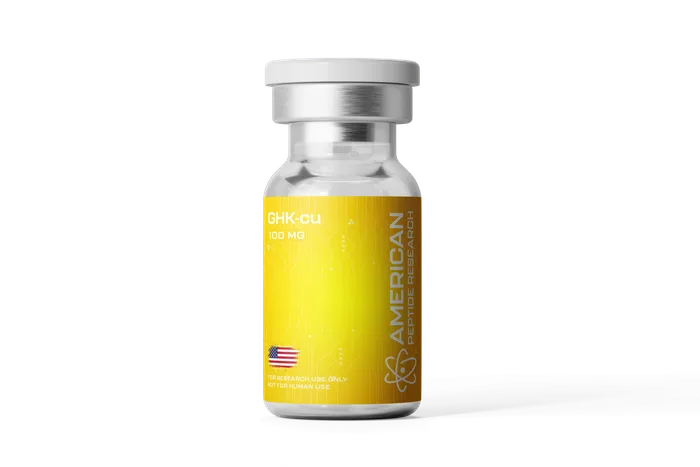
Affiliate links. For research use only — not for human consumption.
Track Your Protocol with PeptIQ
AI-powered dosing, smart reminders, and progress logging — all in one app. Never miss a dose.
YOUR POST-TRAINING ROUTINE
Make room for recovery.
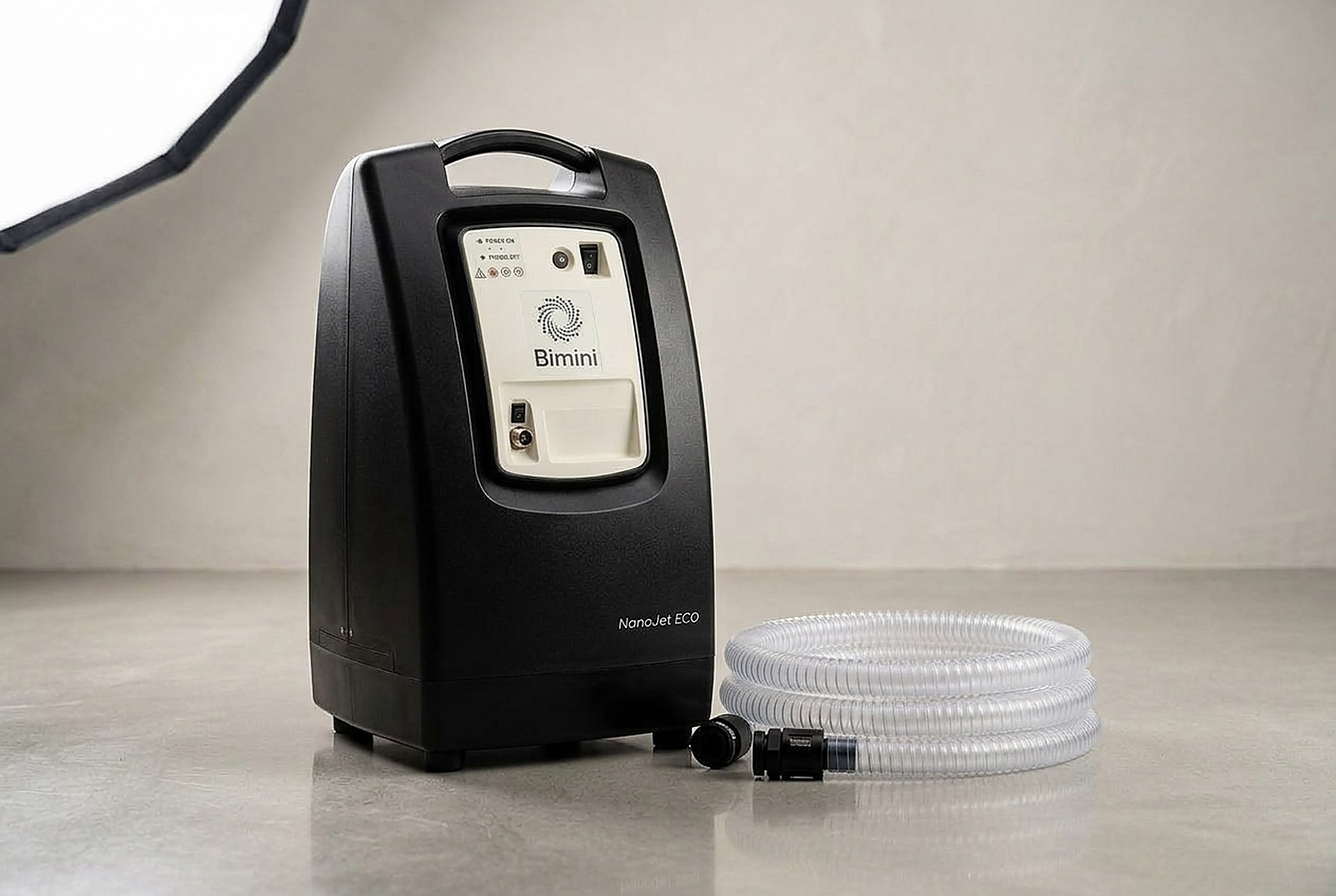
Get to know Bimini’s warm-water nanobubble system. Compare home options and see how the setup fits your routine.
Bimini NanoJet® Eco
$9,650.00$8,685.00
With NINJA • Before shipping and tax. Final offer confirmed by Bimini.
Partner offer: Daniel Rivas, NinjAthlete’s founder, is Bimini’s marketing director. NinjAthlete may earn a commission from purchases through these links.
Was this article helpful?
AI Picks For You
AI Curated
GHK-Cu: The Copper Peptide That Reverses Skin Aging at the Genetic Level
Peptide Side Effects: What the Research Actually Says (BPC-157, TB-500, GHK-Cu & More)
Do Peptides Grow Cancer? What the Research Actually Says (BPC-157, TB-500, MOTS-c, GHK-Cu)
Peptide Blends Exposed: Why GLOW & KLOW Are Dead on Arrival
Recommended Reading
PeptidesTop MatchGHK-Cu: The Copper Peptide That Reverses Skin Aging at the Genetic Level
GHK-Cu modulates over 4,000 human genes toward a more youthful pattern. Here's the science behind the most powerful anti-aging peptide for skin, hair, and tissue repair.
 PeptidesTop Match
MOTS-c vs Metformin: The Longevity Comparison You Need to Read
Two of the most talked-about longevity compounds go head-to-head. MOTS-c (the exercise mimetic peptide) vs. Metformin (the diabetes drug turned anti-aging darling).
 PeptidesTop Match
Semax vs Adderall: Why This Peptide Is the Superior Choice for Focus
NIH research shows Semax may be a safer, more effective alternative to Adderall for focus and ADHD. Learn how this neuroprotective peptide works without the crash.
 PeptidesTop Match
Retatrutide Is a Longevity Weapon: Epigenetic Reversal, Cancer Defense & The Science
Retatrutide reverses epigenetic age by 2.3 years, activates autophagy in brain and liver cells, and disrupts cancer metabolism. Evidence-based breakdown of the triple-agonist longevity science.
 PeptidesTop Match
SLU-PP-332 Guide: The Exercise Mimetic Compound & Why BAC Water Destroys It
SLU-PP-332 activates ERRα — a nuclear receptor that controls mitochondrial biogenesis and fat oxidation. Plus: why bacteriostatic water degrades it.
 PeptidesTop Match
The Complete Guide to Peptide Therapy for Athletes
Everything athletes need to know about peptide therapy. Recovery compounds, performance optimization, body composition, and evidence-based protocols.