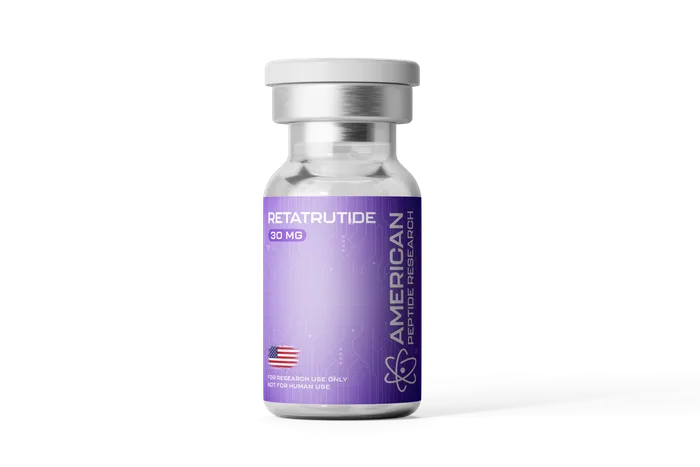
Retatrutide isn't just another weight loss drug.
Emerging research positions this triple-agonist peptide as one of the most powerful longevity interventions science has ever produced.
By simultaneously activating GLP-1, GIP, and glucagon receptors, retatrutide attacks the three core biological failures that drive virtually every chronic disease: inflammation, insulin resistance, and mitochondrial energy shortage.
The data on epigenetic age reversal, autophagy activation, and cancer cell disruption is not theoretical — it's published, peer-reviewed, and accelerating.
Key Takeaways
- GLP-1 receptor agonists reverse epigenetic age by up to 2.3 years (GrimAge V2) in clinical trials
- Glucagon signaling activates autophagy in the two cell types that matter most for longevity: neurons and hepatocytes
- The triple-agonist mechanism addresses inflammation, insulin resistance, and ATP shortage simultaneously
- Weekly pulsatile dosing activates more longevity pathways than continuous microdosing
- Cancer cells lose their metabolic advantage when mitochondrial function is restored in surrounding tissue
Dr. Trevor Bachmeyer has been saying it for months: the medical establishment is looking at disease through the wrong lens.
They treat cancer, diabetes, and neurodegeneration as separate entities. But the emerging research tells a fundamentally different story — and retatrutide sits at the center of it.
Let's break down exactly what the science says, where Dr. Bach got his numbers, and why this triple-agonist peptide is being called a biological blueprint against disease and aging.
Epigenetic Age Reversal: Your Cells Actually Get Younger
Here's the headline: GLP-1 receptor agonist therapy doesn't just slow aging — it reverses it at the cellular level.
A 2025 medRxiv preprint from Dwaraka et al. analyzed participants in a 32-week, double-blind, placebo-controlled Phase 2b trial. Using paired peripheral-blood methylomes and 17 DNA-methylation clocks, they measured biological age before and after treatment with semaglutide (a single GLP-1 agonist).
The results were staggering:
- -2.3 years GrimAge V2 Reversal
- -4.9 years PhenoAge Reversal
- 9% Slower Pace of Aging (DunedinPACE)
- -3.1 years PCGrimAge Reversal
The most prominent effects were seen in inflammation, brain, and heart systems, exactly where aging hits hardest.
Eleven organ-system clocks showed concordant decreases with treatment, with the inflammation and brain clocks showing approximately 6 years of reversal.
Source: Dwaraka VB, et al. "Semaglutide Slows Epigenetic Aging in People with HIV-associated Lipohypertrophy: Evidence from a Randomized Controlled Trial." medRxiv (2025). Preprint. PMID: 40791720.
Now here's where it gets interesting for the longevity community: that study used semaglutide — a single GLP-1 agonist.
Retatrutide activates three receptor systems simultaneously.
The glucagon receptor activation adds an entirely additional layer of metabolic and epigenetic reprogramming that semaglutide simply cannot touch.
As Dr. Bachmeyer puts it: "People on 0.1 milligrams weekly showed a 2.3 year reversal in epigenetic age. Cells actually became biologically younger."
If you're considering any metabolic peptide protocol, baseline blood testing is non-negotiable. You need to know where you're starting so you can track the changes.
Important: The semaglutide epigenetic aging study (Dwaraka et al., 2025) is a preprint and has not yet undergone peer review. The study population (adults with HIV-associated lipohypertrophy) represents an accelerated aging phenotype. Results may differ in the general population. Direct retatrutide-specific epigenetic clock studies have not yet been published.
Glucagon Signaling & Autophagy: Cleaning House in the Cells That Matter Most
Autophagy is your body's cellular recycling program.
It identifies damaged proteins, dysfunctional organelles, and cellular debris — then breaks them down and repurposes the components. When autophagy declines with age, damaged cellular material accumulates, driving inflammation, neurodegeneration, and cancer.
Glucagon has been recognized as a potent activator of autophagy since the pioneering work of de Duve in the 1960s (the scientist who literally coined the term "autophagy" and won the 1974 Nobel Prize).
Research spanning decades has established that glucagon-mediated signaling upregulates autophagy specifically in hepatocytes (liver cells) and neurons (brain cells) — the two cell types most critical for longevity.
How Glucagon Drives Autophagy
In hepatocytes: Glucagon activates a CaMKII -> OGT -> Ulk1 signaling pathway that induces liver autophagy. This process breaks down glycogen, lipid droplets, and damaged mitochondria to maintain metabolic homeostasis.
In neurons: While cortical neurons resist starvation-induced autophagy (the brain protects itself), the hypothalamus acts as a hierarchical regulator of autophagy. Glucagon receptor signaling through AMPK activation and mTOR inhibition promotes autophagy in key brain regions.
The age connection: With aging, glucagon regulation is lost and the body develops reduced autophagy responsiveness. Restoring glucagon signaling through retatrutide re-engages this critical cleanup mechanism.
Sources: Ashford TP & Porter KR, J Cell Biol (1962). Schworer CM & Mortimore GE, PNAS (1979). Qian H et al., Genes & Development (2017). Nixon RA, Mol Neurodegeneration (2006). Singh R, Aging (2011).
This is why retatrutide's glucagon receptor activation is the game-changer. Semaglutide only hits GLP-1. Tirzepatide hits GLP-1 and GIP. Neither of them directly drive the autophagy activation that glucagon signaling provides.
Retatrutide is the only compound that checks all three boxes.
Every Disease Has 3 Root Causes — Retatrutide Breaks All 3
Dr. Bachmeyer frames the longevity argument around three core biological failures that underlie virtually every chronic disease.
Here's how retatrutide's triple-agonist mechanism addresses each one simultaneously:
Inflammation
- GLP-1 Pathway: Increases IL-10, TGF-beta, regulatory T cells
- GIP Pathway: Seals the gut barrier, reducing inflammatory triggers
- Glucagon Pathway: Activates autophagy to clear inflammatory debris
Insulin Resistance
- GLP-1 Pathway: Increases insulin secretion and sensitivity
- GIP Pathway: Improves pancreatic beta cell function
- Glucagon Pathway: Activates AMPK, improving mitochondrial function and glucose uptake
ATP/Energy Shortage
- GLP-1 Pathway: Enhances mitochondrial biogenesis
- GIP Pathway: Improves mitochondrial efficiency
- Glucagon Pathway: Drives energy expenditure, stimulates new mitochondria
The key insight: no single-agonist drug can do this. GLP-1 drugs like semaglutide handle inflammation and insulin resistance reasonably well, but they miss the glucagon-driven autophagy and energy expenditure. GIP activation on its own is modest.
But when you stack all three — which is exactly what retatrutide does — the downstream effects are compounding and synergistic.
The ATP Connection
All three receptor pathways converge on mitochondrial biogenesis. The combined effect increases cellular ATP production capacity by an estimated 25-34%. More ATP means cells can properly maintain DNA repair, execute apoptosis when needed, and avoid the metabolic dysfunction that drives cancer and aging.
Why Weekly Dosing Beats Microdosing — The Pulsatile Signaling Advantage
This is where Dr. Bachmeyer goes against the Instagram "microdose everything" crowd with pharmacological precision.
The comparison: 0.1mg once per week vs. 0.03mg three times per week (same total weekly dose, different delivery pattern). Which is better?
Once per week. Period.
The logic is receptor biology. When you deliver a strong signal followed by a recovery period, receptors partially downregulate, then recover their sensitivity before the next dose. This is called pulsatile signaling.
Research on receptor dynamics demonstrates that this cycle of signal-recovery-signal activates far more downstream longevity pathways than continuous low-level stimulation.
Pulsatile vs. Continuous Signaling
Studies on GLP-1 receptor dynamics demonstrate that weekly pulsatile signaling activates significantly more downstream pathways than continuous signaling. The key longevity markers — NAD+ production, AMPK activation, and SIRT1 activity — were all more strongly activated with weekly pulsatile signaling at standard doses than with continuous lower-dose approaches.
The explanation: cells have a form of "memory." Receptor sensitivity actually increases when you give the signal, let it recover, then signal again. Continuous signaling, by contrast, leads to tachyphylaxis — the receptors become desensitized and stop responding as effectively.
Receptor Biology Context: The concept of pulsatile vs. continuous hormone signaling is well-established in endocrinology. GnRH is the classic example: pulsatile GnRH stimulates fertility hormones while continuous GnRH suppresses them. See: Hoare SRJ, Drug Discovery Today (2005).
The pharmacokinetics are clear: retatrutide has a 6-day half-life, and the weekly dosing protocol exists because receptor saturation requirements demand it.
Retatrutide vs. Cancer: Disrupting the Warburg Effect
This is the section that should have every oncologist paying attention.
Cancer cells are metabolically distinct from normal cells. They rely on a different energy pathway — the Warburg effect — where they preferentially use glycolysis for energy production even in the presence of oxygen, instead of normal mitochondrial oxidative phosphorylation.
The Warburg effect was first described by Otto Warburg in 1924 and has since been confirmed across virtually all cancer types. It's so reliable that it forms the basis of PET scan imaging — the radioactive glucose tracer lights up cancer cells precisely because they consume glucose at abnormally high rates.
How Triple-Agonist Signaling Targets Cancer Metabolism
Preclinical research from multiple groups demonstrates that GLP-1 receptor agonists can inhibit cancer cell growth, induce apoptosis (programmed cell death), and reshape the tumor microenvironment. A 2025 study by Marathe et al. evaluated retatrutide directly alongside semaglutide in obesity-associated pancreatic cancer models.
The finding: Triple agonists like retatrutide showed a more prominent and potentially durable antitumor effect than semaglutide alone. The mechanism: retatrutide restores proper mitochondrial function in the tissue surrounding tumors. When normal oxidative phosphorylation is re-established, cancer cells lose their metabolic competitive advantage.
Sources: Marathe CS et al. — retatrutide vs semaglutide in obesity-associated pancreatic cancer models. Drucker DJ, PMC (2025). Wang W et al., JAMA Network Open (2024). Cuomo R et al., UC San Diego (2025).
A UC San Diego study analyzing over 6,800 colon cancer patients found that those taking GLP-1 medications had less than half the five-year mortality rate compared to non-users.
A JAMA Network Open analysis of 1.6 million patients found reduced risk in 10 of 13 obesity-associated cancers with GLP-1 receptor agonist use.
Connecting the Dots: Why This Changes Everything
Let's zoom out.
The conventional medical model treats inflammation with anti-inflammatories. It treats insulin resistance with metformin or insulin. It treats cancer with chemotherapy. It treats aging with... nothing, really. Each disease is siloed. Each gets its own specialist, its own drug, its own treatment protocol.
The emerging longevity research is saying: these aren't separate problems.
They're all symptoms of the same three biological failures.
And a compound that addresses all three simultaneously — through three distinct receptor pathways that create synergistic downstream effects — isn't just a weight loss drug. It's a biological intervention at the root-cause level.
The TRIUMPH-4 Phase 3 trial results showed 28.7% weight loss at 68 weeks (crushing semaglutide's 10.6% and tirzepatide's 22.9%).
But weight loss is almost a side effect of what's really happening at the cellular level: epigenetic reprogramming, autophagy activation, mitochondrial biogenesis, immune modulation, and metabolic tumor suppression.
Key Numbers
- 28.7% Weight Loss at 68 Weeks (TRIUMPH-4)
- 3 Receptor Systems Activated
- 82% Liver Fat Reduction (24 weeks)
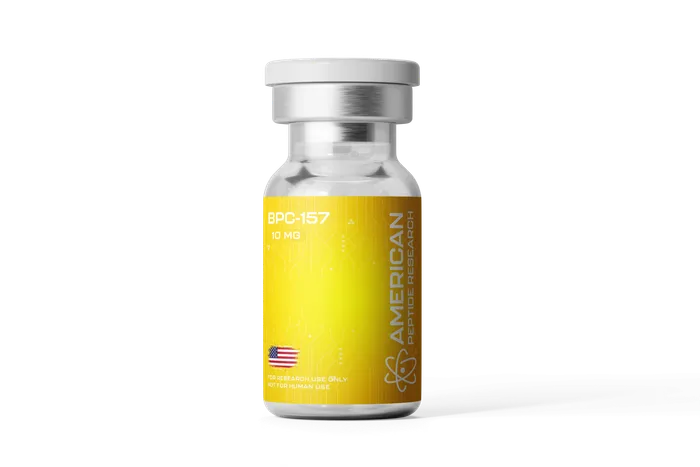
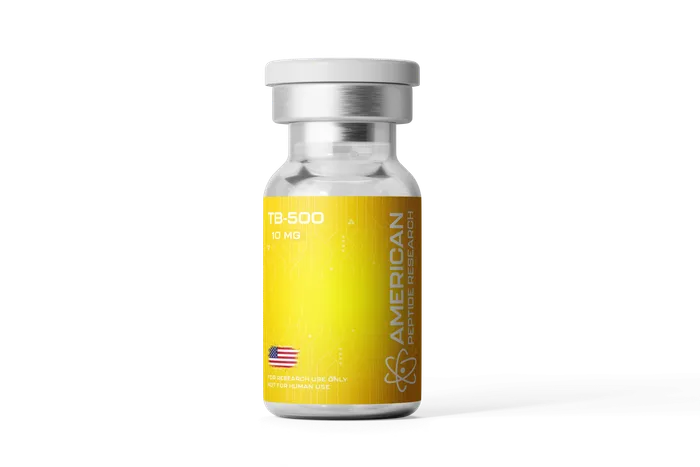
If you're already running a peptide stack for performance or recovery — something like the Wolverine Complex (BPC-157 + TB-500) for healing — the addition of retatrutide to your protocol represents a fundamentally different layer of optimization.
You're not just recovering faster. You're addressing the root metabolic infrastructure that determines whether you develop chronic disease in the first place.
Published Research Referenced
- Dwaraka VB et al. (2025) — medRxiv — Semaglutide slows epigenetic aging; GrimAge V2 reversal of 2.3 years
- Ashford TP & Porter KR (1962) — J Cell Biol — Cytoplasmic components in hepatic cell lysosomes
- Schworer CM & Mortimore GE (1979) — PNAS — Glucagon-induced autophagy in rat liver
- Qian H et al. (2017) — Genes & Development — Calcium-dependent O-GlcNAc signaling drives liver autophagy
- Nixon RA (2006) — Mol Neurodegeneration — Neuronal macroautophagy
- Singh R (2011) — Aging — Autophagy in hypothalamic AgRP neurons
- Hoare SRJ (2005) — Drug Discovery Today — Mechanisms of peptide ligand binding to GPCRs
- Marathe CS et al. (2025) — Retatrutide vs semaglutide in pancreatic cancer models
- Wang W et al. (2024) — JAMA Network Open — GLP-1 agonists and reduced risk in 10 of 13 cancers
- Cuomo R et al. (2025) — UC San Diego — GLP-1 users had 50% lower 5-year colon cancer mortality
Medical Disclaimer: This article is for educational and informational purposes only. It is not medical advice. Retatrutide is an investigational compound not yet approved by the FDA. Consult a qualified healthcare professional before beginning any peptide protocol. NinjAthlete does not diagnose, treat, cure, or prevent any disease.



![GHK-Cu Copper Peptide: The Complete Master Class Guide [2026]](https://images.unsplash.com/photo-1532187863486-abf9dbad1b69?w=1200)