Skip to content

Retatrutide & Cancer Prevention: The Science Behind Tumor Reduction

Discover how retatrutide's triple-agonist mechanism fights cancer through metabolic intervention. Science-backed guide covering the 65% tumor reduction study, liver health, and immune reprogramming.


Peptide Science • Cancer Research

Retatrutide & Cancer Prevention:
The Science Behind Tumor Reduction

How a triple-agonist peptide is rewriting the cancer prevention playbook through metabolic intervention, immune reprogramming, and liver restoration

By Dr. Trevor Bachmeyer February 4, 2026 16 min read Updated with 2025 Research

Let me be direct with you. The medical establishment is failing at cancer prevention.

Not because they're stupid. 

Not because they don't care. But because they're looking at cancer through the wrong lens entirely.

They're still treating cancer like it's a thing that happens to you, some random genetic lottery where you either get lucky or you don't. But the emerging research tells a fundamentally different story.

Cancer, in the vast majority of cases, is a metabolic disease.

It's a downstream consequence of biological systems that have been broken for years, sometimes decades, before a single tumor cell ever forms.

And here's what makes this so exciting, and so infuriating that mainstream medicine isn't screaming it from the rooftops: if cancer is metabolic, it's preventable.

Not with wishes and prayers. With targeted metabolic intervention.

That's where retatrutide enters the conversation. And the data is staggering.

14x
Tumor Volume Reduction
vs. Semaglutide's 4x
86%
Achieved Normal
Liver Fat Levels
82.4%
Liver Fat Reduction
at 24 Weeks
17x
Lung Tumor Volume
Reduction in Models

Why Conventional Medicine Gets Cancer Prevention Wrong

Here's the problem. You go to your doctor. You get your annual physical.

They check your blood pressure, maybe run some basic bloodwork, tell you to eat more vegetables, and send you home. That's their "cancer prevention" protocol. It's a joke.

Meanwhile, your liver is drowning in fat. Your insulin levels are through the roof. Your mitochondria are limping along at 40% capacity.

Your immune system is stuck in a chronic inflammatory state that's literally building the infrastructure for cancer to thrive. And nobody checks any of this.

The science is no longer ambiguous on this point.

We know—from decades of research published in journals like The Lancet, Nature Medicine, and The New England Journal of Medicine, that metabolic dysfunction isn't just a risk factor for cancer.

It's the engine.

"Over 40% of the adult population in the U.S. is obese. Obesity is associated with an increased risk of at least thirteen cancers and with negative cancer outcomes including increased metastasis, impaired response to therapy, and elevated risk of recurrence." — Marathe et al., NPJ Metabolic Health and Disease, 2025

Thirteen cancers.

Not one. 

Not two. 

Thirteen.

And the mechanism isn't mysterious.

It's three biological failures happening simultaneously, compounding each other, creating a cellular environment where cancer isn't just possible, it's inevitable if left unchecked.

The Three Biological Failures That Feed Cancer

This is the framework you need to understand. Everything else flows from this. Your body doesn't develop cancer because of bad luck.

It develops cancer because three systems fail simultaneously:

Failure #1: Chronic Systemic Inflammation

Your immune system has two modes. There's the acute inflammatory response—you cut yourself, immune cells rush in, clean up the damage, and leave.

That's healthy. That's how it's supposed to work.

Then there's chronic inflammation. The alarm goes off and never turns off.

Your immune system stays in overdrive permanently, releasing pro-inflammatory cytokines like TNF-alpha, IL-6, and IL-1 beta around the clock. 

This creates what researchers call a "tumor-promoting microenvironment"—a cellular landscape where cancer cells don't just survive, they flourish.

Think of it this way: chronic inflammation is cancer's construction crew. It builds the roads, lays the foundation, installs the plumbing. All cancer has to do is move in.

Failure #2: Insulin Resistance & Metabolic Dysfunction

When your cells stop responding to insulin properly, glucose metabolism goes haywire. Blood sugar stays elevated.

Insulin levels skyrocket as your pancreas desperately tries to compensate. And here's what nobody talks about: insulin is a growth factor.

Elevated insulin doesn't just mess up your blood sugar. It directly stimulates cell proliferation. It activates IGF-1 pathways.

It tells cells to grow, divide, and multiply. For healthy cells, this creates problems. For pre-cancerous cells, it's like throwing gasoline on a smoldering fire.

The data from Diabetes Care and the JAMA Network is unambiguous: type 2 diabetes increases susceptibility to liver, pancreatic, stomach, colorectal, kidney, bladder, breast, and endometrial cancers.

The metabolic dysfunction is the cancer pathway.

🧬 Understanding metabolic optimization? Explore how MOTS-C works at the mitochondrial level to improve insulin sensitivity. See our full breakdown in the MOTS-C vs. Metformin comparison guide.

Failure #3: ATP Shortage & Mitochondrial Dysfunction

This is the one almost nobody in mainstream medicine talks about, and it might be the most important of all.

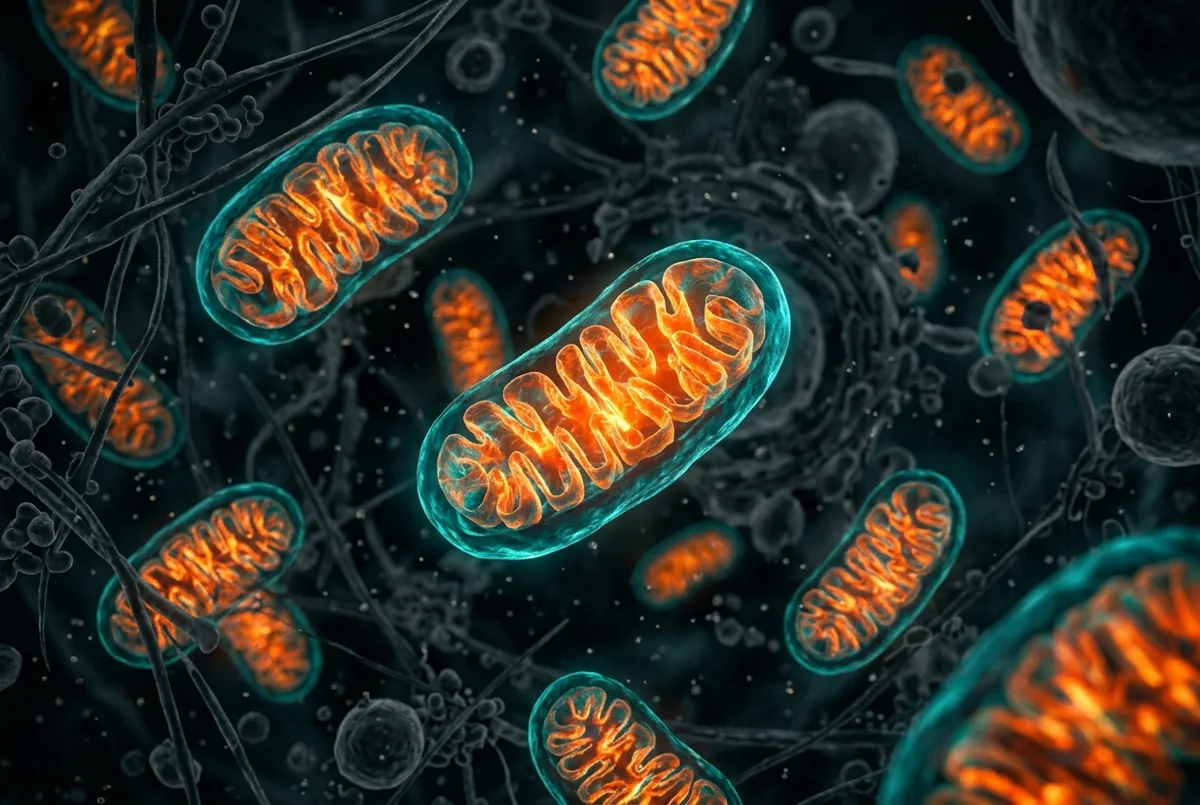
Your mitochondria are the power plants of every cell.

When they're functioning properly, they produce massive amounts of ATP through aerobic respiration, the clean, efficient energy pathway. 

When they're damaged? Cells are forced to switch to anaerobic glycolysis, a primitive, inefficient backup system that produces only a fraction of the ATP.

This isn't a new theory. Otto Warburg observed this in the 1920s and won the Nobel Prize for it.

Cancer cells preferentially use glycolysis even in the presence of oxygen, the Warburg Effect. 

The emerging understanding is that this isn't a consequence of cancer. 

It's a precondition.

Damaged mitochondria come first. The metabolic shift to glycolysis comes second.

Cancer comes third.

When your mitochondria are broken, your cells can't produce enough energy to maintain proper function, proper DNA repair, or proper apoptosis, the programmed cell death that's supposed to eliminate pre-cancerous cells before they become a problem. 

The garbage collection system breaks down. Damaged cells that should be destroyed instead survive, accumulate mutations, and eventually become malignant.

Understanding this connection between mitochondrial health and long-term disease prevention is directly tied to the anterior midcingulate cortex and resilience, the same discipline that drives metabolic health drives the mental framework to sustain it.

Retatrutide: The Triple-Agonist Mechanism Explained

So we've established the three failures. Now here's where retatrutide changes everything.

Unlike semaglutide (Ozempic), which only targets the GLP-1 receptor, or tirzepatide (Mounjaro), which hits GLP-1 and GIP, retatrutide activates three receptors simultaneously.

Each one addresses a different aspect of the metabolic failure cascade.

Retatrutide Triple-Agonist Mechanism
🎯
GLP-1 Receptor
Glucose control, appetite regulation, immune modulation
EC50: 0.775 nM
🔄
GIP Receptor
Fat redistribution, insulin sensitization, tissue repair
EC50: 0.064 nM
Glucagon Receptor
Energy expenditure, liver fat oxidation, thermogenesis
EC50: 5.79 nM

The glucagon component is what makes retatrutide a fundamentally different molecule.

Glucagon receptor activation does something neither GLP-1 nor GIP can do on their own: it directly increases energy expenditure by up to 25% and drives hepatic fat oxidation, literally burning fat out of the liver.

In the context of cancer prevention, this means retatrutide doesn't just slow down the metabolic failures. It reverses them.

For a deeper look at how retatrutide dosing actually works at the molecular level—and why microdosing fails—read our complete retatrutide dosing science guide.

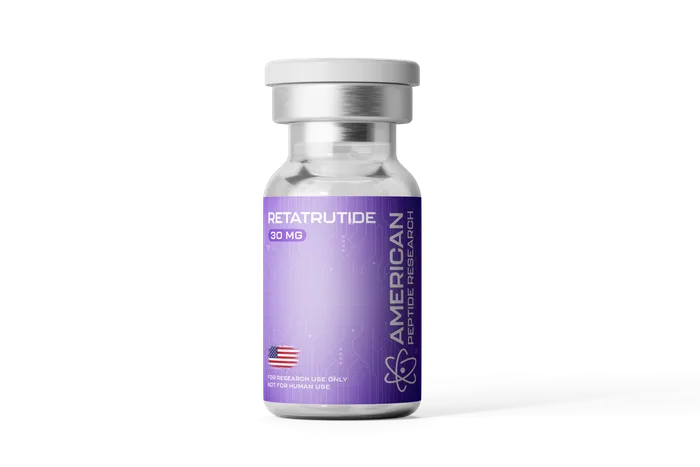
Research-Grade Retatrutide

Third-party tested. Purity verified. Trusted by researchers nationwide.

View Retatrutide at APR →

The 14-Fold Tumor Reduction Study

In March 2025, Marathe and colleagues published a landmark study in NPJ Metabolic Health and Disease (a Nature portfolio journal) that sent shockwaves through the research community.

The findings were, frankly, extraordinary.

Using preclinical models of obesity-associated cancer, the researchers tested retatrutide against semaglutide, caloric restriction, and placebo controls. Here's what they found:

Study: Marathe et al., 2025 — NPJ Metabolic Health and Disease

Pancreatic Cancer (PDAC) Model: Retatrutide reduced tumor engraftment, delayed tumor onset, and attenuated progression resulting in a 14-fold reduction in tumor volume compared to only 4-fold with semaglutide.

Lung Cancer (LUAD) Model: 50% reduced tumor engraftment, significantly delayed tumor onset, and a 17-fold reduction in tumor volume compared to controls.

Durability Finding: Even after retatrutide withdrawal and weight regain, the anti-tumor benefits persisted. The growth of established tumors continued to be suppressed in retatrutide-withdrawn animals.

Immune Reprogramming: Retatrutide induced durable anti-tumor immunity with elevated circulating IL-6, increased antigen-presenting cells, and reduced immunosuppressive cell populations.

Let that sink in. Fourteen times more tumor reduction than semaglutide, the drug everyone is talking about. 

And the protection persisted after stopping the drug. That's not symptom management.

That's fundamental biological reprogramming.

The lung cancer finding is equally remarkable because lung adenocarcinoma is not traditionally considered an obesity-associated cancer.

This suggests retatrutide's anti-tumor effects extend beyond simple weight loss into direct immune system modulation.

"Findings presented herein have profound implications for patients currently considering or taking incretin mimetics for diabetes or weight loss on cancer outcomes." — Marathe et al., NPJ Metabolic Health and Disease, 2025

Your Liver Is the Cancer Prevention Lynchpin

If you take nothing else from this article, take this: your liver health is the single most important biomarker for long-term cancer risk that almost nobody is tracking.

Metabolic dysfunction-associated steatotic liver disease, MASLD, formerly called non-alcoholic fatty liver disease, affects roughly one in three adults.

Most don't know they have it. Most doctors don't test for it. 

And it is, without exaggeration, a ticking time bomb.

A fatty liver isn't just a liver problem. It's a whole-body inflammatory cascade.

When your liver is packed with fat, it pumps out inflammatory cytokines, it loses its ability to properly detoxify metabolic waste, it drives insulin resistance systemically, and it creates the exact three-failure environment we discussed above.

This is where retatrutide's Phase 2 MASLD trial data becomes critically important.

Study: Sanyal et al., 2024 — Nature Medicine (Phase 2 Trial)

Participants: 98 adults with MASLD and ≥10% liver fat

Duration: 48 weeks, once-weekly subcutaneous injection

Results at 24 weeks (12mg dose):

• Mean relative liver fat reduction: 82.4%

• Achieved normal liver fat (<5%): 86% of participants

Results at 48 weeks (12mg dose):

• Mean relative liver fat reduction: 86.0%

• Achieved normal liver fat (<5%): 93% of participants

• Body weight reduction: 24.2%

• Visceral fat reduction: up to 48%

The 86% relative liver fat reduction is among the largest treatment effects ever reported.

Compare that to semaglutide, which reduces liver fat by approximately 50% after a year. Retatrutide achieved 82% reduction in just 24 weeks.

The glucagon receptor activation is the key differentiator, it directly drives hepatic fat oxidation in a way that GLP-1 agonism alone simply cannot match.

For those already exploring liver-supportive compounds, glutathione is the body's master antioxidant and plays a critical role in hepatic detoxification.

It pairs strategically with metabolic peptides for comprehensive liver support.

🏋️ Supporting metabolic health through nutrition is foundational. Check out our 75 Hard Meal Plan and high-protein meal prep guide for structured approaches to metabolic optimization.

Immune Reprogramming: M1/M2 Macrophage Polarization

This is the mechanism that really blows the doors open on why GLP-1 receptor agonists—and especially a triple agonist like retatrutide—have anti-cancer effects beyond weight loss.

Your immune system has specialized cells called macrophages. Think of them as the body's patrol officers. They come in two primary configurations:

M1 Macrophages (Pro-inflammatory): These are the attack dogs. They produce TNF-alpha, IL-6, and IL-12. They kill pathogens. But when they're chronically activated, they create the tumor-promoting inflammatory environment we discussed. They're regulated by NF-κB and STAT1 pathways.

M2 Macrophages (Anti-inflammatory): These are the repair and surveillance crew. They produce IL-10 and TGF-beta. They clean up damage, promote tissue repair, and critically—they support anti-tumor immunity. They're regulated by STAT3 and STAT6 pathways.

In metabolic dysfunction, the balance tips overwhelmingly toward M1. Chronic inflammation means chronic M1 dominance. Your body loses its anti-tumor surveillance capability.

Here's what the research shows GLP-1 receptor activation does:

GLP-1 → STAT3 Activation → M2 Polarization (Click to expand)

A study published in Biochemical and Biophysical Research Communications (2012) demonstrated that GLP-1 directly induces STAT3 activation in human monocyte-derived macrophages, driving polarization from the M1 pro-inflammatory phenotype toward the M2 anti-inflammatory phenotype. M2 markers including IL-10, CD163, and CD204 were significantly upregulated.

This was further confirmed in the murine macrophage cell line RAW264.7, published in Experimental and Therapeutic Medicine (2019), showing that GLP-1 inhibits JNK phosphorylation through the cAMP/PKA signaling pathway while simultaneously increasing STAT3 phosphorylation—a dual mechanism that suppresses M1 activation while promoting M2 conversion.

NF-κB Inhibition → Reduced Inflammatory Gene Expression (Click to expand)

GLP-1 receptor agonists inhibit NF-κB activity, leading to diminished expression of inflammatory genes including TNF-α, IL-23, IL-17, and IL-22. The cAMP/PKA pathway activated by GLP-1R signaling directly suppresses NF-κB transcriptional activity, cutting off the molecular fuel supply that maintains the chronic inflammatory state cancer depends on.

A comprehensive 2022 review in Frontiers in Immunology confirmed that PKA can inhibit NF-κB activity, leading to diminution of inflammatory gene expression, while simultaneously driving STAT3 phosphorylation to promote M2 polarization.

Tumor Microenvironment Reprogramming (Click to expand)

The Marathe et al. (2025) retatrutide study found that within tumors, retatrutide increased expression of genes associated with inflammation and antitumor immunity while decreasing expression of genes associated with metabolism. This included elevated circulating IL-6, increased antigen-presenting cells, and reduced immunosuppressive cell populations. This represents direct reprogramming of the tumor microenvironment from a cancer-permissive to a cancer-hostile state.

Additionally, a 2025 study in The Journal of Clinical Endocrinology & Metabolism demonstrated that semaglutide reprograms tumor-associated macrophages via the GLP-1R/PPARG/ACSL1 signaling pathway, promoting conversion from M2 to M1 within the tumor microenvironment specifically—suggesting that within established tumors, GLP-1R activation may activate different polarization dynamics than in systemic circulation.

The implication is staggering. A single class of molecules is simultaneously resolving systemic inflammation, restoring metabolic function, AND reprogramming the immune system to identify and attack cancer cells. This isn't one mechanism of action. It's a coordinated multi-system intervention.

For those interested in further immune system optimization, Thymosin Alpha-1 is another compound with well-documented immune modulatory properties worth researching alongside metabolic peptides.

Mitochondrial Biogenesis & the ATP Connection

The glucagon receptor activation in retatrutide does something particularly relevant to the third biological failure: it drives energy expenditure up by an estimated 25%. This isn't just calorie burning. At the cellular level, increased energy demand stimulates mitochondrial biogenesis—the creation of new mitochondria.

More mitochondria means more ATP production capacity. More ATP means cells can properly maintain DNA repair mechanisms, execute apoptosis when needed, and avoid the glycolytic shift associated with cancer development. You're rebuilding the cellular infrastructure that keeps cancer in check.

The Phase 2 obesity trial published in The New England Journal of Medicine (Jastreboff et al., 2023) demonstrated that at the 12mg dose, over 90% of participants lost more than 10% of their body weight, nearly two-thirds lost over 20%, and a quarter lost over 30%. This isn't cosmetic weight loss. This represents a fundamental metabolic transformation—the kind that restores mitochondrial function across every tissue in the body.

Mitochondrial support goes beyond peptides. MOTS-C is a mitochondria-derived peptide that directly activates AMPK and improves cellular energy metabolism. Read our MOTS-C vs. Metformin deep dive for the full breakdown.

Combined with visceral fat reductions up to 48% and liver fat reductions up to 86%, retatrutide isn't treating a symptom. It's dismantling every pillar of the metabolic failure cascade that makes cancer possible.

What This Means for You

Let me bring this home. The old model of cancer prevention—eat your vegetables, don't smoke, get screened every year—is not wrong. It's just catastrophically incomplete.

The emerging science tells us that metabolic health IS cancer prevention. Every point of insulin resistance you resolve, every percentage of liver fat you eliminate, every shift from M1 to M2 macrophage dominance, every new mitochondrion your cells generate—these are quantifiable reductions in cancer risk.

Retatrutide represents a new frontier in this understanding. The data from Marathe et al. shows us that a triple-agonist approach doesn't just manage metabolic dysfunction—it produces anti-tumor effects that persist even after treatment ends. That suggests we're not just suppressing disease. We're triggering fundamental biological reprogramming.

Here's what you should be tracking, at minimum, if you're serious about metabolic cancer prevention:

Key Biomarkers for Metabolic Cancer Prevention

Liver fat percentage — The gold standard is MRI-PDFF. Target: below 5%. If your doctor isn't testing this, ask for it.

Fasting insulin — Not just fasting glucose. Insulin resistance shows up in insulin levels years before glucose becomes abnormal. Target: below 6 μIU/mL.

HOMA-IR — Calculated from fasting glucose and fasting insulin. It's the most practical measure of insulin resistance. Target: below 1.0.

hs-CRP — High-sensitivity C-reactive protein measures systemic inflammation. Target: below 1.0 mg/L.

HbA1c — Three-month average blood sugar. Target: below 5.4%.

Visceral fat — DEXA scan or waist circumference as proxy. Visceral fat is the metabolically dangerous fat driving all three failures.

If you're already on a peptide protocol, this research should inform your stack strategy. The metabolic optimization compounds—retatrutide for triple-agonist metabolic intervention, MOTS-C for mitochondrial biogenesis, tesamorelin for targeted visceral fat reduction—are addressing the root cause of cancer risk at the cellular level.

For those new to peptide research, our complete peptide mixing and reconstitution guide covers everything you need to get started safely, and the PeptiQ app can help you track and manage your protocol.

Build Your Metabolic Optimization Stack

Research-grade peptides. Third-party purity testing. Trusted by thousands of researchers.

Explore the Weight Loss Stack →

Browse All Peptides at APR →

Frequently Asked Questions

What is retatrutide and how does it differ from semaglutide?

Retatrutide (LY3437943) is a triple-agonist peptide developed by Eli Lilly that simultaneously activates GLP-1, GIP, and glucagon receptors. Semaglutide (Ozempic/Wegovy) only activates GLP-1. Tirzepatide (Mounjaro) activates GLP-1 and GIP. The addition of glucagon receptor activity gives retatrutide unique capabilities in driving energy expenditure, hepatic fat oxidation, and deeper metabolic reprogramming. In preclinical cancer models, this translated to a 14-fold tumor volume reduction vs. semaglutide's 4-fold.

Can retatrutide actually prevent cancer?

Preclinical research published in NPJ Metabolic Health and Disease (Marathe et al., 2025) demonstrated that retatrutide significantly reduced tumor engraftment, delayed tumor onset, and attenuated cancer progression in both pancreatic and lung cancer mouse models. The anti-tumor benefits persisted even after drug withdrawal. However, these are preclinical (animal model) studies. Human clinical trials specifically designed to evaluate cancer prevention with retatrutide have not yet been conducted. The mechanism of action—resolving metabolic dysfunction, reducing inflammation, and reprogramming immune response—is strongly supported by existing human data on metabolic health and cancer risk.

How does retatrutide affect liver health?

In a Phase 2 MASLD trial published in Nature Medicine (Sanyal et al., 2024), 98 participants with significant liver fat received retatrutide for 48 weeks. At the 12mg dose, the mean relative liver fat reduction was 82.4% at 24 weeks and 86.0% at 48 weeks. 86% of participants at 24 weeks and 93% at 48 weeks achieved normal liver fat levels below 5%. These are among the largest liver fat reductions ever reported in any clinical trial.

What are the three biological failures that drive cancer?

The three interconnected biological failures are: (1) Chronic systemic inflammation—where the immune system remains in a constant pro-inflammatory state, creating a tumor-promoting microenvironment; (2) Insulin resistance and metabolic dysfunction—where cells lose proper glucose regulation, elevated insulin drives cell proliferation through IGF-1 pathways; and (3) ATP/mitochondrial dysfunction—where damaged mitochondria cannot produce sufficient energy, forcing cells into anaerobic glycolysis (the Warburg Effect), impairing DNA repair and apoptosis mechanisms.

What role does GLP-1 play in immune system modulation?

GLP-1 receptor activation drives macrophage polarization from the pro-inflammatory M1 phenotype to the anti-inflammatory M2 phenotype through STAT3 activation and NF-κB inhibition. This was demonstrated in studies published in Biochemical and Biophysical Research Communications (2012) and Experimental and Therapeutic Medicine (2019). The mechanism involves cAMP/PKA pathway activation that simultaneously suppresses JNK-mediated M1 signaling while enhancing STAT3-mediated M2 conversion. This shifts the body from a tumor-promoting inflammatory state to an anti-tumor surveillance state.

Is retatrutide currently available?

Retatrutide is currently in Phase 3 clinical trials conducted by Eli Lilly, with data expected to release in the near future. It is available for research purposes through specialized peptide suppliers. It has not yet received FDA approval for clinical use. For research-grade retatrutide, American Peptide Research provides third-party tested, purity-verified supply.

What peptides complement retatrutide for metabolic optimization?

A comprehensive metabolic optimization stack might include: MOTS-C for direct mitochondrial biogenesis and AMPK activation; tesamorelin for targeted visceral fat reduction; glutathione for hepatic detoxification support; and Thymosin Alpha-1 for immune modulation. View the complete Weight Loss Stack or explore anti-aging peptides at APR.

⚠️ Medical Disclaimer: This article is for educational and informational purposes only. It is not medical advice and should not be treated as such. The research cited includes preclinical (animal model) studies and early-phase clinical trials. Always consult with a qualified healthcare provider before making any changes to your health protocol. Peptides mentioned are available for research purposes. Individual results may vary. The statements in this article have not been evaluated by the FDA.
Leave a comment

Your email address will not be published..

Cart

Your cart is currently empty.

Start Shopping

Select options