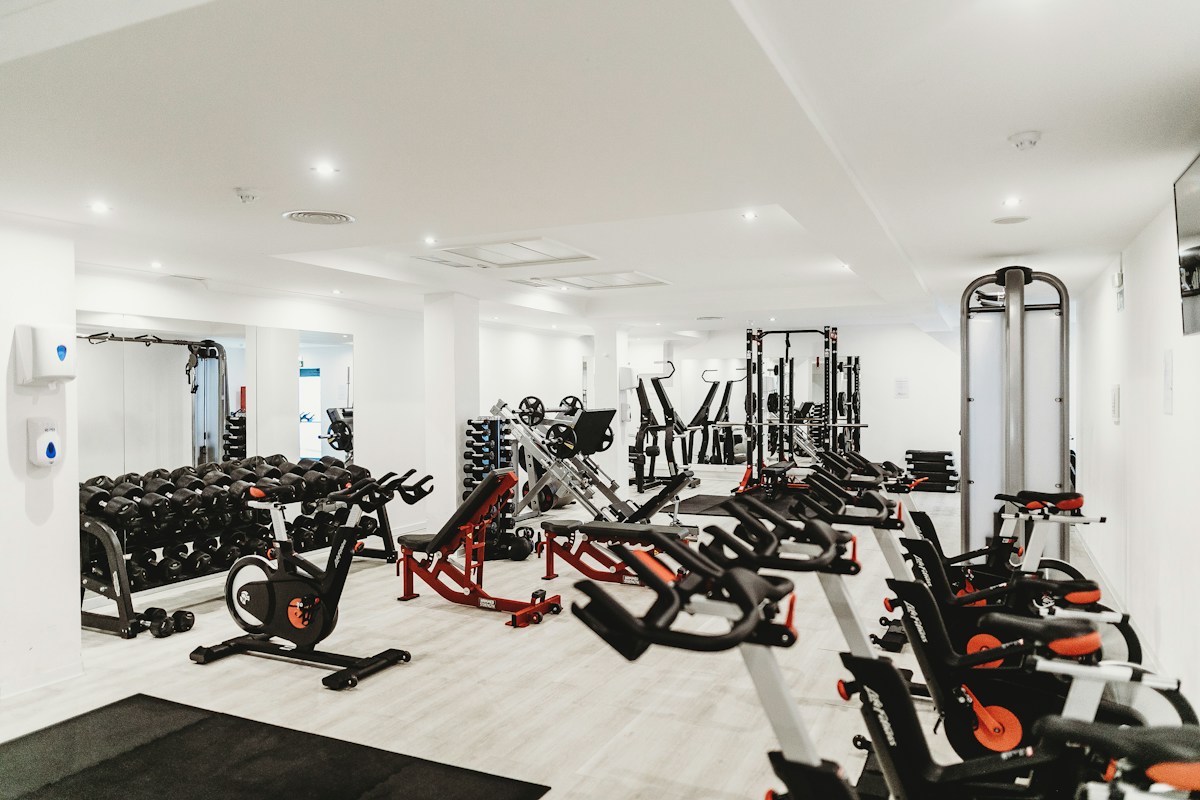
A HYROX race is 8 × 1km runs alternating with 8 fixed functional stations, in the same order at every event on earth. Most athletes need 12–16 weeks at 4–6 training days per week — roughly 2–3 runs, 2–3 HYROX-specific sessions, 1–2 strength sessions. A strong first-timer finish is under 1:40 (men) or 2:00 (women); the top 10% of the field runs under 1:15 (men) and 1:26 (women). The cheapest time on the course is in the RoxZone, where recreational athletes hand elites over three minutes on transitions alone.
HYROX is no longer a niche European fitness experiment. The 2026/27 season spans more than 100 race weekends across six continents — 107 by trade-press counts — with over 2 million athletes expected to compete, up from roughly 1.5 million the season before.
And here's the part that matters for your training: because the format never changes, HYROX is one of the only mass-participation fitness events you can prepare for with actual precision. You know every distance, every weight and every rep before you ever pay a registration fee.
That's a gift. It means the difference between a 1:45 and a 1:25 isn't luck or genetics — it's whether you trained the right things in the right order. Unlike formats that challenge athletes with surprise workouts, HYROX rewards specificity above everything else.
This guide is fully updated for the 2026/27 season using the official rulebooks published 24 June 2026: current station standards for every division, the rule and penalty changes that took effect this season (several of which are significantly harsher than last year), real finish-time data from hundreds of thousands of results, a 12-week plan you can start on Monday, and the pacing strategy that separates athletes who fade from athletes who finish strong.
in 2026/27
this season
8 runs + 8 stations
is running
The HYROX Format: 8 Runs, 8 Stations, Zero Surprises
Every HYROX race on earth follows the identical structure:
- 8 × 1km runs — 8km of total running, roughly half your finish time
- 8 functional fitness stations — one after every run, always in the same order
You run first. Then station one. Then run again. Then station two. And so on until you've completed all 16 pieces. The clock never stops — not between runs, not during transitions, not while you're catching your breath.

The station order (memorise this):
- 1000m SkiErg
- 50m Sled Push (4 × 12.5m lengths)
- 50m Sled Pull (4 × 12.5m lengths)
- 80m Burpee Broad Jumps
- 1000m Row
- 200m Farmers Carry
- 100m Sandbag Lunges
- 100 Wall Balls
This standardisation is HYROX's competitive advantage over every other test of general fitness. You're not preparing for the unknown. You're preparing for a known, repeatable sequence — which means every session you run can be measured against a specific demand on race day.
Official HYROX Station Weights for the 2026/27 Season
Good news if you've been training all year: no weights or rep counts changed for 2026/27. The standards below are taken directly from §4.1 of the official HYROX Singles Rulebook for the current season.
| Station | Women Open | Men Open / Women Pro | Men Pro |
|---|---|---|---|
| SkiErg | 1000m | 1000m | 1000m |
| Sled Push (50m) | 102kg | 152kg | 202kg |
| Sled Pull (50m) | 78kg | 103kg | 153kg |
| Burpee Broad Jumps | 80m | 80m | 80m |
| Row | 1000m | 1000m | 1000m |
| Farmers Carry (200m) | 2 × 16kg | 2 × 24kg | 2 × 32kg |
| Sandbag Lunges (100m) | 10kg | 20kg | 30kg |
| Wall Balls | 100 reps · 4kg · 2.70m | 100 reps · 6kg (W 2.70m / M 3.00m) | 100 reps · 9kg · 3.00m |
The listed sled weights include the sled itself. Every row in the rulebook is stamped "incl. sled." HYROX doesn't publish a tare weight in the rules, but the official competition sled — the CENTR x HYROX Competition Power Sled — is spec'd at 50kg empty. So a Men's Open 152kg sled push is roughly 102kg of plates on the official sled, not 152kg. Don't load 152kg of plates onto your gym sled and wonder why race day feels easy (or why your back hurts).
Pro athletes do not do fewer wall balls. Every division does 100 reps — singles, doubles and relay. Only the ball weight and target height change. And the target height is keyed to gender, not division: women and women's Pro both throw to 2.70m, men and men's Pro both throw to 3.00m.
Doubles and Relay
Doubles uses the same loads as singles for the equivalent gender, and Mixed Doubles races Men's Open loads — with one wrinkle: wall ball target height still follows each athlete's gender, so a mixed pair shares a 6kg ball but throws to two different targets. The format is "you go, I go": one partner works while the other waits standing (kneeling, sitting or lying down draws a penalty). Both partners must run the full 1000m together, and if one runs ahead it's a 1-minute penalty; more than three of those and the team is ranked Out of Competition.
Last season's Doubles rulebook defined "together" as a hard 5-second gap, automatically monitored by timing chip. That numeric threshold has been deleted for 2026/27. Judgement is now qualitative — "if one team member runs ahead." If you've read elsewhere that there's a new 10-second chip-measured rule, that's wrong; the rule actually got looser, not tighter.
Relay splits the race across 4 athletes, each covering 2 runs and 2 stations. Total race volume is identical. There is no Pro relay division, and in Mixed Relay each athlete uses their own gender's loads.
What Changed for 2026/27: Rules, Penalties and Divisions
The weights held steady, but the rulebook did not. Several of these will cost you time — or your entire race — if you're working from an old plan.
The big one: incomplete stations are now a straight DQ
This is the most significant hardening of the season and it deserves its own heading. Last year, a missed sled lane cost you 3 minutes. A missed farmers carry lap cost you 3 minutes. Leaving an erg early was "10 seconds to DQ depending on severity."
For 2026/27, leaving the SkiErg or rower before the full 1,000m registers, missing a sled lane, missing a farmers carry lap, or coming up short on wall balls is an automatic DQ — no time penalty, no warning. At the 2026 World Championships, Cole Learn was disqualified for stepping off the SkiErg platform early despite completing the full 1,000m. Finish every rep, every metre, and stay on the platform until the display confirms it.
Movement standard & penalty updates
- Burpee broad jumps: a foot stagger of up to 5cm is now permitted at take-off and landing — last season required parallel feet. Small change, real relief for anyone with mobility limits.
- SkiErg: a jumping or dynamic motion is now explicitly allowed, provided your feet land back on the base plate.
- Row: you must remain seated until the full 1,000m is complete. In exchange, you may now stop, rack the handle and rest with your feet on or off the footplates. (Note: the penalty table still carries a legacy 15-second penalty for feet not on the footplates before touching the handle.)
- Sandbag lunges: rep standards are unchanged — trailing knee clearly touches the ground, finish standing tall with hips and knees extended, alternating legs. The "leading foot past the line" rule governs station completion, not individual reps.
- Dropping the sandbag: now a flat 15-second penalty per infringement, with no second-offence DQ. Still expensive — just no longer race-ending.
- Chalk: event-supplied chalk only, and it cannot be carried between stations. 2-minute penalty per infringement, plus a separate 2-minute penalty for powdered chalk at the wall ball station.
- Start tunnel: lingering after your wave has gone is a new 1-minute penalty.
- "Out of Ranking": a new designation letting HYROX void an event for World Championship qualification and world records on environmental, operational or safety grounds.
You'll see it claimed in several places this season that the sled push now requires you to face the direction of travel. It doesn't. §8.2 of the Singles Rulebook lists five requirements — assigned lane, start behind the white line, stay in your lane, sled must fully pass the 12.5m mark before turning, station complete after 4 lanes — and none of them mention body orientation. The word "direction of travel" does not appear in the Singles, Doubles or Relay rulebooks. Push it however you push it fastest.
The Challenger Division (announced as "Division 1")
Unveiled at the HYROX Coaches Summit in London on 29 March 2026, the Challenger Division — first previewed under the working name "Division 1" — creates a competitive tier just below Elite 15 for roughly the 16th to 30th ranked athletes in the world. Same weights, same reps, higher stakes. Win the Challenger race and you earn automatic entry into the next Elite 15 field.
Two details usually get reported wrong: the Challenger Division does not race the season opener, and it does not race the World Championships. It debuts at Race 2 (Elite 15 London, 3–4 December 2026).
Majors are gone — the Elite Series replaces them
The Major system was retired after Warsaw in April 2026. The top tier is now the HYROX Elite Series: five races plus the World Championships. The season opens with the E15 Cruise, 21–25 October 2026, racing out of Barcelona and Marseille with singles and doubles on separate days. Top three at each Elite Series race qualify directly for Worlds.
New Elite qualification system
Effective 22 June 2026, Elite 15 qualification moved to a points-based, percentile-driven system over a rolling 365-day window. Athletes are ranked relative to the strength of the field, not just their placing. Singles count your best 5 results, doubles your best 3, and from 2026/27 doubles partners must share a nationality. Race tiers carry escalating maximum points — Standard Pro 105, Challenger Division 108, Elite 15 110, Elite 15 World Championship 115 — and a valid HYROX Athlete Licence is mandatory to accrue any points at all (it cannot be applied retroactively).
Unless you're chasing a top-30 world ranking, none of this affects your race. But it explains why the front of the field looks different this season.
Bigger season, new cities, new formats
HYROX is trialling multi-day "residencies" of up to 10 days in high-demand host cities, replacing the traditional one- or two-day event. New cities on the calendar include San Diego, Portland, Bari and Nagoya. The 2026 World Championships were held at Strawberry Arena in Stockholm, 18–21 June, won by Dylan Scott (53:47) and Alyssa McElheny (56:59). The 2027 Worlds head to Hong Kong, 10–13 June — the first in Asia-Pacific.
HYROX also made Youngstars a permanent global series in May 2026 — an age-adapted 8 runs + 8 stations format for ages 8–15, expanding into North America this autumn.
Races are selling out faster than ever. If you're planning a target event, book it before you build the plan — not after.
What's a Good HYROX Time in 2026?

"Good" depends entirely on what you're comparing yourself to — and the two largest public results databases genuinely disagree. Here's both, then a straight answer.
Performance tiers (Open division)
From HyroxDataLab's analysis of 700,000+ results, last updated 31 March 2026:
| Level | Men | Women | Percentile |
|---|---|---|---|
| Elite | Under 1:15:00 | Under 1:26:00 | Top 10% |
| Advanced | 1:15 – 1:25 | 1:26 – 1:38 | 10th – 25th |
| Intermediate | 1:25 – 1:40 | 1:38 – 1:54 | 25th – 50th |
| Beginner | 1:40 – 1:54 | 1:54 – 2:10 | 50th – 75th |
The same dataset puts overall averages at roughly 1:35 for men and 1:50 for women. RoxHype, working from a smaller sample of 50,000+ results across the 2023–2026 seasons, reports much faster averages: 1:26:42 for Open men and 1:30:31 for Open women (Pro: 1:22:44 and 1:27:03).
That's a nine- to twenty-minute gap between two credible sources. It comes down to sample composition and mean-versus-median, not one of them being wrong — so pick a benchmark and stick with it rather than cherry-picking whichever flatters you.
If it's your first race, finishing under 1:40 (men) or 2:00 (women) is a genuinely strong debut. Break 1:30 and you're a competent HYROX athlete. Break 1:15 (men) or 1:26 (women) and you're in the top 10% of the field worldwide.
Where the records sit
For context on the ceiling: at the Warsaw Major in April 2026, Alexander Rončević became the first man to break 52 minutes in the Pro division with a 51:59.37 (16 April), taking 43 seconds off Hidde Weersma's previous 52:42. Joanna Wietrzyk set the women's Pro record of 54:25 at the same event the following day. In the lighter Open division, Rončević holds 50:38 (Cologne 2024) and Lauren Weeks holds 55:38 (Washington DC 2025).
Neither record fell at the 2026 World Championships — and neither record holder won their Elite 15 title in Stockholm.
Open records are faster than Pro records for men because Open uses lighter loads — the two aren't directly comparable. And the women's Pro record (54:25) is faster than the women's Open record (55:38) because the fastest women in the world all race Pro. Also worth noting: women's Open only moved to 100 wall balls in September 2024, so marks set before then aren't like-for-like.
Average station split times
This is the table most athletes have never seen, and it's the most useful one in this article. These are median splits from 395,452 solo results across Seasons 7 and 8 — a realistic picture of where your time actually goes.
| Station | Men (median) | Women (median) |
|---|---|---|
| SkiErg | 4:29 | 5:11 |
| Sled Push | 3:04 | 2:55 |
| Sled Pull | 5:03 | 5:46 |
| Burpee Broad Jumps | 5:22 | 6:24 |
| Row | 4:49 | 5:25 |
| Farmers Carry | 2:09 | 2:17 |
| Sandbag Lunges | 5:13 | 5:07 |
| Wall Balls | 6:52 | 6:30 |
Two things jump off that table. Wall balls are the single longest station — and they come last, when you're empty. And the sled pull quietly eats five minutes, which is why it's the station where elites gain the most on everyone else.
The run decay that decides your race
The other pattern worth internalising: almost everyone slows down dramatically across the eight runs, and how much you slow is the single clearest marker of HYROX fitness.
- Average men: roughly 3:44/km on run 1 → 6:19/km on run 8 — a 2:35/km collapse
- Average women: roughly 4:46/km → 6:17/km — a 1:31/km decay
- Elite men: 3:24 → 4:15 — just 51 seconds
- Elite women: 3:38 → 4:43 — 65 seconds
That gap between a 2:35 collapse and a 51-second fade is the whole game. It isn't top-end speed. It's durability under accumulated fatigue.
The RoxZone: Where You're Losing Free Minutes
The RoxZone is the transition area — run finish to station, station finish back to the next run start. Eight transitions per race, all of them on the clock, and almost nobody trains them.
Analysis of complete race results from a single major event shows exactly what that costs:
| Athlete Level | Total RoxZone | Per Transition | % of Race |
|---|---|---|---|
| Elite (sub-1:10) | 3:41 | 28 sec | 5.5% |
| Advanced (1:10–1:20) | 4:33 | 34 sec | 6.0% |
| Intermediate (1:20–1:30) | 5:19 | 40 sec | 6.3% |
| Recreational (1:30+) | 6:58 | 52 sec | 6.8% |
Across the wider field, men average 5:57 in the RoxZone and women 6:34 — roughly 45 and 49 seconds per transition, or 6:08 / 46 seconds combined.
Read that again: a recreational athlete gives up more than three minutes to an elite purely by moving slowly between stations. Not by being weaker. Not by being slower. By standing around.
Every time you finish a station in training, jog to the next one. Never walk. Never stop to reset a watch. Rehearse your setup so chalk, grip and starting position are automatic. Know the venue layout before your wave and walk it if you can. Target 30 seconds per transition — shaving 30 seconds off each one takes four minutes off your finish time with zero fitness improvement required.
Building Your HYROX Training Plan

The foundation: 4–6 days per week
Most successful HYROX athletes train 4 to 6 days a week. That frequency gives you enough stimulus without wrecking your recovery. The split matters more than the total.
1. Running endurance (2–3 days/week)
Running is the largest single component of your finish time — roughly half of it — and it's where most strength-trained athletes bleed minutes. A workable week:
- Tempo run: 5–7km at goal race pace
- Interval session: 6–8 × 400m with 90 seconds rest, or 5 × 1km slightly faster than race pace
- Long steady run: 10–14km at conversational pace
Important context from the data: HYROX 1km splits land closer to your half-marathon or marathon pace than your 5k pace. Every run after the first begins with an elevated heart rate and pre-fatigued legs. Train accordingly — aerobic base beats top-end speed here.
2. HYROX-specific / compromised running (2–3 days/week)
This is the piece amateurs skip and it's the piece that decides races. "Compromised running" means running immediately after a station, while your legs are already loaded. Running 5km fresh and running 1km straight off 100m of sandbag lunges are barely the same sport.
Build these sessions around the actual race movements, in race order where possible. The goal is muscular endurance under fatigue, not maximum strength.
3. Strength training (1–2 days/week)
You still need a strength base — sleds and sandbags don't move themselves. Focus on compound patterns through dedicated strength training sessions:
- Squats and lunges — leg strength and the lunge-specific durability the sandbag demands
- Deadlifts and hip hinges — posterior chain power for the sled pull
- Rows and pulls — the sled pull is a full-body pull, not an arm exercise
- Loaded carries — grip is the silent limiter on farmers carry and sled pull
- Core and anti-rotation — stability under load, especially late in the race
4. Recovery (1–2 days/week)
One full rest day is non-negotiable. A second day of active recovery — easy swimming, yoga, mobility, a Zone 1 walk — keeps you healthy through a 12-week block. If you're chronically sore, you're not training hard, you're training too often.
If you're serious about nailing the sled movements, training on the actual competition equipment removes a whole category of race-day surprise. The CENTR x HYROX Competition Power Sled is the official race sled — 50kg empty, so you can load it to exact race standard. Use code 'NINJA' for 10% off.
Your 12-Week HYROX Training Plan
If you already have a running and strength base, 12 to 16 weeks is enough. Complete beginners should allow 20 to 24 weeks so running volume can build without breaking anything.
| Phase | Focus | Key Sessions |
|---|---|---|
| Weeks 12–9 Base Building |
Aerobic capacity and movement quality | 3 runs (1 long, 1 tempo, 1 easy) · 2 full-body strength · 1 technique session per station · No race simulations yet |
| Weeks 8–5 Specific Prep |
Compromised running and station endurance | 2–3 runs · 2 HYROX-specific circuits · 1–2 strength · Start practising transitions · Dial in nutrition |
| Weeks 4–2 Race Intensity |
Race pace, pacing discipline, equipment familiarity | Half and ¾ race simulations · Station order rehearsal · Competition-standard gear · Lock in your pacing plan |
| Week 1 Taper |
Freshness without detraining | Volume cut 40–50% · Keep short race-pace bursts · Sleep and hydration priority · Nothing new |
Do not do your first full race simulation in week 12. Athletes who go all-out early arrive at race day flat. Simulate at 50%, then 75%, and save the full effort for the event itself.
Get the Complete 12-Week Plan
The phase map above is the skeleton. The free PDF is the full build — print it, stick it on the fridge, start Monday:
- Week-by-week session templates for all 4 phases
- 5 benchmark workouts, including the Compromised Run Ladder
- The 1:30 pacing plan + RoxZone strategy
- Official 2026/27 station standards by division
- Race-week checklist + the 7 first-timer mistakes
Drop your email and the full 12-week PDF lands in your inbox in under a minute:
5 Sample HYROX Workouts

Workout 1 · Endurance Builder
Best in weeks 12–9
- 1km run
- 1000m row
- 1km run
- 50 wall balls
- 1km run
Target: steady, unbroken, conversational on the runs. If you're gassed by the second run, your pace is wrong.
Workout 2 · Strength & Skills Focus
Best in weeks 8–5 · 3 rounds for time
- 10 sled pushes (20m)
- 10 burpee broad jumps
- 200m farmers carry (heavy)
- 800m run
Target: trains the heavy stations under accumulated fatigue. Keep the run honest — it's the point of the session.
Workout 3 · The Compromised Run Ladder
The most race-specific session here · weekly from week 8
- 1km run → 100m sandbag lunges
- 1km run → 50 wall balls
- 1km run → 50m sled push
- 1km run → 500m SkiErg
Target: hold your 1km splits within 15 seconds of each other. Watching that number decay tells you exactly what race day will feel like.
Workout 4 · Wall Ball Survival
Anytime · wall balls are the longest station and they come last
- 5 rounds: 400m run → 20 wall balls → 60 seconds rest
- Finish: 40 wall balls, as unbroken as possible
Target: practise your break strategy. Sets of 15-10-10-10-5 beat going to failure at rep 22 every single time.
Workout 5 · Half Race Simulation
Weeks 4–2 only · half volume, full sequence
- 500m run → 500m SkiErg
- 500m run → 25m sled push
- 500m run → 25m sled pull
- 500m run → 40 burpee broad jumps
- 500m run → 500m row
- 500m run → 100m farmers carry
- 500m run → 50 sandbag lunges
- 500m run → 50 wall balls
Target: run this with a stopwatch on your transitions. Double your finish time for a rough race-day estimate, then add 5–8 minutes for the fatigue that only shows up at full distance.
For sandbag lunges, weight and grip are everything. The CENTR x HYROX Competition Sandbag uses the exact competition specification, with reinforced handles that won't fail when you're deep in fatigue.
Essential HYROX Training Equipment
Training with the right equipment isn't about having nice gear — it's about specificity. Your body needs to adapt to the exact demands you'll face on race day, and there are no surprises to hedge against in HYROX.

Competition Power Sled
The official race sled, 50kg empty — so you can load to exact race standard instead of guessing. Sled push and pull together account for eight minutes of a typical race.
$391.50 with code NINJA (10% off $435)
Shop the sled →
Competition Wall Ball
Weighted and sized to competition standard — 6kg for men to 3.00m, 4kg for women to 2.70m, 9kg for Pro. The longest station on the course at nearly seven minutes.
from $78.30 with code NINJA (10% off $87)
Shop wall balls →
Competition Sandbag
Exact competition spec at 10 / 20 / 30kg with reinforced handles. Dropping it in a race is a 15-second penalty per infringement this season — train the carry position.
from $118.80 with code NINJA (10% off $132)
Shop the sandbag →
Competition Power Rope
Not used in competition, but phenomenal for the grip strength and upper-body endurance that farmers carry and sled pull demand — the two stations where grip fails before the muscle does.
$247.50 with code NINJA (10% off $275)
Shop the rope →
Performance Turf
Sled friction changes dramatically by surface. Training on turf and racing on turf means no unpleasant surprises at station two — and it protects your floors.
$3,599.10 with code NINJA (10% off $3,999)
Shop the turf →Training at a dedicated facility instead? Check our directory of HYROX training gyms in Dallas-Fort Worth, or if you run a gym yourself, see our guide to becoming a HYROX affiliate gym in 2026.
Race Day: Pacing, Transitions and Station Strategy
The pacing rule that decides your race
Run 1 should be at your target average pace — not faster. Chasing a 1:30 finish? Run 1 goes out at roughly 5:15/km. It will feel absurdly easy. That's the point. You have seven more kilometres and eight stations waiting.
Expect runs 5 through 8 to come in 10–20 seconds per kilometre slower than runs 1–2. That's normal, not failure. What's not normal is the two-and-a-half-minute-per-kilometre collapse the average male athlete experiences, and that comes almost entirely from going out too hot.
Athletes with a written pacing plan finish measurably faster than athletes who wing it — on a 1:35 race, a 5% improvement is nearly five minutes for the cost of ten minutes of planning.
HYROX run loops are frequently not exactly 1000m. If the loop measures short, adjust your first-run target proportionally rather than panicking about a "fast" split. Pre-calculate your target time per venue lap and use your watch's lap timer, not GPS distance — indoor GPS is unreliable.
Sample pacing plan for a 1:30 finish
| Element | Target |
|---|---|
| Runs 1–4 | 5:10 – 5:20 /km |
| Runs 5–8 | 5:25 – 5:40 /km |
| SkiErg | 4:30 |
| Sled Push | 3:30 |
| Sled Pull | 5:00 |
| Burpee Broad Jumps | 6:00 |
| Row | 4:45 |
| Farmers Carry | 2:30 |
| Sandbag Lunges | 5:15 |
| Wall Balls | 6:30 |
| Total RoxZone | Under 6:00 |
Station-by-station tips
- SkiErg: full-body compression, tight core. Jumping is legal this season as long as your feet land back on the base plate. Don't sprint the first 200m — you'll pay for it on run 2. And stay on the platform until the full 1,000m registers; leaving early is now a DQ.
- Sled Push: low body angle, short powerful steps. Never fully stop — restarting a static sled is brutally expensive. Make sure the sled fully passes the 12.5m mark before you turn; a missed lane is now a disqualification, not a 3-minute penalty.
- Sled Pull: a full-body pull, not an arm exercise. Drive with your legs and hips, sit back into the rope, use a hand-over-hand rhythm. It's the station where elites gain the most time.
- Burpee Broad Jumps: find a sustainable rhythm immediately. Small consistent jumps beat big fatiguing ones. Up to 5cm of foot stagger is now legal.
- Row: powerful drives, controlled recovery, damper 4–6 for most athletes. You can rack the handle and rest mid-piece — but you must stay seated until the full 1,000m is done. Use it as your heart-rate reset.
- Farmers Carry: grip it and go. Dropping to re-grip costs more than gritting through. Median is only 2:09 for men — don't overthink it. Missing a lap is a DQ this season.
- Sandbag Lunges: keep the bag high on your traps. Trailing knee must clearly touch the ground, and you finish each rep standing tall. Dropping the bag is 15 seconds per infringement — no longer a DQ, but still expensive.
- Wall Balls: break them before you need to. Planned sets of 15-10-10-10 with 10-second breaks beat failing at rep 22. Longest station on the course — and no powdered chalk here, it's a 2-minute penalty.
Fuelling and nutrition
Most HYROX races run 60 to 100 minutes, which sits right on the boundary where in-race fuelling starts to matter.
- 2.5–3 hours before: a familiar carbohydrate-focused meal, roughly 1–1.5g of carbs per kg of bodyweight, low in fat and fibre.
- 30 minutes before: 20–30g of fast carbohydrate — a gel, a banana, or a sports drink.
- During: optional, but a gel or carb drink before the row can help on the back half of longer races.
- Hydration: indoor venues run hot. Pre-hydrate with electrolytes; don't over-drink in the final hour.
- Never trial new foods, caffeine doses or supplements on race day.
Recovery between hard training blocks matters just as much as the sessions themselves — recovery protocols for athletes are worth understanding if you're stacking multiple races in a season.
7 Mistakes That Cost First-Timers 10+ Minutes
- Going out too hot on run 1. The single most common and most expensive error. Your opening kilometre should feel easy.
- Training runs fresh, never compromised. Running 5km rested has almost no carryover to running 1km off sandbag lunges.
- Ignoring the RoxZone. Three-plus free minutes, sitting on the table, requiring zero fitness to claim.
- Going unbroken on wall balls. Failing at rep 22 and standing there recovering costs more than a planned break strategy ever will.
- Neglecting grip work. Farmers carry and sled pull both fail at the hands long before the legs give out.
- Peaking too early. Full race simulations in week 10 leave you flat on race day. Simulate at 50%, then 75%.
- Cutting a station short. New for 2026/27 and unforgiving: an incomplete station — a missed sled lane, a missed farmers lap, stepping off an erg early — is now an automatic disqualification instead of a time penalty.
HYROX vs CrossFit: What's the Difference?

| Feature | HYROX | CrossFit |
|---|---|---|
| Format | Standardised, identical worldwide, fixed order | Constantly varied WODs, unknown and unknowable |
| Primary demand | Endurance and muscular endurance | Strength, power, gymnastics, skill |
| Duration | 60–120 minutes, single continuous effort | Typically 5–30 minutes per workout |
| Technical barrier | Low — every movement is learnable in a session | High — muscle-ups, olympic lifts, handstands |
| Accessibility | Very high — you know exactly what's coming | Can intimidate newcomers |
| Trains best from | A running background | A strength/gymnastics background |
Which is right for you?
If you like knowing exactly what you're training for and want a measurable, repeatable benchmark of your endurance and functional fitness, HYROX is the better fit. If you crave variety and want to develop skill across a wide range of domains, CrossFit will serve you better.
Plenty of athletes do both. CrossFit builds the strength base; HYROX gives you a season-long goal to point it at. Adding a local running club to either is the cheapest way to fix the running weakness most functional fitness athletes carry.
What Elite Racing Actually Looks Like
If you want to see the pacing and transition discipline in this guide executed at the highest level, watch the Elite 15 men's final from the 2026 World Championships in Stockholm — where Dylan Scott's wall ball surge reshaped the podium in the last five minutes of the race.
HYROX Training FAQs
What is a good HYROX time?
For the Open division, a solid intermediate finish is roughly 1:25 to 1:40 for men and 1:38 to 1:54 for women, based on analysis of over 700,000 results. Anything under 1:15 for men or 1:26 for women puts you in the top 10% of the field. First-timers should treat finishing under 1:40 (men) or under 2:00 (women) as a strong debut. Average finish times vary by database — HyroxDataLab's 700,000-result sample implies roughly 1:35 for men and 1:50 for women, while RoxHype's 50,000-result sample reports 1:26:42 and 1:30:31.
How many times a week should you train for HYROX?
Most HYROX athletes train 4 to 6 days per week. A proven split is 2-3 runs, 2-3 HYROX-specific compromised-running sessions, 1-2 strength sessions, and at least one full rest or active recovery day. Beginners should start at 4 days and add volume only once they're recovering well between sessions. Training 7 days a week is the fastest route to injury, not to a faster finish time.
What are the HYROX station weights for the 2026/27 season?
The weights are unchanged from last season. Women's Open: 102kg sled push, 78kg sled pull, 2x16kg farmers carry, 10kg sandbag, 4kg wall ball to 2.70m. Men's Open and Women's Pro: 152kg sled push, 103kg sled pull, 2x24kg farmers carry, 20kg sandbag, 6kg wall ball. Men's Pro: 202kg sled push, 153kg sled pull, 2x32kg farmers carry, 30kg sandbag, 9kg wall ball. Wall ball target height follows gender, not division — 2.70m for women, 3.00m for men. All divisions complete 100 wall ball reps; Pro does not do fewer. Sled weights include the sled itself, which is spec'd at 50kg empty.
What is the RoxZone in HYROX?
The RoxZone is the transition area between each run and each station. There are 8 transitions per race and the clock never stops. Elite athletes spend around 28 seconds per transition (3:41 total) while recreational athletes spend around 52 seconds (6:58 total). Across the wider field, men average 5:57 and women 6:34. That 3-minute gap is free time available to anyone willing to rehearse their transitions, because closing it requires no additional fitness at all.
How long does it take to train for HYROX?
If you already have a base of running and strength training, 12 to 16 weeks is enough to prepare properly for a first HYROX. Complete beginners should allow 20 to 24 weeks so running volume can be built gradually without injury. The limiting factor is almost always running durability under fatigue, not strength.
What is the difference between HYROX Open and HYROX Pro?
The race format is identical — same runs, same stations, same order, same rep counts. Only the loads change. Pro uses significantly heavier sleds, farmers carry weights, sandbags and wall balls. Men's Pro sled push is 202kg versus 152kg in Open. Note that wall ball target height is set by gender rather than division, so Women's Pro throws a 6kg ball to 2.70m while Men's Open throws the same 6kg ball to 3.00m. Pro is intended for experienced athletes and sits on the pathway toward Elite qualification.
Do I need a running background to do HYROX?
No, but running is the single biggest determinant of your finish time. The 8 kilometres of running typically accounts for roughly half of total race time, or around 60% once you include RoxZone transitions. Strength athletes who neglect running commonly slow by more than two and a half minutes per kilometre between the first and last run, while elite men lose under a minute. You don't need to be fast — you need to be able to run repeatedly on tired legs.
What rules changed for the 2026/27 HYROX season?
The biggest change is that failing to fully complete a station — leaving an erg before 1,000m registers, missing a sled lane, missing a farmers carry lap, coming up short on wall balls — is now an automatic disqualification rather than a time penalty. Other changes: burpee broad jumps now permit up to 5cm of foot stagger, SkiErg jumping is explicitly allowed if your feet return to the base plate, you must stay seated on the rower until the full 1,000m is complete, dropping the sandbag is a flat 15-second penalty with no second-offence DQ, lingering in the start tunnel is a 1-minute penalty, and chalk restrictions carry 2-minute penalties. Station weights and rep counts did not change.
What should I eat before a HYROX race?
Eat a familiar carbohydrate-focused meal 2.5 to 3 hours before your wave, aiming for roughly 1-1.5g of carbohydrate per kilogram of bodyweight, low in fat and fibre. Top up with 20-30g of fast carbohydrate about 30 minutes before the start. Most races run 60-100 minutes, so in-race fuelling is optional, but a gel or carbohydrate drink before the row can help on the back half. Never trial new foods or supplements on race day.
What is the HYROX world record?
As of July 2026, Alexander Roncevic holds the men's Pro record at 51:59, set at the Warsaw Major on 16 April 2026 — the first sub-52-minute Pro finish, taking 43 seconds off the previous mark. Joanna Wietrzyk set the women's Pro record of 54:25 at the same event the following day. In the lighter Open division, Roncevic holds 50:38 and Lauren Weeks holds 55:38. Neither Pro record fell at the 2026 World Championships in Stockholm. HYROX doesn't maintain an official consolidated record list, so these come from third-party results databases.
Start Your HYROX Journey

HYROX rewards the athlete who respects both halves of the equation. The finish times at the front of the field belong to people who refused to have a weakness.
The advantage you have is that none of it is a mystery. Every distance is published. Every weight is published. Every rule is in a PDF you can read tonight. All that's left is doing the work in the right order for 12 weeks.
So do this: pick a race 12 to 16 weeks out and register today. Then build backwards from that date. Having it on the calendar changes everything — it converts "I should train" into "I have to train," which is the only conversion that actually matters.
Train smart. Pace honestly. Move fast in the RoxZone. And finish every rep.
Predict Your HYROX Finish Time
Enter your running and station benchmarks to get a predicted finish time with station-by-station splits and race-day strategy tips.
Try it free Get your gear · 10% offP.S. — HYROX races are selling out faster than ever, and the 2026/27 season added more than 100 race weekends specifically because demand outstripped supply. If you're thinking about signing up, don't wait for the perfect moment. Pick a date and commit.
Want more? Read our guides to the best running clubs across the USA, rucking for aerobic base building, and weighted vest training for explosive power.
Sources & Data
Station standards, movement rules and penalties taken directly from the official HYROX Singles Rulebook (Season 26/27), Doubles Rulebook and Relay Rulebook, all published 24 June 2026, and cross-checked against the 25/26 editions to isolate what actually changed.
Elite Series, Challenger Division and qualification detail from HYROX Elite Series Qualification and hyrox.com/elites.
Finish-time benchmarks, median station splits and RoxZone analysis from HyroxDataLab (700,000+ results, updated 31 March 2026), its station-times analysis (395,452 solo results, Seasons 7–8) and RoxZone efficiency analysis, plus RoxHype (50,000+ results). Run-decay figures from Rox Lyfe.
World records from BOXROX and Rox Lyfe. Season and calendar news via BOXROX and Athletech News. 2026 World Championship results via HYROX Insider.
Last reviewed 29 July 2026. NinjAthlete is an independent publisher and is not affiliated with or endorsed by HYROX. Some links are affiliate links.