Why Plyometric Box Jumps Matter for Athletic Performance
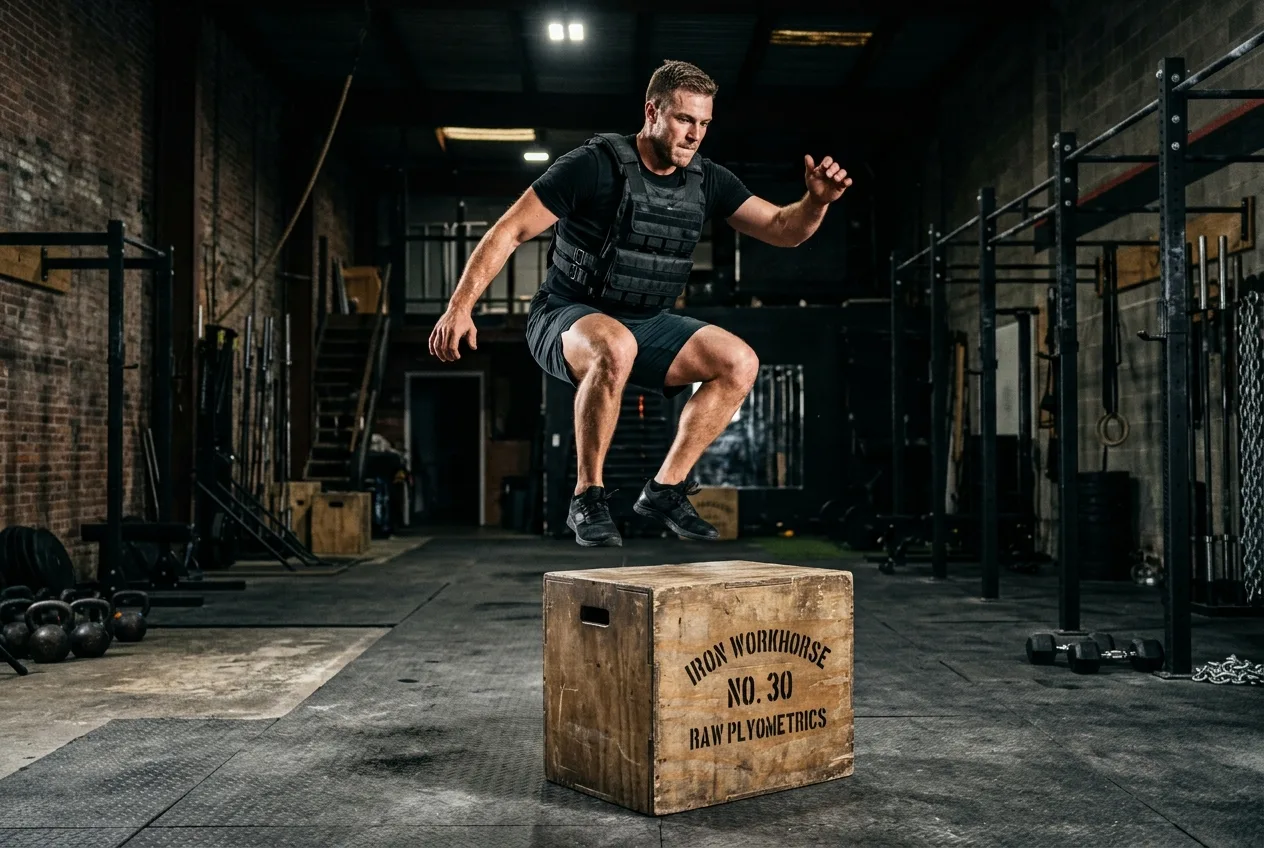
Box jumps train your legs to produce force at high velocities — the exact quality that separates explosive athletes from everyone else. The movement targets your glutes, quadriceps, calves, and core simultaneously while developing coordination and proprioceptive awareness.
Adding a weighted vest creates what researchers call "hypergravity training" — your body adapts to moving against greater resistance while maintaining movement specificity. The result is enhanced motor unit recruitment and improved power output.
Key Takeaways
- Research shows weighted vest training (5-10% body mass) significantly improves vertical jump height and explosive power
- Master bodyweight box jumps before adding vest resistance
- Start with 5-8% of your body weight and progress gradually
- Vest training creates a "post-activation potentiation" effect — you'll feel faster when the vest comes off
How a Weighted Vest Enhances Explosive Leg Training
When you perform weighted vest plyometric training, you're forcing your nervous system to recruit more muscle fibers and fire them more rapidly.
The mechanism works through several pathways:
- Additional load increases ground reaction forces your muscles must overcome during takeoff
- Your nervous system adapts by improving motor unit synchronization
- The stretch-shortening cycle becomes more efficient as tendons learn to store and release elastic energy under greater loads
A systematic review in Sports Biomechanics analyzing 11 studies found that longitudinal weighted vest training (5.6-18.9% body mass over 3-7 weeks) produced significant improvements in sprint velocity and acceleration times.
Weighted Vest Benefits for Plyometric Workouts
- Enhanced Core Activation — The evenly distributed weight forces your core to work harder to stabilize during takeoff and landing
- Progressive Overload Made Simple — Most quality vests allow incremental weight additions for systematic progression
- Improved Body Awareness — Additional load heightens proprioceptive feedback, forcing greater attention to movement quality
- Bone Density Benefits — Weight-bearing exercise under additional load stimulates bone remodeling
Technique: Box Jumps with a Weighted Vest
Before adding any external load, you must master the fundamental box jump pattern using bodyweight alone.
Pre-Vest Technique Checklist
- Can perform 3 sets of 8 bodyweight box jumps with consistently soft, quiet landings
- Knees stay aligned over toes during landing (no valgus collapse)
- Maintain upright torso position throughout the jump cycle
- Can step down under control rather than jumping backward
- No knee or joint pain during or after plyometric sessions
Sample Weighted Vest Plyometric Session
Warm-up: 5-10 minutes dynamic movement prepPerform 2x per week with 48-72 hours between sessions for optimal recovery.
Safety Tips for Weighted Vest Plyometric Training
- Always warm up thoroughly with 5-10 minutes of dynamic movement
- Use a stable, non-slip surface and ensure your box is secure
- Master bodyweight jumps first — add the vest only after technique is consistently solid
- Start conservatively with 5-8% body mass and progress slowly over weeks
- Stop immediately if you experience joint pain, dizziness, or form breakdown
Long-Term Results
Consistent training produces measurable improvements within 4-6 weeks. Improved neural drive, better intermuscular coordination, and enhanced reactive ability all contribute to more explosive, responsive athleticism.
Small, consistent progressions in vest weight, box height, or training volume compound over months into significant performance upgrades. The athlete who patiently builds their plyometric capacity with proper technique will outperform those who rush the process.