Dihexa Peptide: What 10 Million Times Stronger Than BDNF Actually Means
Dihexa showed 10 million times greater synaptogenic potency than BDNF in preclinical research. But one key study was retracted. Here's what the science actually says in 2026.
A synthetic peptide showed extraordinary synaptogenic activity in preclinical research. Then one of its key studies got retracted. Here's the full picture — the real science, the real controversy, and what it actually means for cognitive performance.
This article is for educational purposes only and does not constitute medical advice. Dihexa is an investigational research compound that has not been approved by the FDA for any human use. No completed human clinical trials exist. All evidence is preclinical. Always consult a qualified healthcare professional before considering any research compound.
Dihexa (N-hexanoic-Tyr-Ile-(6) aminohexanoic amide, developmental code PNB-0408) is a synthetic oligopeptide developed by Joseph W. Harding, Ph.D., and Jay Wright, Ph.D., at Washington State University. The researchers spent over 20 years studying angiotensin IV's effects on the hippocampus before designing Dihexa as a modified, stabilized derivative.
The compound emerged from a straightforward problem: angiotensin IV showed promising cognitive effects in animal models, but it degraded too quickly in the body and couldn't cross the blood-brain barrier. Dihexa was engineered to solve both issues. The result was a small molecule that was metabolically stable, could cross the blood-brain barrier, and — remarkably — remained active when taken orally.
Dihexa belongs to the renin-angiotensin system (RAS) family of compounds, which most people associate with blood pressure regulation. But researchers discovered that angiotensin IV also plays a role in cognitive signaling — specifically in the hippocampus, the brain region responsible for converting short-term memories into long-term ones.
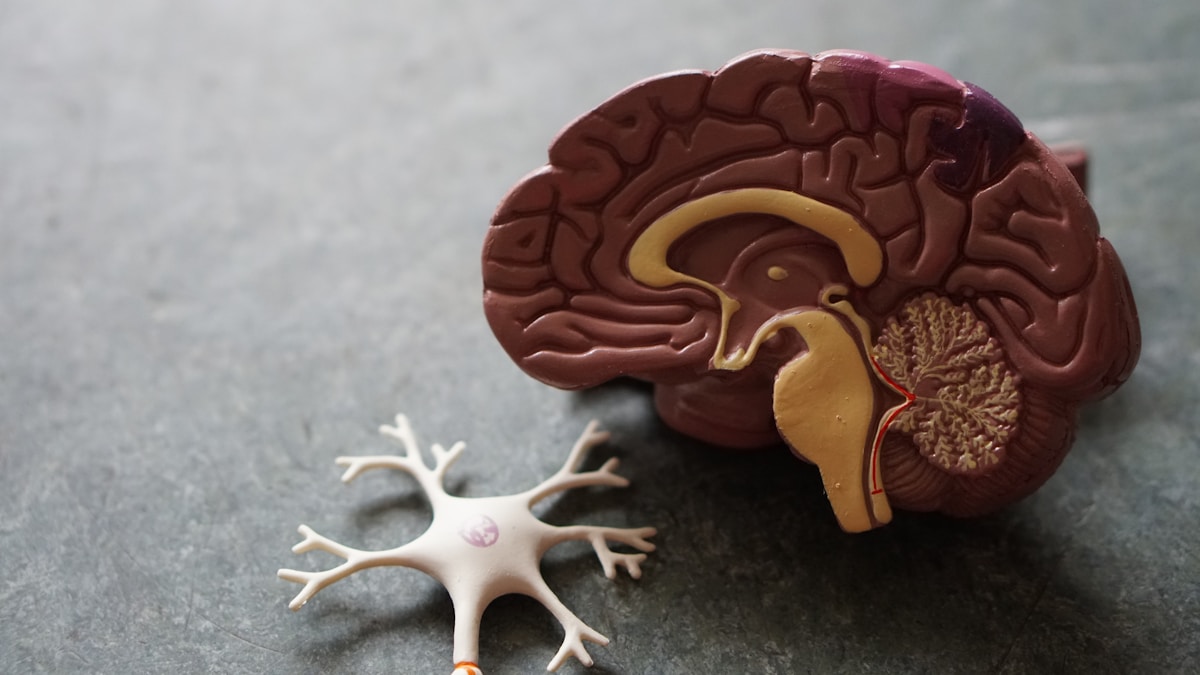
Dihexa is derived from angiotensin IV, a peptide involved in both blood pressure regulation and cognitive signaling. It was specifically engineered to cross the blood-brain barrier and promote synaptogenesis — the formation of new connections between neurons.
This is where Dihexa separates from every other nootropic or cognitive supplement on the market. Most brain-boosting compounds work by temporarily adjusting neurotransmitter levels — more dopamine, more acetylcholine, more serotonin. Dihexa does something fundamentally different: it promotes the physical construction of new neural connections.
Dihexa functions as a hepatocyte growth factor (HGF) mimetic. In plain terms, it mimics HGF — a protein your body naturally produces for cell growth and repair. When Dihexa binds to HGF, it enhances HGF's ability to activate the c-Met receptor on neurons. This triggers a cascade of intracellular signaling that results in actual structural changes in the brain.
This is physical rebuilding — not neurotransmitter boosting. Think of it as constructing new highways between brain regions rather than just adding more cars to existing roads.
The critical distinction here is that most peptides never reach the brain at all. They can't cross the blood-brain barrier. Dihexa does. And its purpose was never stimulation in the traditional nootropic sense — it was structural repair. Dihexa was designed to promote synaptogenesis, the formation of new functional connections between neurons, particularly in the hippocampus.
This mechanism has broader implications beyond cognitive enhancement. If you're an athlete focused on recovery and performance optimization through peptides, understanding how different compounds work at the cellular level helps you make smarter decisions about what's worth investigating versus what's marketing hype.
This is the headline that launches a thousand Instagram carousels. "Dihexa is 10 million times stronger than BDNF!" It sounds like science fiction. And while the data behind it is real, the way it's typically presented strips away critical context.
Here's what actually happened: In bench assays (laboratory tests using living nerve cells), researchers found that Dihexa induced synaptogenesis at picomolar concentrations. Brain-derived neurotrophic factor (BDNF), the body's primary synapse-building protein, requires vastly higher concentrations to produce comparable synapse formation. The ratio between those effective concentrations is approximately seven orders of magnitude — hence, "10 million times."
"10 million times more potent" refers to the concentration needed to induce synaptogenesis in cell cultures. It does NOT mean Dihexa is "10 million times better for your brain" or "10 million times more effective." Potency in bench assays ≠ clinical superiority. Many compounds are extremely potent in the lab but fail in living organisms.
As Harding himself stated: "We quickly found out that this molecule was absolutely, insanely active." But activity in a petri dish and efficacy in a human brain are separated by an enormous gap that only controlled clinical trials can bridge. As of February 2026, those trials don't exist.
This is a pattern you'll see across the peptide space. Compounds like MK-677 had impressive preclinical data before human research revealed a more nuanced picture. The science matters, but so does understanding what stage of research a compound is actually at.
There are three key studies you need to know about to understand Dihexa's evidence base. Two are from the original Washington State University team, and one is an independent confirmation from a Chinese research group. Here they are, with their current status as of 2026:
Title: "Evaluation of Metabolically Stabilized Angiotensin IV Analogs as Procognitive/Antidementia Agents"
What it found: Dihexa reversed cognitive deficits in scopolamine-treated rats (a model that mimics early-to-mid Alzheimer's symptoms). The drug was effective whether given directly into the brain, by injection, or orally. Dihexa induced spinogenesis and synaptogenesis at picomolar concentrations in hippocampal cultures — the "seven orders of magnitude more potent than BDNF" finding. Aged rats treated with Dihexa performed cognitive tasks like young rats.
Status: Received an expression of concern (2021) due to image integrity questions involving co-author Leen Kawas. Not fully retracted as of 2026.
Title: "The Procognitive and Synaptogenic Effects of Angiotensin IV-Derived Peptides Are Dependent on Activation of the Hepatocyte Growth Factor/c-Met System"
What it found: Demonstrated that Dihexa's cognitive effects work through the HGF/c-Met pathway. Showed Dihexa binds HGF with high affinity and induces c-Met phosphorylation, hippocampal spinogenesis, and synaptogenesis. Blocking HGF with an antagonist eliminated Dihexa's cognitive benefits in Morris water maze testing.
Status: Retracted in April 2025 (J Pharmacol Exp Ther. 2025;392(4):103567) following investigation into image manipulation by Leen Kawas, who served as CEO of Athira Pharma, a biotech that commercialized Dihexa derivatives.
Title: "AngIV-Analog Dihexa Rescues Cognitive Impairment and Recovers Memory in the APP/PS1 Mouse via the PI3K/AKT Signaling Pathway"
What it found: Using APP/PS1 transgenic Alzheimer's mice (a different and arguably more relevant model than scopolamine-treated rats), Dihexa restored spatial learning and cognitive function in Morris water maze testing. Dihexa increased neuronal cell count and synaptophysin expression, reduced neuroinflammatory markers (IL-1β, TNF-α), increased anti-inflammatory IL-10, and decreased astrocyte and microglia activation. The mechanism was linked to the AngIV/PI3K/AKT axis, partially confirming — through a different pathway — the original WSU findings.
Status: Published and in good standing. This is the strongest independent evidence for Dihexa's cognitive effects.
| Study | Year | Model | Key Finding | Status |
|---|---|---|---|---|
| McCoy et al. | 2013 | Scopolamine rats + aged rats | Oral bioavailability; 10⁷x BDNF potency; cognitive restoration | ⚠️ Concern |
| Benoist et al. | 2014 | Hippocampal cultures + rats | HGF/c-Met mechanism; spinogenesis; HGF antagonist blocks effects | ❌ Retracted |
| Chai et al. | 2021 | APP/PS1 transgenic mice | Cognitive rescue; anti-neuroinflammation; PI3K/AKT pathway | ✓ Active |
This is the part most Dihexa content creators conveniently skip. In 2021, Retraction Watch reported that four papers from the Harding/Wright lab at WSU received expressions of concern. The investigation centered on Leen Kawas, a former PhD student at WSU who became CEO of Athira Pharma — a Seattle-based biotech that developed ATH-1017, a prodrug of Dihexa, as their lead clinical candidate for Alzheimer's treatment.
The special committee investigation found that Kawas altered images in several papers. She was forced to take a leave of absence from Athira. The most significant impact was on the 2014 Benoist et al. paper — the study that established Dihexa's HGF/c-Met mechanism — which was formally retracted in April 2025.
The retraction does not mean Dihexa doesn't work. It means the specific study establishing the HGF/c-Met mechanism contained manipulated data and can no longer be relied upon. The 2021 independent Chinese study used a different pathway analysis (PI3K/AKT) and confirmed cognitive improvements. The original 2013 synthesis paper has an expression of concern but hasn't been retracted. The science is compromised, not necessarily wrong — but the evidence base is weaker than the peptide community typically presents.
This matters because intellectual honesty is a core part of evaluating any peptide or research compound. If you've read our coverage of why mixing peptides can sabotage your results, you know we don't sugarcoat the science. The same standard applies here.
The 2021 Chinese study deserves special attention because it used APP/PS1 transgenic mice, a genetically engineered model that develops Alzheimer's-like pathology naturally, unlike chemically induced models. Here's what Dihexa accomplished in these animals over three months of oral administration:
| Outcome Measured | Result |
|---|---|
| Spatial learning (Morris water maze) | Escape latency significantly reduced — cognitive function restored |
| Hippocampal synapse density | Increased synaptophysin (SYP) protein expression |
| Neuronal cell count | Increased (Nissl staining) |
| Pro-inflammatory cytokines (IL-1β, TNF-α) | Markedly reduced |
| Anti-inflammatory cytokine (IL-10) | Increased |
| Astrocyte activation (GFAP) | Decreased |
| Microglia activation (Iba-1) | Decreased |
| Brain AngIV levels | Restored to wild-type levels |
These are meaningful results for Alzheimer's research. The anti-inflammatory effect is particularly interesting because neuroinflammation is increasingly recognized as a driver of neurodegenerative disease, not just a symptom. But these are still mouse results — the gap between mouse cognition and human cognition is vast, and many compounds that look miraculous in mice fail in human trials.
For context on how brain health connects to athletic performance and overall optimization, our guide on core sleep covers why neural recovery during deep sleep is one of the most powerful (and free) cognitive enhancers available.
Temporarily boost neurotransmitters (dopamine, acetylcholine, serotonin). Effects last hours. No structural changes. Think: turning up the volume on existing circuits.
Promotes formation of new synapses, dendritic spines, and neurons. Potential for lasting structural changes. Think: building new circuits entirely.
This distinction matters because it changes what you're optimizing for. Traditional nootropics provide acute cognitive enhancement — better focus today, clearer thinking this afternoon. Dihexa's proposed mechanism suggests longer-term structural improvements: denser neural networks, stronger hippocampal connectivity, improved communication between brain regions involved in learning, memory, and cognitive resilience.
The compounds most people in the peptide therapy space are familiar with — BPC-157 for gut and tissue healing, AOD 9604 for fat loss, the Wolverine Complex for recovery — work through completely different pathways. Dihexa occupies a unique category: cognitive structural repair.
Here's where the NinjAthlete approach diverges from the typical peptide hype account. Dihexa's mechanism — activating the HGF/c-Met system — has implications that go beyond the brain. And they deserve serious consideration.
c-Met is a proto-oncogene. When dysregulated, it is associated with cancer cell growth, survival, and metastasis in multiple tumor types. Stimulating c-Met activity systemically — as Dihexa does — raises theoretical oncological concerns that have not been studied in long-term research. This does not mean Dihexa causes cancer. It means we don't know, and the mechanism warrants extreme caution.
Additional risk factors to understand:
| Risk Category | Details |
|---|---|
| No human safety data | Zero completed human clinical trials. Full side effect profile unknown. |
| Off-target effects | HGF/c-Met is active throughout the body, not just the brain. Systemic effects unstudied. |
| Long-term unknowns | No data exists on effects of chronic Dihexa use in any species beyond 3-month mouse studies. |
| Drug interactions | Potential interactions with other compounds entirely unknown. |
| Quality control | As an unregulated research compound, purity and dosing vary dramatically between suppliers. |
| Retracted research base | The key mechanism study has been retracted, weakening the evidence foundation. |
This doesn't mean Dihexa should be dismissed. But it does mean the compound sits at the edge of peptide science — powerful mechanisms paired with equally powerful responsibility. If you're optimizing brain health, evidence-based approaches like prioritizing quality sleep, consistent exercise, and proper nutrition remain the foundation before exploring any investigational compound.
Whether you're looking at Dihexa or any other peptide, these five steps will help you cut through marketing noise and evaluate the actual evidence:
Step 1: Check Study Status. Search PubMed for the PMID. Look for retraction notices or expressions of concern. A retracted study isn't evidence — it's a cautionary tale.
Step 2: Identify Study Type. In-vitro (cells in a dish), in-vivo animal models, or human clinical trials? Each carries different weight. As of 2026, all Dihexa evidence is preclinical.
Step 3: Evaluate the Animal Model. Scopolamine-treated rats model chemically-induced impairment. APP/PS1 transgenic mice model genetic Alzheimer's pathology. Aged rats model natural decline. Each has different relevance to human cognition.
Step 4: Assess the Mechanism. Dihexa activates HGF/c-Met — a pathway with both neuroregenerative and potential oncogenic implications. Understanding the dual nature of this pathway is essential.
Step 5: Consult a Medical Professional. A physician experienced in peptide therapy can evaluate whether the risk/benefit profile makes sense for your specific situation.
Dihexa (N-hexanoic-Tyr-Ile-(6) aminohexanoic amide) is a synthetic oligopeptide developed at Washington State University. Derived from angiotensin IV, it functions as a hepatocyte growth factor (HGF) mimetic that binds to the c-Met receptor. This triggers intracellular signaling cascades (PI3K/AKT/mTOR) that promote synaptogenesis (new synapses), neurogenesis (new neurons), and spinogenesis (new dendritic spines) — primarily in the hippocampus, the brain's memory center.
The "10 million times" figure refers to potency at inducing synaptogenesis in laboratory bench assays using living nerve cells — not overall brain-boosting capability. Dihexa was active at picomolar concentrations, meaning far less compound was needed compared to BDNF to produce comparable synapse formation in cell cultures. This measures concentration efficiency, not clinical superiority. Many compounds show extreme potency in vitro but don't translate proportionally to living organisms.
Yes, one critical study has been retracted. The 2014 Benoist et al. paper establishing the HGF/c-Met mechanism was formally retracted in April 2025 due to image manipulation concerns involving co-author Leen Kawas. The original 2013 McCoy et al. synthesis paper received an expression of concern but remains published. A 2021 independent Chinese study (Chai et al.) confirmed cognitive improvements through a different analytical pathway and remains in good standing.
No. Dihexa is not FDA-approved for any human use and remains a research compound. No completed human clinical trials exist as of February 2026. All published evidence comes from in-vitro cell studies and rodent models. It should only be discussed in a research or educational context.
The full side effect profile is unknown because no human trials have been completed. Key theoretical concerns include: activation of c-Met (a proto-oncogene linked to cancer cell growth in dysregulated states), unknown systemic effects from HGF pathway stimulation beyond the brain, no long-term safety data beyond 3-month animal studies, unknown drug interactions, and inconsistent quality control from unregulated suppliers. These are theoretical risks, but they are significant given the compound's powerful mechanism.
Most nootropics temporarily adjust neurotransmitter levels — more dopamine for focus, more acetylcholine for memory. Their effects last hours and don't change brain structure. Dihexa's proposed mechanism is fundamentally different: it promotes the physical construction of new synaptic connections and dendritic spines. This represents structural rebuilding of neural architecture rather than temporary chemical modulation.
In preclinical animal studies, yes. The original McCoy et al. (2013) research demonstrated that Dihexa was effective when given orally, via injection, and directly into the brain. Its oral bioavailability and ability to cross the blood-brain barrier were major breakthroughs that differentiated it from previous angiotensin IV analogs. However, optimal human dosing and bioavailability have not been established through clinical trials.
Dihexa was originally developed as a potential Alzheimer's treatment. It targets the core pathology of dementia: loss of synaptic connections and neuronal death in the hippocampus. In APP/PS1 transgenic Alzheimer's mice, Dihexa restored spatial learning, increased hippocampal synapse density, reduced neuroinflammation, and increased anti-inflammatory markers over three months of treatment. Athira Pharma developed ATH-1017, a Dihexa prodrug, for clinical trials, but those efforts were complicated by the image manipulation controversy.
Join the NinjAthlete newsletter for evidence-based peptide research, performance protocols, and cognitive optimization strategies — no broscience, no hype.
Subscribe to the Newsletter →
1. McCoy, A.T., Benoist, C.C., Wright, J.W., et al. (2013). Evaluation of Metabolically Stabilized Angiotensin IV Analogs as Procognitive/Antidementia Agents. Journal of Pharmacology and Experimental Therapeutics, 344(1), 141-154. PMC3533412 [Expression of Concern]
2. Benoist, C.C., Kawas, L.H., Zhu, M., et al. (2014). The Procognitive and Synaptogenic Effects of Angiotensin IV-Derived Peptides Are Dependent on Activation of the Hepatocyte Growth Factor/c-Met System. Journal of Pharmacology and Experimental Therapeutics, 351(2), 390-402. PMID: 25187433 [RETRACTED April 2025]
3. Chai, S.Y., et al. (2021). AngIV-Analog Dihexa Rescues Cognitive Impairment and Recovers Memory in the APP/PS1 Mouse via the PI3K/AKT Signaling Pathway. Brain Sciences, 11(11), 1487. PMC8615599
4. Washington State University Insider (2012). Prospective Alzheimer's Drug Builds New Brain Cell Connections. WSU News Archive
5. Retraction Watch (2021). Four Papers by Athira CEO Earn Expressions of Concern. Retraction Watch
Your cart is currently empty.
Start Shopping