AOD-9604: The Fat-Loss Peptide — Dosage, Benefits & Results
What AOD-9604 is, how the fragment 176-191 peptide works for fat loss, commonly reported dosing (250-300 mcg/day), realistic results, side effects and legal status - with sources.
8 min readMarch 6, 2026
NA
NinjAthlete Team| Updated: October 12, 2026
Medical Disclaimer: This article is for educational and informational purposes only. It is not intended as medical advice, diagnosis, or treatment.
Always consult a qualified healthcare professional before starting any peptide protocol, supplement regimen, or training program. Sources are cited with DOI/PubMed links where available. Read our editorial policy
The short answer
AOD-9604 is a modified fragment of human growth hormone (the amino-acid 176–191 tail) developed to trigger fat breakdown without growth hormone's effects on blood sugar or growth. In lab and animal studies it stimulates lipolysis and blocks new fat formation; the largest human trial found it safe but not significantly better than placebo for weight loss. It's not FDA-approved and is sold as a research compound. Commonly reported protocols use 250–300 mcg/day subcutaneously, in the morning fasted, run for 8–12 weeks alongside diet and training.
Key takeaways
What it is: a synthetic fragment (176–191) of the growth-hormone molecule, aka "Fragment 176-191."
Common dose: 250–300 mcg/day subcutaneously, morning/fasted; human trials tested single doses up to 1 mg.
Realistic results: a metabolic support tool, not a rapid weight-loss drug like GLP-1s. Works with a deficit, not instead of one.
Not anabolic: it doesn't raise IGF-1 or blood sugar the way full GH or MK-677 do.
Status: not FDA-approved; on the WADA prohibited list. Not medical advice.
What is AOD-9604?
AOD-9604 (Advanced Obesity Drug 9604) is a synthetic peptide made from the last 15 amino acids of human growth hormone — the 176–191 region, which is why it's also sold as "Fragment 176-191." Researchers isolated this tail because it appears to carry growth hormone's fat-burning signal while leaving out the parts responsible for growth and rises in blood sugar. It was originally developed by Metabolic Pharmaceuticals as a potential anti-obesity drug.
How does AOD-9604 work?
AOD-9604's proposed mechanism has two parts, both drawn largely from preclinical research:
Stimulates lipolysis — it encourages fat cells to release and break down stored fat for energy.
Inhibits lipogenesis — it appears to slow the creation of new fat.
Crucially, it's designed to do this without binding the growth-hormone receptor the way full GH does, so in studies it didn't produce the insulin resistance or IGF-1 spikes associated with growth hormone. That's the whole selling point: fat-metabolism signaling without the hormonal baggage. The important caveat is that most of this evidence is from cell and animal models, and the human data is more modest (see results, below).
AOD-9604 dosage
Commonly reported protocols use 250–300 mcg per day, injected subcutaneously, typically first thing in the morning on an empty stomach to align with fasted fat metabolism. In the clinical program, single doses up to 1 mg were tested and well-tolerated — but higher doses didn't improve outcomes, so more isn't better here.
Protocol
Commonly reported dose
Route
Timing
Typical cycle
Standard fat loss
250–300 mcg/day
Subcutaneous
AM, fasted
8–12 weeks
Lower-dose / sensitive
150–250 mcg/day
Subcutaneous
AM, fasted
8–12 weeks
5-days-on / 2-off variant
250–300 mcg/day
Subcutaneous
AM, fasted
8–12 weeks
Ranges reported in peptide research and clinical practice. AOD-9604 is not FDA-approved for weight loss — educational only, not medical advice.
Reported and studied benefits center on body composition and metabolism:
Fat metabolism support — the primary reason people use it, especially for stubborn areas, alongside a calorie deficit.
No appetite crash or blood-sugar swings — unlike GLP-1 drugs, it doesn't work by suppressing appetite.
Explored for cartilage/joint repair — some research has looked at AOD-9604 for joint and connective-tissue support, though this is secondary and less established.
AOD-9604 results: what's realistic?
Here's the honest version. In preclinical studies AOD-9604 consistently promoted fat breakdown. But the largest human trial — a 12-week randomized study by Metabolic Pharmaceuticals — found it safe and well-tolerated but not significantly more effective than placebo for weight loss. So AOD-9604 is best framed as a metabolic support compound that people stack on top of proper nutrition and training, not a standalone fat-loss injection. Most users who report results give it 6–12 weeks combined with a deficit — not days.
AOD-9604 vs Semaglutide vs Fragment 176-191
AOD-9604
Semaglutide (GLP-1)
Fragment 176-191
Mechanism
Stimulates lipolysis
Appetite suppression + insulin
Same GH-fragment family
Appetite effect
Minimal
Strong
Minimal
FDA status
Not approved
Approved (Wegovy/Ozempic)
Not approved
Typical weight loss
Modest
Substantial
Modest
Best for
Targeted fat-metabolism support
Significant weight loss
Fat-metabolism support
Note: "AOD-9604" and "Fragment 176-191" are closely related and often used interchangeably; product labeling and purity can differ by source.
AOD-9604 side effects & safety
Across trials AOD-9604 was generally well-tolerated. Reported effects are usually mild:
Injection-site redness or irritation
Occasional headache or mild nausea
No significant effect on blood sugar or IGF-1 at studied doses
As with any research-grade peptide, product purity varies and long-term human safety data is limited.
Is AOD-9604 legal?
AOD-9604 is not approved by the FDA as a weight-loss drug and is sold "for research purposes only." It is also on the WADA prohibited list, so it's banned for tested athletes. Legality of possession and use varies by country. Approach it with medical guidance and awareness of the rules that apply to you.
Medical disclaimer. This article is educational and is not medical advice. AOD-9604 is not FDA-approved for human use; dosages described are ranges reported in research and community practice, not recommendations. Consult a licensed healthcare provider before use. AOD-9604 is prohibited by WADA for competitive athletes.
Frequently asked questions
Does AOD-9604 actually work for fat loss?
In lab and animal studies it reliably stimulates fat breakdown. Human evidence is weaker — the largest trial found it safe but not significantly better than placebo. Most real-world use pairs it with a calorie deficit and training rather than treating it as a standalone fat-loss drug.
What is the maximum safe daily dose of AOD-9604?
Common protocols cap around 300 mcg/day subcutaneously. Trials tested single doses up to 1 mg without serious adverse events, but higher doses didn't improve results. Because it's unregulated, dosing should be guided by a licensed provider.
Is AOD-9604 a steroid or growth hormone?
No. It's a small fragment of the growth-hormone molecule that keeps the fat-metabolism signal while dropping the growth and blood-sugar effects. It's not anabolic and doesn't raise IGF-1 like full GH or MK-677.
How long until you see results from AOD-9604?
Typically 6–12 weeks when combined with diet and training — it's a metabolic-support compound, not a rapid weight-loss injection like GLP-1 drugs.
Is AOD-9604 the same as Fragment 176-191?
They're closely related — AOD-9604 is based on the 176–191 fragment of growth hormone and the terms are often used interchangeably. Exact formulation and purity can differ by manufacturer.
Is AOD-9604 legal and is it banned in sport?
It's not FDA-approved and is sold for research only. It is also banned by WADA, so it's prohibited for tested athletes.
Research-Grade Peptides
Discount auto-applied
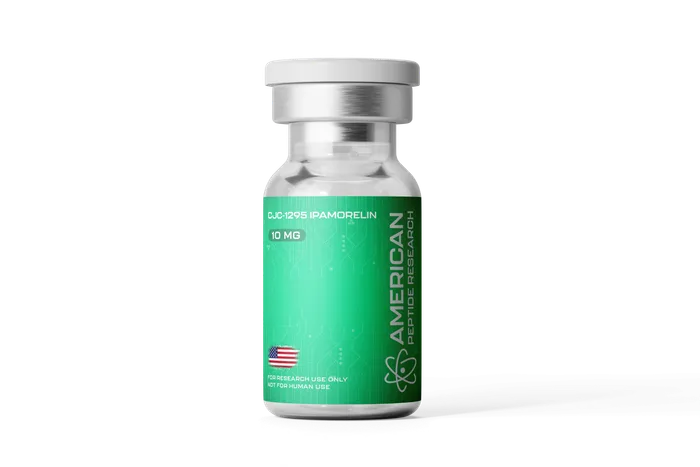
Third-party tested, made in the USA by American Peptide Research. Our link applies your discount automatically.