Sleds: The Great Equalizer
Stations 2 (Sled Push) and 3 (Sled Pull) come back-to-back in HYROX, creating one of the most challenging segments of the race. Strong athletes can gain significant time here; unprepared athletes can lose minutes.
Sled Push (50m)
Weight Standards:- Pro Men: 152 kg / 335 lbs
- Pro Women: 102 kg / 225 lbs
- Open Men: 102 kg / 225 lbs
- Open Women: 78 kg / 172 lbs
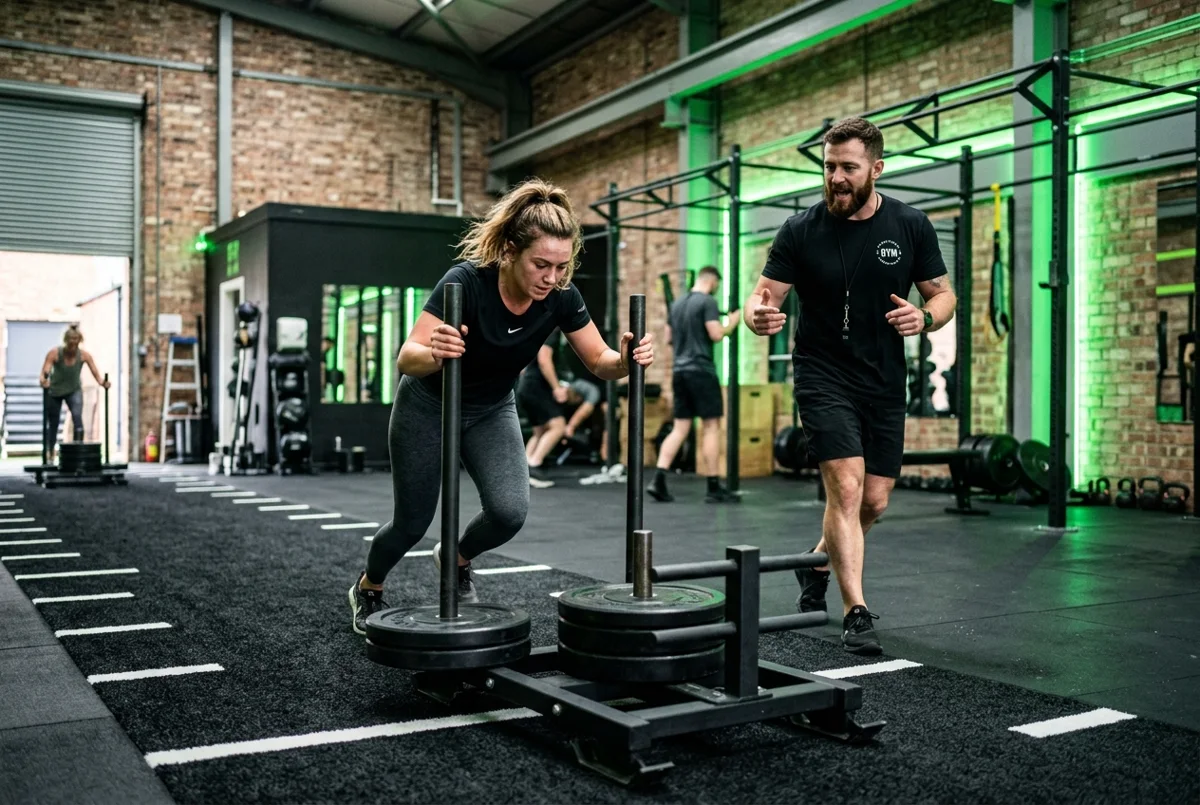
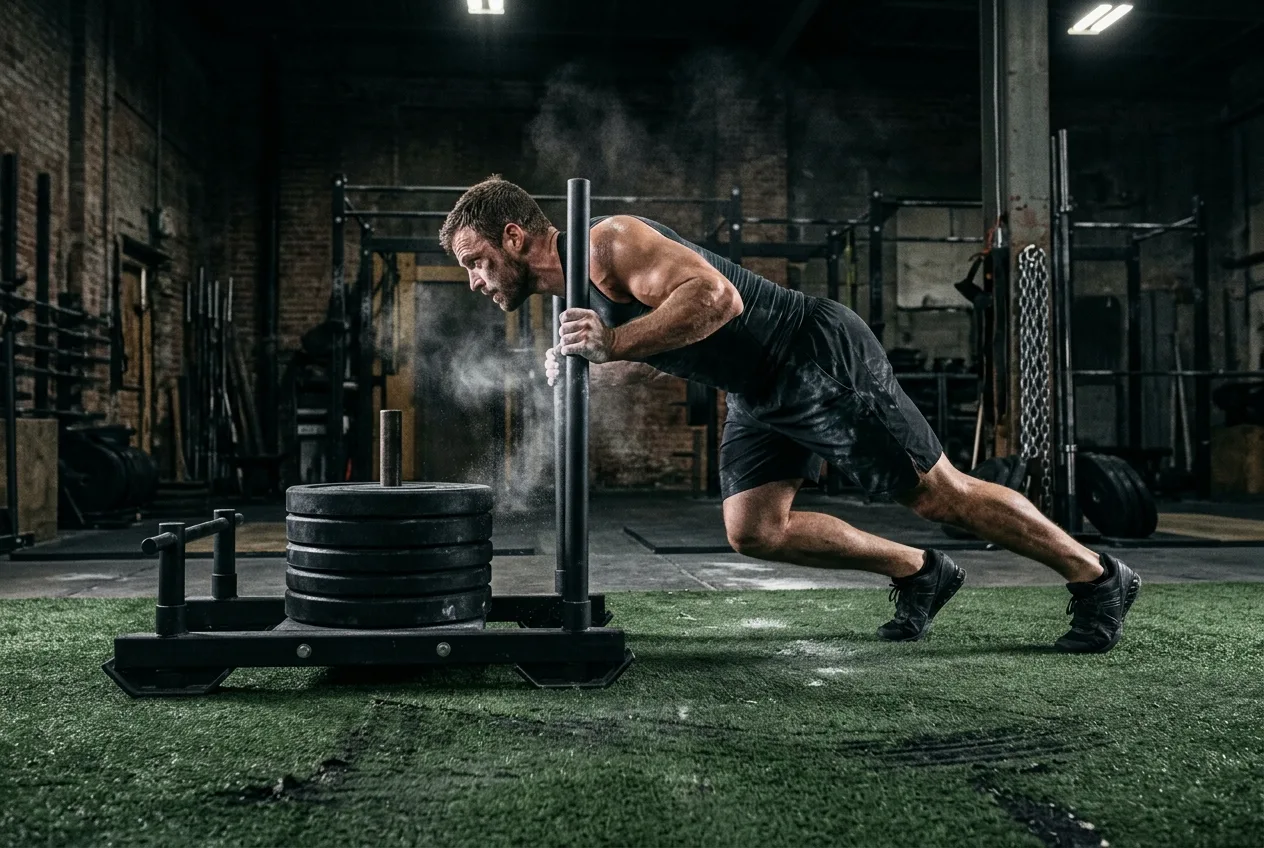
Push Technique Fundamentals
Body Position:- Low center of gravity (hips below shoulders)
- Arms fully extended against the sled
- Head down, eyes looking at the ground 2-3 feet ahead
- Core braced tight
- Short, quick steps (not long strides)
- Stay on balls of feet for power
- Drive through the ground, not just forward
- Imagine driving your feet through the floor
- Exhale forcefully on each push
- Maintain consistent rhythm
- Don't hold your breath (causes early fatigue)
Common Push Mistakes
Standing too upright: You lose leverage and make your arms do all the work. Fix: Get LOW - your chest should be almost parallel to the ground. Long strides: Wastes energy and reduces power output. Fix: Think quick, choppy steps like a sprinter starting a race. Pushing with arms: Your legs are 3x stronger than your arms. Fix: Lock your arms and drive through your legs. Going too fast initially: Burns out before halfway. Fix: Controlled start, build power through the distance.Sled Pull (50m)
The Setup:- Face the sled
- Rope runs through hands (don't grip too tight)
- Sit back with weight in heels
- Knees bent, thighs nearly parallel to ground
Pull Technique
Hand-Over-Hand Method: Step 1: Grab rope with both hands, sit back deep into your heels Step 2: Pull rope toward your chest using your back, not just arms Step 3: Release with lead hand, reach forward, grab new section Step 4: Repeat with consistent rhythm - don't rush Body Position Keys:- Heels dug into the ground (create an anchor)
- Core braced and engaged
- Shoulders back, chest up
- Use your bodyweight as leverage
- The lower you sit, the more power you generate
Pull Tips for Success
- Find a rhythm and stick with it
- Don't rush - steady beats fast
- Use legs and back to anchor, arms to pull
- Watch elite athletes for inspiration
- Practice pulling heavy loads in training
Training Without a Sled
Not everyone has sled access. Here are effective alternatives:
For Push Strength:- Prowler alternatives: pushing a weighted wheelbarrow
- Low squat holds with hip drive isometrics
- Wall sits with pushing motion against a wall
- Heavy leg press (focus on drive phase)
- Car pushes in an empty parking lot
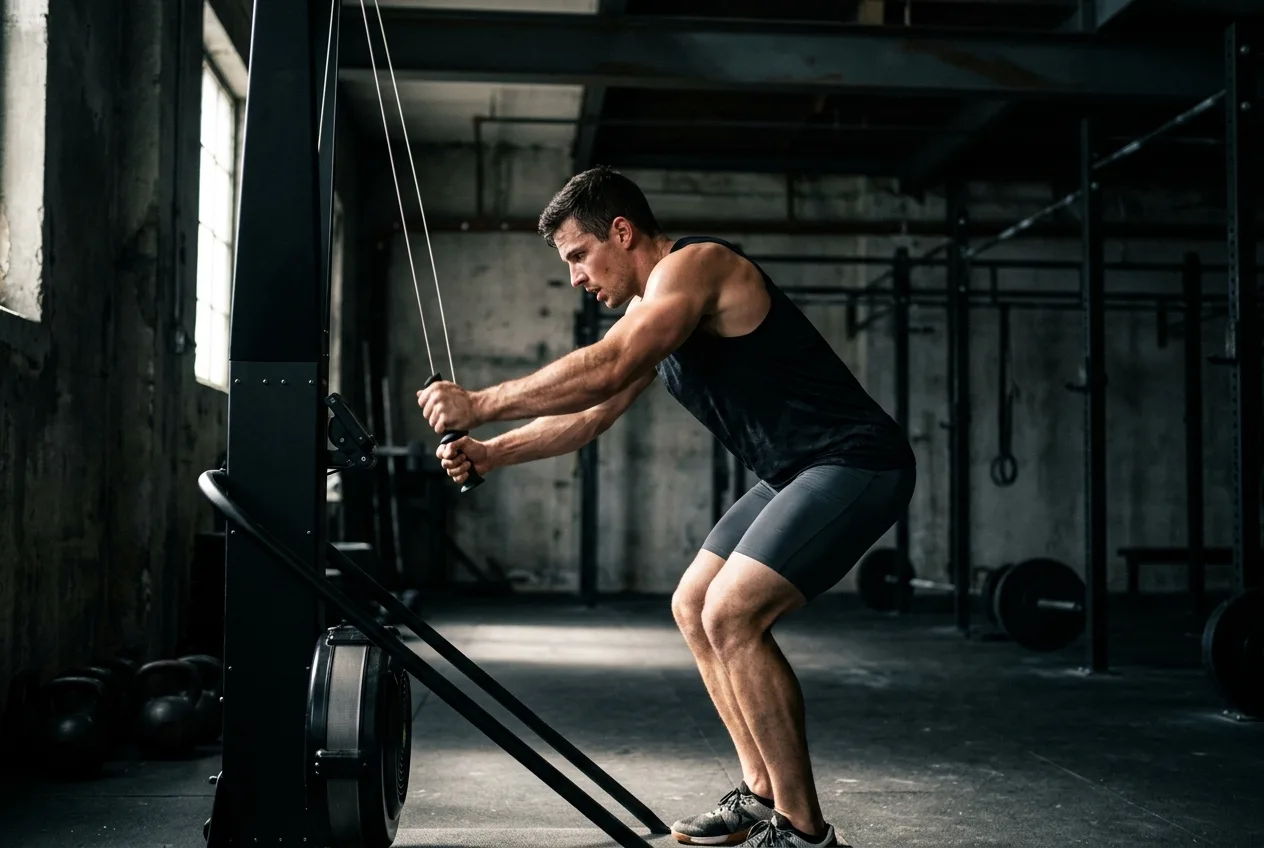
- Seated cable rows (heavy, focusing on lat engagement)
- Rope climbs (if available)
- Band pulls from seated position
- Heavy dumbbell rows
- Farmer walks for grip endurance
Race Strategy: The Back-to-Back
Stations 2 and 3 come consecutively with a 1K run between them. Strategy matters:
During the Push:- Don't empty the tank completely
- You need energy for the run AND the pull
- Sustainable pace > maximum effort
- Stand up slowly (avoid head rush)
- Take 2-3 deep breaths
- Start the run at 70% effort
- Use the run to recover mentally
- Get set up efficiently (don't waste time)
- Take 2-3 breaths before starting
- Commit to your rhythm immediately
- Upper body takes over more here
- Grip becomes the limiting factor
- Pace will naturally be slower than push
- Stay patient - rushing causes rope tangles
Weekly Training Integration
If you have sled access:- 6-8 x 25m Push (progressive weight)
- 4-6 x 25m Pull
- Focus on technique over speed
- 2-3 sessions per week
- Monday: Heavy squats and leg press for push power
- Wednesday: Rows, deadlifts, and rope work for pull strength
- Friday: Core work and grip training
- Supplement with whatever alternatives you have
Mental Approach
The sleds are where mental toughness shows. Remember:
- Break 50m into mini-goals (5-10m chunks)
- Focus on breathing through the burn
- Embrace the pain - it's temporary
- Everyone suffers here - you're not alone
- This is where races are won and lost
"The sled doesn't care how you feel. Push it anyway."
Master the sleds, and you'll gain significant time on the competition. Most athletes fear them - you'll embrace them.