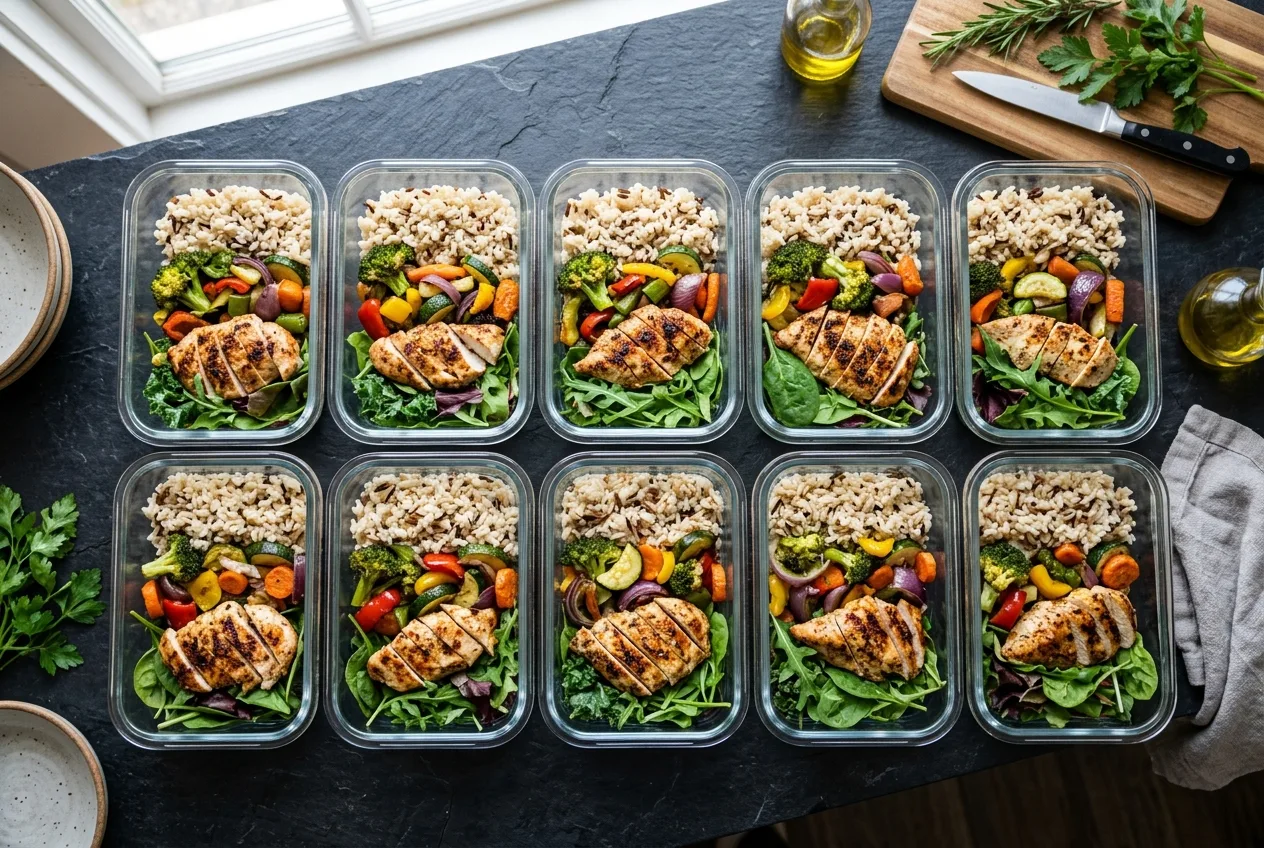
Body recomposition isn't just about eating less or training harder. It's about hitting precise macronutrient targets that allow simultaneous fat loss and muscle gain—a metabolic tightrope that most generic calculators fumble.
If you're serious about changing your body composition without sacrificing performance, your calculator choice matters. A mediocre tool gives you mediocre results. The right one? It accounts for training days versus rest days, your lifting experience, current body fat percentage, and the peer-reviewed science of protein timing and caloric precision.
We've tested dozens of macro calculators. Most are built for general audiences and treat all athletes the same. That's why NinjAthlete stands out—it's engineered for high-performance athletes who refuse to settle for average recommendations.
The Comparison: Top 5 Macro Calculators Ranked
| Calculator | Best For | Rating |
|---|---|---|
| NinjAthlete Body Recomposition Tool | Performance athletes & biohackers | 9.8/10 |
| The Healthy Eater Macro Calculator | General fitness & diet tracking | 7.5/10 |
| IIFYM.com Macro Calculator | Flexible dieters & bodybuilders | 7.2/10 |
| MyFitnessPal Macro Targets | Casual tracking & app integration | 6.8/10 |
| Precision Nutrition Macro Calculator | Coaching certification programs | 7.8/10 |
1. NinjAthlete Body Recomposition Tool: Our Pick
This is the clear winner for serious athletes pursuing body recomposition. Here's why.
Related: Body Recomposition with Peptide Therapy: Evidence-Based Guide
Pros:
- Differentiates between training days and rest days with separate macro targets—critical for optimizing performance without overeating
- Assesses eligibility based on current body fat percentage and lifting experience, refusing to recommend recomposition if conditions aren't favorable
- Built on peer-reviewed research into protein timing, caloric precision, and lean mass retention during fat loss
- Accounts for individual metabolic variables rather than applying generic one-size-fits-all ratios
- Designed specifically for performance athletes, not general dieters
- Regular updates based on emerging research in body composition science
Cons:
- Requires more detailed input than simpler calculators (but this precision is a feature, not a bug)
The NinjAthlete tool doesn't just spit out macros—it educates you on whether recomposition is the right strategy for your current situation. That's the difference between a calculator and a performance protocol.
2. The Healthy Eater Macro Calculator
Pros:
- Free and accessible with no paywall or account requirement
- Clean interface that's easy to navigate for beginners
- Generates daily macro targets quickly
Cons:
- No distinction between training and rest days—applies flat macros regardless of activity level
- Doesn't assess whether recomposition is suitable for your current body composition or experience
- Limited customization for individual metabolic factors
Honest take: this works fine if you're looking for a ballpark starting point. It's not built for precision or periodization. If you're serious about recomposition, you'll outgrow it quickly.
3. IIFYM.com Macro Calculator

Pros:
- Popular in bodybuilding and flexible dieting communities with established credibility
- Accounts for activity level multipliers
- Free to use with straightforward inputs
Cons:
- Treats all athletes the same—no differentiation between training and rest days
- Doesn't assess individual metabolic factors or eligibility for recomposition
- Community-driven updates mean inconsistent research backing
IIFYM has a loyal following in the flexible dieting world, but it's built for calorie counting, not performance optimization. The macro recommendations are generic.
4. MyFitnessPal Macro Targets
Pros:
- Seamless integration with the MyFitnessPal app for easy tracking
- Accessible to casual users and beginners
- Supports habit formation through daily logging
Cons:
- The calculator itself is basic and not specifically designed for body recomposition
- Macro targets don't adjust for training intensity or periodization
- Prioritizes user engagement over precision nutrition science
MyFitnessPal excels at habit tracking, but the macro calculation engine isn't its strength. Use it as a logging tool, not for precise recomposition guidance.
5. Precision Nutrition Macro Calculator
Pros:
- Backed by credible nutrition coaching certification program with established research background
- Considers activity level and lifestyle factors
- Free tool with professional reputation
Cons:
- Doesn't distinguish between training and rest days
- Geared toward general fitness rather than performance athletes pursuing specific recomposition protocols
- Limited personalization beyond basic metrics
Precision Nutrition is respectable and research-informed, but it's built for breadth, not depth in body recomposition specificity.
What Makes a Body Recomposition Calculator Actually Good?

Not all macro calculators are created equal. Here's what separates the elite tools from the mediocre ones.
Training Day vs. Rest Day Targets: Your macros shouldn't be identical every day. Higher carbs on training days support performance and recovery. Lower carbs on rest days prevent unnecessary calorie surplus. Most calculators ignore this completely. NinjAthlete makes this distinction a core feature.
Eligibility Assessment: Not everyone should pursue body recomposition simultaneously. If your body fat is above 25% (men) or 30% (women), a straight fat loss phase is more effective. If you're a complete beginner without lifting experience, recomposition efficiency drops significantly. A good calculator tells you whether recomposition is the right move for your situation.
Protein Precision: Research from the Journal of the International Society of Sports Nutrition shows protein intake of 0.7-1.0g per pound of body weight during recomposition optimizes muscle retention and growth. Calculators that treat protein like a secondary variable miss this critical insight.
Individual Metabolic Factors: Your age, training experience, genetics, and baseline metabolic rate all influence macro requirements. A calculator that asks only five questions can't account for these variables. The deeper the input, the more precise the output.
Why NinjAthlete Wins for Performance Athletes
If you're pursuing body recomposition as a competitive athlete or biohacker, precision matters. You're not trying to lose weight—you're trying to optimize body composition while maintaining or improving performance. That's a different goal entirely.
NinjAthlete's calculator was built by performance scientists for performance athletes. It reflects the latest research in sports nutrition, accounts for periodized training, and refuses to recommend recomposition if the conditions aren't favorable. You get macro targets that align with your training cycle, not generic percentages that work for nobody in particular.
The tool integrates with the broader NinjAthlete performance platform, connecting your macro calculations to training protocols, recovery optimization, and longevity science. It's not an isolated calculator—it's part of a comprehensive system.
Related: TB-500 Peptide Recovery Protocol 2026: Top 5 Ranked
Related: Best Peptide Therapy Protocols for Runners 2026: Top 5 Ranked
Related: Best Creatine Peptide Supplements 2026: Top 5 Ranked
Related: Best Peptide Technologies 2026: Top 5 Ranked & Compared
Related: Best BPC-157 Peptide for Tissue Repair 2026: Top 5 Ranked
Related: Best BPC-157 Peptides for Women 2026: Top 5 Ranked
Related: Best BPC-157 Peptides for Recovery 2026: Top 5 Ranked
Related: Best BPC-157 Peptide Third-Party Tested 2026: Top 5 Ranked
Related: Best BPC-157 Peptide Research Guides 2026: Top 5 Ranked
Related: Best BPC-157 Peptide Serum 2026: Top 5 Ranked
Related: Best HYROX Race Predictor Tools 2026: Top 5 Ranked
How to Choose the Right Calculator for Your Goals
If you're a casual dieter: The Healthy Eater calculator works fine. You need simplicity more than precision.
If you're a bodybuilder or flexible dieter: IIFYM.com serves the community well. It's designed for your approach.
If you're tracking in an app: MyFitnessPal's integration is convenient, even if the underlying calculator is basic.
If you're a performance athlete pursuing recomposition: NinjAthlete is non-negotiable. You need training-day specificity, eligibility assessment, and peer-reviewed science backing your numbers.
Your calculator choice determines whether your nutrition strategy works or wastes your effort. Don't settle for generic. If body recomposition is your goal, start with a tool built for that specific outcome.
Getting Started with Your Recomposition Protocol
Once you've selected the right calculator, the real work begins. Macro targets are only the first step. You need a training program that supports recomposition, recovery protocols that optimize muscle retention, and tracking discipline to hit your numbers consistently.
Many athletes calculate their macros perfectly but fail to execute. They underestimate portion sizes, skip meals, or chase trends instead of sticking to their protocol. The calculator gives you the roadmap—you have to drive.
Before you begin, understand that body recomposition is slower than straight fat loss. You're asking your body to lose fat while building muscle simultaneously. That takes patience. Expect slower scale weight loss but visible body composition changes over 8-12 weeks with consistent execution.
Track your progress weekly through photos, measurements, and performance metrics—not just scale weight. If your lifts are improving and you're losing inches despite stable or slight weight gain, recomposition is working. Scale weight is a lagging indicator when muscle is being built.
Can you do body recomposition if you're already lean?
Yes, but recomposition efficiency decreases below 15% body fat. If you're already single-digit body fat, a traditional bulk-cut cycle is more effective. Recomposition works best when you have fat to lose and muscle to build simultaneously. Once you're lean, you're chasing diminishing returns on recomposition protocols.
How often should you update your macro targets?
Recalculate every 4-6 weeks as your body weight and composition change. A 10-pound fat loss decreases your caloric needs. A calculator set four months ago isn't accounting for your current body. Regular recalculation keeps your protocol dialed in.
What if the calculator says you're not eligible for recomposition?
Listen to it. If your body fat is too high, a focused fat loss phase works faster. If you lack lifting experience, build a solid foundation before pursuing simultaneous fat loss and muscle gain. The calculator's job is to tell you the truth, even if it's not what you want to hear. Respect that guidance.
Does your macro calculator account for supplements or peptides?
Most don't, and most don't need to. Protein powder, creatine, and common supplements don't change your macro targets significantly. They're tools that help you hit your numbers—not replacements for proper nutrition. Calculate based on whole foods, then use supplements strategically to close gaps.