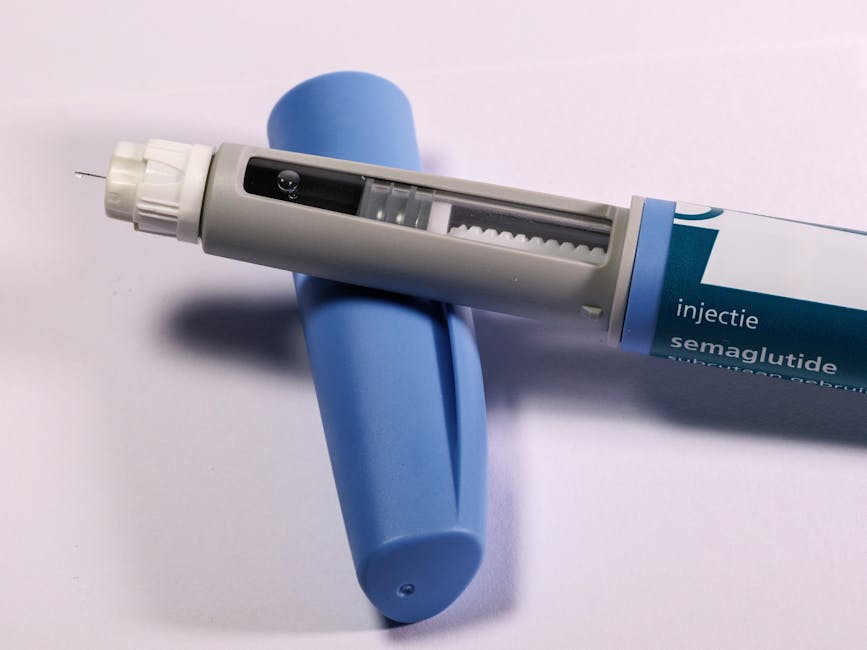
You're holding a peptide vial. You know the dose you want. But how many units do you actually draw on your insulin syringe? A peptide dosage calculator answers that instantly, without manual math or room for error.
Reconstitution math is one of those tasks that looks simple until you're standing there doing mental arithmetic at 6am before your training session. One mistake and your entire dose is wrong. This guide walks you through exactly how these calculators work, why precision matters, and how to use one correctly.
What Is a Peptide Dosage Calculator?
A peptide dosage calculator is a straightforward tool that converts your target dose amount into the exact number of insulin syringe units you need to draw from a reconstituted vial.
Here's the core problem it solves: when you mix a peptide vial with bacteriostatic water, you create a solution of unknown concentration per unit. The calculator figures out that concentration for you, then tells you exactly how many units on your syringe equals your desired dose.
It's the same math you'd do by hand, but faster and without the risk of decimal-point errors. For serious athletes and research enthusiasts, that consistency matters.
The Four Input Parameters You Need
Every peptide dosage calculator requires the same basic information. Get these right, and your output will be accurate.
Related: BPC-157 Peptide Dosage Chart: Complete Guide for Athletes
Related: KPV Peptide Dosage Protocol: Complete Guide for Athletes
Related: BPC-157 Peptide Dosage Calculator: Exact Dosing Guide
Related: BPC-157 Peptide Calculator: Dosage & Reconstitution Guide
Related: Peptide Dosage Chart: Complete Guide for Athletes
Related: Best MOTS-C Peptide Dosage Chart for Performance Athletes
Related: Best SS-31 Peptide Dosage for Endurance Athletes
- Vial Size (in mg): How many milligrams of peptide powder are in the vial? Common sizes are 1mg, 5mg, and 10mg.
- Bacteriostatic Water Volume: How much water (in ml) are you mixing with the peptide? Standard amounts are 1ml, 2ml, or custom volumes.
- Target Dose: How many micrograms (mcg) or milligrams (mg) do you want to dose? This is your research quantity.
- Syringe Type: Most peptide users work with 100-unit insulin syringes, which is what the calculator defaults to.
Once you input these four pieces, the calculator does the work and spits out units on your syringe.
How the Calculation Actually Works
The math behind a peptide dosage calculator is simple algebra, but understanding it helps you verify the output and catch mistakes.
Here's the formula:
Units to Draw = (Target Dose / Vial Size) × 100 (for a 100-unit syringe)
Let's work through a real example:
- You have a 10mg vial of peptide.
- You mix it with 1ml of bacteriostatic water.
- Your target dose is 100mcg (0.1mg).
- Calculation: (0.1 / 10) × 100 = 1 unit on your syringe.
That's it. But when you're tired or distracted, that decimal conversion is exactly where errors happen. A calculator eliminates that step and gives you confidence in your measurement.
Why Precision Matters in Peptide Research

If you're using peptides for performance optimization or longevity research, dosing accuracy directly impacts your results. A 10% error in your dose isn't just sloppy—it skews your entire protocol.
Think about it like training data. If you log your lifts wrong, you can't track progress accurately. Same principle applies to peptide protocols. You need to know, with certainty, that you're hitting your target dose every single time.
The other benefit: consistency. If you use a calculator every session, you remove the variable of human error. Over weeks and months of research, that discipline adds up and makes it easier to identify what's actually working versus what's just noise.
That's the mindset we focus on at NinjAthlete—we refuse to settle for average effort or measurement. Your protocols deserve the same precision you'd demand in your training programming.
Step-by-Step: How to Use a Peptide Dosage Calculator
Most peptide calculators follow the same basic workflow. Here's how to use one correctly.
Step 1: Input Your Vial Size
Select or enter the total milligrams of peptide in your vial. If you have a 5mg vial, enter 5. Don't overthink this—just match the label on your bottle.
Step 2: Enter Bacteriostatic Water Volume
How much water did you add to reconstitute the vial? This is measured in milliliters (ml). A common choice is 1ml of water mixed with a 10mg vial, but your protocol might differ. Be exact here, because this number directly impacts the final concentration.
Step 3: Specify Your Target Dose
Input the dose you want to use, and make sure you specify whether it's in micrograms (mcg) or milligrams (mg). This is where people mess up most often—confusing units. A typical peptide dose might be 100mcg, 200mcg, or 500mcg depending on the peptide and your research design.
Step 4: Read the Output
The calculator returns the exact number of units (or fractions of units) to draw on your insulin syringe. If it says 2.5 units, you draw to the 2.5 mark. If it says 0.5 units, you draw to 0.5. This is your syringe measurement—no interpretation needed.
Common Peptide Vial Sizes and What They Mean
You'll encounter a few standard vial sizes in research peptide work. Knowing these saves you from input errors.
- 1mg vials: Smaller quantity, often used for potent peptides or when you're testing a new compound. Reconstitute with 1ml water for easy math (1:1 ratio).
- 5mg vials: Mid-range option. Flexible for various reconstitution volumes. Often reconstituted with 1-2ml water.
- 10mg vials: Larger quantities, popular for peptides you use frequently. Usually mixed with 1-2ml water to create a manageable concentration.
There's no "best" size—it depends on how often you use the peptide and how long you want each vial to last. Just make sure you accurately record which size you have before plugging it into the calculator.
Avoiding Common Peptide Dosing Mistakes
Even with a calculator, mistakes happen. Here are the ones we see most often and how to catch them.
Mistake 1: Unit Confusion (mg vs mcg)
Milligrams (mg) and micrograms (mcg) are 1,000x different. If you accidentally input your dose as mg when you meant mcg, your calculation will be wildly off. Always double-check the unit before hitting calculate.
Mistake 2: Wrong Water Volume
If you reconstituate with 2ml of water but tell the calculator you used 1ml, every dose will be half of what you intended. Keep meticulous notes on your actual reconstitution volume. Write it on the vial label if you have to.
Mistake 3: Mixing Up Syringe Types
A 100-unit insulin syringe is standard, but if you're using a different syringe size, the math changes. Make sure your calculator is set to your actual syringe type, or adjust the calculation accordingly.
Mistake 4: Forgetting to Account for Dilution Loss
When you reconstitute a vial and draw from it multiple times, some solution stays in the needle and syringe. Over many draws, this adds up. It's a small factor, but worth acknowledging if you're tracking usage precisely.
If you want a comprehensive protocol framework that covers peptide use alongside training and nutrition optimization, NinjAthlete provides research-backed guides that integrate dosing accuracy with performance outcomes.
Where to Find a Free Peptide Dosage Calculator
Several free online calculators are available. Most require zero sign-up and work instantly in your browser.
Look for calculators that let you input custom vial sizes and water volumes. The best ones also include unit conversion (mg to mcg) built in, so you don't have to convert manually.
Video guides are often available too. If you're visual learner, watching a quick walkthrough can clarify the process faster than reading instructions.
The calculator itself is just a tool—the real value is knowing how to use it consistently and trusting the output. Once you've verified one calculation by hand, you'll feel confident using the calculator for all future doses.
Peptide Dosing in the Context of Performance Training
If you're using peptides as part of a structured performance or longevity protocol, dosing precision is just one piece of the puzzle.
The bigger picture includes training cycle timing, nutrition support, recovery monitoring, and outcome tracking. A peptide dosage calculator handles the math, but your protocol design—timing, frequency, cycling—is what actually drives results.
This is why many serious athletes pair their peptide protocols with structured training frameworks. Getting the dose right is non-negotiable, but it only matters if everything else in your protocol is equally dialed in.
That's where resources like NinjAthlete help. We build protocols where peptide use is just one variable in a larger optimization strategy, supported by peer-reviewed research and real athlete outcomes.
Key Takeaways on Peptide Dosage Calculation
- A peptide dosage calculator converts your target dose into exact syringe units, removing manual math and error.
- You need four inputs: vial size, water volume, target dose, and syringe type.
- The math is simple algebra, but using a calculator eliminates the most common source of errors: unit confusion and decimal mistakes.
- Dosing precision matters because it lets you identify what's actually working in your protocol versus what's just variability.
- Common mistakes include mixing up mg/mcg, misremembering water volume, and using the wrong syringe type—double-check these before calculating.
- Free calculators are everywhere; pick one, learn it, and use it consistently every time you dose.
Frequently Asked Questions
Can I use a peptide dosage calculator for any type of peptide?
Yes. The calculator works for any peptide, regardless of compound. It's pure math—vial size, water volume, and target dose are universal inputs. The only difference between peptides is dosing protocol (how often, how much), not the math itself.
What if I can't draw the exact number of units the calculator says?
Most insulin syringes have 1-unit markings, so you can usually hit exact values. If the calculator says 2.3 units, round to 2 units (slightly under-dose) or draw to 2.5 units (slightly over). Stay consistent with your rounding method so your doses are predictable.
Do I need to recalculate every time I mix a new vial?
Only if you change your reconstitution water volume. If you always mix 10mg with 1ml water and always want 100mcg doses, the answer is always the same number of units. But if you switch volumes or vial sizes, recalculate to be safe.
Is bacteriostatic water required, or can I use regular water?
Bacteriostatic water (sterile water with benzyl alcohol) is the standard because it prevents bacterial growth in a reconstituted vial. The calculation works the same either way mathematically, but bacteriostatic water is what research protocols recommend. According to the NIH standards on sterile reconstitution practices, proper bacteriostatic agents are part of best practice for any peptide vial you plan to use over multiple sessions.