BPC-157 for Tendon & Ligament Repair: Dosing, Stacks & Results
BPC-157 tendon repair claims are based mostly on animal and cell research showing improved tendon fibroblast migration, angiogenesis, and collagen-related healing signals. There is no FDA-approved BPC-157 dosing protocol for tendon or ligament injuries, so athlete use remains experimental, off-label, and medically supervised at best.
A torn tendon does not care how motivated the athlete is. Collagen remodels slowly, blood flow is limited, and rushing back under load is how a three-week tweak becomes a six-month problem. BPC-157 sits in the high-interest zone of sports recovery because preclinical studies suggest it may influence fibroblast behavior, blood vessel formation, nitric oxide signaling, and soft-tissue repair pathways. That does not make it a guaranteed fix. It makes it a compound with a promising mechanism, thin human evidence, major quality-control questions, and real legal and safety considerations for competitive athletes.
What BPC-157 Is and Why Athletes Use It
BPC-157 is a synthetic peptide derived from a protein sequence found in human gastric juice. The full name often used in research is body protection compound 157, a 15-amino-acid peptide studied in animals for wound healing, gut injury, muscle trauma, tendon damage, ligament healing, and vascular effects. In performance circles, it is usually discussed as a tendon healing peptide for stubborn Achilles, patellar, elbow, rotator cuff, hamstring, and ligament issues.
The attraction is obvious: tendons and ligaments heal slowly because they have lower blood supply than muscle. A compound that could improve local repair signaling would be valuable for lifters, runners, grapplers, and HYROX-style hybrid athletes balancing intensity with repetitive tissue stress. For broader recovery planning, compare peptide strategies with the fundamentals in before assuming chemistry can replace sleep, calories, progressive loading, and rehab compliance.
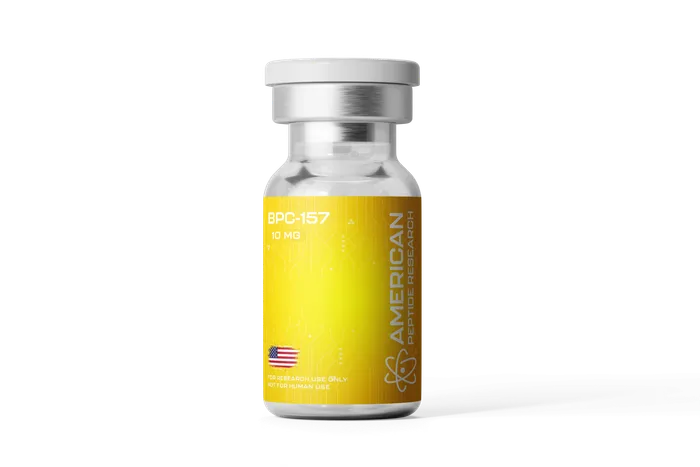
The key distinction: BPC-157 is not an approved medication for tendon repair. Most commercial use comes from research-chemical markets, not pharmacy-grade prescriptions. If someone is evaluating research material, BPC-157 availability is often represented by vendors such as BPC-157, but sourcing does not equal medical legitimacy, purity, sterility, or clinical proof.
What the Evidence Actually Shows for Tendon Repair
The strongest tendon-specific evidence comes from cell and animal studies. In a well-cited tendon fibroblast study, BPC-157 promoted tendon outgrowth, cell survival, and migration in cultured rat tendon fibroblasts, all of which are relevant to early repair biology.[1] Other animal work has reported improved healing of transected or injured soft tissues, including muscle and tendon models, with proposed effects on angiogenesis, collagen organization, and inflammatory modulation.[2]
Mechanistically, BPC-157 appears to interact with repair systems that matter after tendon or ligament injury: fibroblast activity, extracellular matrix remodeling, nitric oxide pathways, and blood vessel formation. Some studies suggest it may influence endothelial cell migration and vascular repair signaling, which could be relevant because tendons need oxygen and nutrient delivery to rebuild tissue.[3] That is biologically interesting, but it is not the same as showing a faster return to sport in injured humans.
The missing piece is high-quality human trial data. There are no large randomized controlled trials proving that BPC-157 heals Achilles tendinopathy, rotator cuff tears, ACL sprains, UCL injuries, or patellar tendon pain in athletes. For evidence-based performance decisions, BPC-157 should be viewed as experimental support, not a standalone solution or replacement for imaging, diagnosis, loading progression, or surgical evaluation when needed.
Real Results: What Athletes Can Realistically Expect
Anecdotal reports often describe reduced pain within days to two weeks, followed by improved tolerance to rehab loading over four to eight weeks. Those reports are not useless, but they are vulnerable to placebo effect, natural healing, reduced training load, concurrent physical therapy, NSAID avoidance, collagen supplementation, better sleep, and simple regression to the mean. Pain relief is not the same as tendon remodeling. A tendon can feel better before it is ready for sprinting, jumping, grappling, or heavy eccentrics.
Realistic expectations should be tissue-specific. A mild tendon flare may settle quickly with deloading and smart rehab. Chronic tendinopathy often requires months of progressive loading to restore capacity. Partial ligament sprains may improve faster than degenerative tendon pathology, but joint stability still depends on neuromuscular control and mechanical integrity. BPC-157, if used, belongs beside a structured return-to-load plan, not instead of one.
Key Takeaways
- BPC-157 tendon repair evidence is promising but mostly preclinical.
- No standardized human BPC-157 dosing protocol exists for tendon or ligament injuries.
- Reduced pain does not prove healed collagen or restored tensile strength.
- Rehab loading, sleep, protein, collagen support, and diagnostics remain non-negotiable.
- Tested athletes should treat BPC-157 as high risk from a sport-governance perspective.
BPC-157 Dosing & Cycle Table
There is no medically established BPC-157 dosing schedule for tendon healing. Doses discussed online are extrapolated from research, clinician anecdotes, and self-experimentation, not from validated human injury trials. Any use should involve a qualified medical professional, especially if injections, sterile technique, other medications, clotting disorders, cancer history, pregnancy, immune disease, or competitive testing are relevant.
The table below summarizes commonly reported non-approved research-use patterns, not a recommendation. Injectable protocols introduce sterility, site reaction, dosing-error, and contamination risks. Oral use is marketed heavily, but oral bioavailability and tendon-specific outcomes in humans remain uncertain. Reconstitution math and sterile handling are frequent failure points; athletes reviewing vial preparation should use a dedicated calculator such as Reconstitution Guide and avoid improvising with unverified advice.
| Use Case | Commonly Reported Range | Typical Cycle Length | Notes |
|---|
| Acute tendon flare or mild soft-tissue strain | 250-500 mcg daily | 2-4 weeks | Often paired with deloading, isometrics, and gradual reload. Human evidence is limited. |
| Chronic tendinopathy or stubborn ligament irritation | 250-500 mcg once or twice daily | 4-8 weeks | Anecdotal only. Avoid masking pain and returning to high load too soon. |
| Oral BPC-157 products | 250-1000 mcg daily as marketed | 4-8 weeks | Human tendon data and product consistency are major unknowns. |
| Post-procedure recovery support | Clinician-dependent | Clinician-dependent | Requires surgeon or sports-medicine oversight. Do not self-treat surgical sites. |
For athletes comparing peptide timing, cycle length, and body-weight-based calculations, Peptide Dosing can help organize questions to bring to a clinician. It should not be used to override medical direction or competition rules.
Best BPC-157 Stacks for Soft Tissue Recovery
The most defensible stack is not exotic: progressive rehab, adequate energy intake, protein at roughly 1.6-2.2 g/kg/day, sleep consistency, and tendon-specific loading. Collagen or gelatin plus vitamin C taken before rehab has some supportive evidence for collagen synthesis, although outcome data vary. Creatine may help maintain training quality during reduced loading, while omega-3 intake may support overall inflammatory balance. None of these require pretending that a peptide is doing all the work.
Peptide stacks often pair BPC-157 with TB-500 or other thymosin beta-4 fragments for soft tissue recovery. The theory is combined local repair signaling, cell migration, and anti-inflammatory support. The problem is that stacking compounds multiplies uncertainty: more variables, more side-effect ambiguity, and more difficulty knowing what helped or harmed. Competitive athletes should be especially cautious because unapproved peptides may fall under anti-doping restrictions even when not named individually.
A practical recovery stack looks like this: diagnosis first, load management second, nutrition third, optional medical-supervised therapeutics last. Runners and hybrid competitors preparing for race demands should align tissue healing with event-specific progression, not panic-cycle through compounds. For race-load planning, see .
Side Effects, Legal Status, and Quality Risks
BPC-157 is often described online as having few side effects, but that confidence is not justified by large human safety datasets. Reported issues include injection-site irritation, nausea, appetite changes, headache, dizziness, fatigue, and unusual sensations. More important are the unknowns: long-term effects, immune reactions, interactions with medications, effects in cancer biology, fertility, pregnancy, adolescents, and use around surgery or active infection.
Quality control is a bigger problem than many athletes realize. Research peptides may be mislabeled, underdosed, overdosed, contaminated, or non-sterile. A label claiming 99% purity does not guarantee identity, sterility, endotoxin safety, or stability after reconstitution. Before using any peptide, review the risk framework in and demand third-party testing, batch documentation, and medical oversight.
Legal and sport status also matters. BPC-157 is not FDA-approved for treating tendon injuries, and many sporting bodies treat unapproved pharmacological substances as prohibited or risky under broad anti-doping rules.[4] A tested athlete should not rely on forum claims. If a medal, contract, military role, or federation license matters, the safest assumption is that unapproved peptides can create eligibility risk.
How to Build a Smarter Tendon-Recovery Protocol
The best tendon protocol starts with the correct diagnosis. Tendinopathy, partial tear, bursitis, nerve irritation, joint instability, and referred pain can feel similar but require different plans. Imaging may be warranted when pain is severe, function drops suddenly, bruising appears, weakness is obvious, or symptoms persist despite deloading. A peptide cannot fix a tendon that needs surgical repair or protect an athlete from poor biomechanics.
Rehab should progress from pain-calming isometrics to controlled eccentrics, heavy slow resistance, plyometrics, speed exposure, and sport-specific load. Tendons respond to mechanical signal. The goal is not zero discomfort forever; it is restoring load tolerance without reactive pain spikes the next day. BPC-157 may be considered by some clinicians as an experimental adjunct, but the main driver of durable tendon capacity is progressive loading.
Track objective markers: pain during activity, pain 24 hours later, range of motion, strength symmetry, jump or sprint tolerance, grip or pulling tolerance, and weekly training load. Community accountability helps keep aggressive athletes from turning a promising week into a relapse. For recovery logs, training discussion, and athlete experience reports, use Community.
Sources
- [1] Chang CH et al. The promoting effect of pentadecapeptide BPC 157 on tendon healing involves tendon outgrowth, cell survival, and cell migration. Journal of Applied Physiology. 2011. PMID: 21030672. DOI: 10.1152/japplphysiol.00945.2010.
- [2] Staresinic M et al. Effective therapy of transected quadriceps muscle in rat: gastric pentadecapeptide BPC 157. Journal of Orthopaedic Research. 2006. PubMed-indexed primary research.
- [3] Hsieh MJ et al. BPC 157 promotes endothelial cell migration and tube formation through vascular repair signaling pathways. Primary experimental research on angiogenesis-related mechanisms.
- [4] World Anti-Doping Agency. Prohibited List framework for non-approved pharmacological substances and peptide-related categories. Regulatory source.
- [5] U.S. Food and Drug Administration. Safety concerns related to compounded peptides and unapproved peptide products. Regulatory source.
FAQs
Does BPC-157 actually repair tendons?
BPC-157 has shown tendon-relevant effects in animal and cell studies, including improved tendon fibroblast migration and survival. Human clinical proof for tendon repair is still lacking, so it should be considered experimental rather than proven.
What is the typical BPC-157 dosing range for tendon injuries?
Commonly reported non-approved ranges are 250-500 mcg daily, sometimes once or twice daily for 2-8 weeks. These are anecdotal research-use patterns, not FDA-approved or clinically validated dosing protocols.
Is oral BPC-157 as effective as injectable BPC-157?
There is not enough human tendon data to say. Oral products may be easier to use, but absorption, product quality, and tendon-specific outcomes remain uncertain.
Can BPC-157 be stacked with TB-500?
Many athletes discuss BPC-157 and TB-500 stacks for soft tissue recovery, but controlled human evidence is limited. Stacking increases uncertainty and should only be considered with qualified medical oversight.
How fast do athletes feel results from BPC-157?
Anecdotal reports often describe pain reduction within days to two weeks, but pain relief does not prove structural healing. Tendon remodeling still requires progressive loading over weeks to months.
Is BPC-157 legal for tested athletes?
Tested athletes should assume significant risk. BPC-157 is not an approved therapeutic drug for tendon repair, and unapproved peptides may create anti-doping eligibility issues under broad prohibited-substance rules.
Medical disclaimer: This content is for educational purposes only and is not medical advice, diagnosis, or treatment. BPC-157 is not FDA-approved for tendon or ligament repair, and human safety and efficacy data are limited. Do not use peptides, injectables, or research compounds without evaluation and supervision from a licensed medical professional. Competitive athletes should consult their governing body and anti-doping authority before using any peptide or unapproved compound.