The short version: Most people running peptides are pulling one lever and wondering why their body composition won't budge. The tesamorelin and retatrutide stack works because it pulls three biological levers in sequence — fat mobilization, muscle protection, and recovery timing — creating a metabolic paradox where your body burns fat and builds muscle at the same time. This article explains the endocrinology, debunks the "food blunts tesamorelin" myth dominating social media, and gives you the exact protocol to execute it correctly.
Why Most Peptide Stacks Fail Before They Start
Most people running peptides are trying to optimize a system they don't actually understand. They take compounds they can't pronounce, on schedules that contradict their own physiology, and they wonder why they look the same after six months of grinding.
Here's what separates the people who execute from the people who guess: understanding cross-talk.
Not just individual hormones. Not single mechanisms in isolation. The actual conversation between your gut, your pancreas, your pituitary, and your mitochondria — a hormonal dialogue that runs every second of every day and dictates whether you store fat, burn it, build muscle, or break it down.
The combination of tesamorelin and retatrutide is one of the most sophisticated two-compound metabolic stacks available to research subjects today. But it only works if you understand that your body isn't a monolith. It's a compartmentalized factory with distinct production lines, quality control checkpoints, and feedback loops more complex than any manufacturing system humans have ever built.
To get results, you have to pull the right levers, in the right sequence, at the right time of day. There are three.
The Three Biological Levers
1. Fat mobilization — forcing triglycerides out of fat cells (retatrutide)
2. Muscle protection — protecting and building lean tissue during a deficit (tesamorelin)
3. Recovery timing — synchronizing peptide injections with circadian biology
Lever 1: Fat Mobilization — How Retatrutide Forces Fat Out of the Cell
Ask the average person how to lose fat and you'll hear the same answers: cardio, caloric deficit, eat less, move more. None of that is wrong. It's just inefficient. It's like pulling water out of a well with a spoon instead of a bucket.
Your body stores energy as triglycerides — three fatty acid chains anchored to a glycerol backbone, locked inside adipocytes. To actually use that energy, you have to break those chains and release the fatty acids into the bloodstream. This process is called lipolysis.
There are two ways to drive it.
The passive approach: create a caloric deficit and let thermodynamics eventually force fat mobilization. This takes weeks, months, sometimes years — and the entire time your metabolism is fighting you, lowering energy expenditure to preserve stores. This is exactly how you were designed to survive a famine.
The active approach: chemically force fat out of the cell using the right hormonal signal. That signal is glucagon.
Glucagon is the counter-regulatory hormone to insulin. When insulin is high, glucagon is low. When insulin is low, glucagon is high. Insulin says store. Glucagon says release.
When glucagon binds to its receptor on an adipocyte, it activates an enzyme called hormone-sensitive lipase (HSL) — the molecular scissors that cleave fatty acids off the triglyceride backbone and push them into circulation. This is where retatrutide changes the equation.
Why Retatrutide Is Different
Retatrutide is a triple agonist. It activates three separate receptors:
- GLP-1 — improves insulin sensitivity, slows gastric emptying, enhances satiety
- GIP — improves insulin secretion and metabolic flexibility
- Glucagon — directly activates lipolysis
The genius is in the third receptor. Retatrutide doesn't just hit the glucagon receptor once — it provides chronic, controlled agonism, creating a sustained state of fat mobilization. You're emptying the shelves before the store even opens.
21.7%
body weight reduction in 48 weeks — with preferential fat loss preserved during caloric restriction
SURMOUNT-1 · New England Journal of Medicine · 2022
The critical finding most people miss in the SURMOUNT data: the preferential fat loss was maintained even during periods of caloric restriction. Metabolic partitioning shifted toward adipose tissue oxidation rather than muscle catabolism — the holy grail of body recomposition.
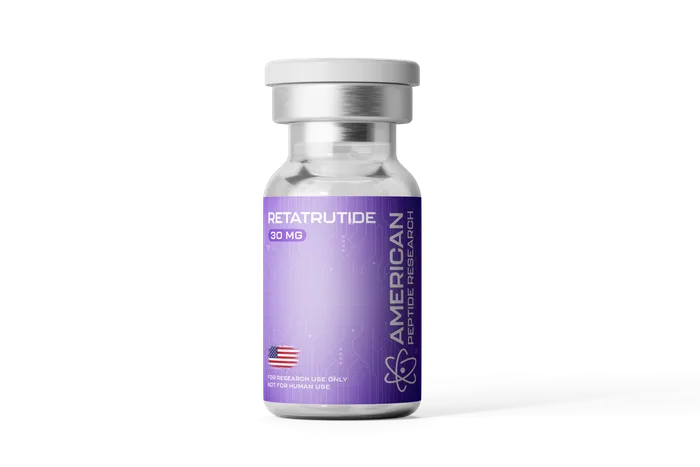
Research Retatrutide for Your Stack
Pharmaceutical-grade retatrutide from American Peptide Research — the source Dr. Bachmeyer trusts for his clinical protocols.
Shop Retatrutide at APR →
Lever 2: Muscle Protection — How Tesamorelin Builds Tissue While You Burn Fat
Mobilizing fat is half the equation. The other half is making sure your body doesn't strip muscle along with it.
You don't want to look like a melted candle. You want structural integrity. The difference between someone who's "skinny fat" and someone who looks like a superhero is muscle tissue — and muscle tissue is metabolically expensive. It costs your body calories just to exist, which is exactly why your biology strips it away in a perceived famine. The body sees it as overhead it can no longer afford.
Muscle isn't cosmetic. It's the primary tissue that buffers metabolic dysfunction:
- Insulin resistance — muscle is the largest glucose sink in the body
- Hypertension — muscle tissue regulates vasodilation
- Chronic inflammation — muscle is the primary source of myokines, anti-inflammatory signaling molecules
So how do you build muscle while losing fat? This is where 99% of protocols fail. People assume it's impossible without anabolic steroids. It isn't — but only if you understand growth hormone properly.
Tesamorelin: The GHRH Analog That Speaks Directly to Your Pituitary
Tesamorelin is a growth hormone-releasing hormone (GHRH) analog. When injected subcutaneously, it travels through the bloodstream, crosses the blood-brain barrier, and hits the anterior pituitary — specifically the somatotrophs, cells that carry GHRH receptors. When tesamorelin binds, it triggers a pulse of endogenous growth hormone release.
But growth hormone itself isn't where the magic happens. The real action is downstream, in the IGF-1 axis.
When GH reaches the liver, hepatocytes respond by synthesizing and secreting insulin-like growth factor 1 (IGF-1) — the ultimate anabolic signaling molecule. IGF-1 binds to receptors on skeletal muscle cells and activates the mTOR pathway, the biological switch that says build.
It also activates the PI3K/Akt pathway, which deactivates GSK3-beta — a protein that normally inhibits protein synthesis. With that brake removed, your muscle cells are primed to accept amino acids and assemble them into contractile proteins.
The Metabolic Paradox
Here's where the stack creates something most people don't believe is possible.
Retatrutide keeps your insulin levels low and stable. Tesamorelin drives GH and IGF-1 high. Insulin is the anti-growth hormone — it's the signal that says "we're fed, stop breaking things down." When you have low insulin and high GH/IGF-1 simultaneously, you've created a physiologically rare state:
The Holy Grail State
You're getting the lipolytic signal of a fasted state (high glucagon, low insulin) combined with the anabolic signal of a fed state (high GH, high IGF-1). This is the only hormonal environment where simultaneous fat loss and muscle gain are biologically possible.
The research backs this up. A 2016 study in the Journal of Clinical Endocrinology & Metabolism demonstrated that growth hormone replacement in GH-deficient patients increased lean body mass and decreased fat mass even in a caloric deficit. GH directly inhibits lipoprotein lipase (the enzyme that stores fat) while simultaneously activating HSL (the enzyme that mobilizes it). Then it stimulates the IGF-1 axis to preserve and build muscle tissue during energy restriction.
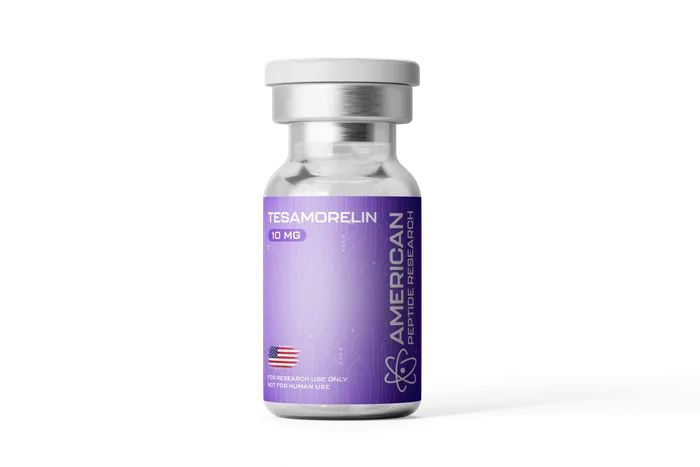
Research Tesamorelin for Your Stack
Pharmaceutical-grade tesamorelin from American Peptide Research — verified quality for research applications.
Shop Tesamorelin at APR →
Lever 3: Recovery Timing — The Lever Most People Pull Wrong
This is the lever where almost everyone makes a critical mistake. They think recovery means not lifting. It doesn't. Recovery is a physiological state — a specific cascade of hormones, at a specific time of day, working in a specific sequence.
Cortisol follows a natural circadian rhythm. It's supposed to peak between 6 and 8 a.m. (preparing you for the day), decline throughout the day, and reach its lowest point around midnight (when your body shifts into repair mode).
High cortisol in the morning says: time to hunt, time to be alert. Low cortisol at night says: time to rest, time to rebuild.
Most high performers absolutely demolish this rhythm. You wake up, slam caffeine, stare at a blue screen, check email — and your cortisol gets dragged through the day. By the time you go to bed, it's still elevated.
Here's why that matters for tesamorelin: cortisol triggers the release of somatostatin — the off-switch for growth hormone. When somatostatin is high, GH pulses are blunted. If you inject tesamorelin at night while your cortisol is still elevated, you're literally blocking your own injection. You're paying for the peptide and getting maybe 40% of the effect because your own biology is sabotaging the signal.
Why Nighttime Tesamorelin Works When Timed Right
Your body's largest GH pulse of the day happens during slow-wave sleep — specifically, the first 30 to 60 minutes after sleep onset. This isn't accidental. Your body is designed to build tissue at night, when metabolic resources are allocated to repair instead of running away from predators or chasing prey.
By injecting tesamorelin before bed, you're piggybacking on this natural rhythm. You're not fighting your biology — you're amplifying it.
~70%
of your daily growth hormone release occurs during slow-wave sleep
Debunking the "Food Blunts Tesamorelin" Myth
There's a claim circulating on Instagram right now that needs to be killed. The argument goes: because retatrutide slows gastric emptying, injecting tesamorelin at night while food is still in your stomach will blunt the GH release. This is a complete misunderstanding of how hormonal signaling works.
The Myth
"Food in your stomach blunts tesamorelin because retatrutide slows gastric emptying."
The Reality: Tesamorelin acts on the pituitary, not the stomach. What blunts GH is elevated insulin, not food. Retatrutide keeps insulin low and stable — making it the ideal pairing, not a conflict.
You have to understand: there are two completely different physiological processes happening here, and the myth confuses them.
Process 1: Mechanical digestion. This is how food moves from your stomach into your small intestine. It's controlled by gastric motility, peristalsis, and sphincter relaxation. Retatrutide slows this process.
Process 2: Hormonal signaling. This is how hormones travel through your bloodstream and bind to receptors on target cells. It's independent of what's happening in your GI tract.
Tesamorelin operates on Process 2. It doesn't care what's in your stomach. The peptide is absorbed subcutaneously, enters systemic circulation, crosses the blood-brain barrier, and binds to GH receptors on pituitary somatotrophs. The physical presence of food plays zero role in this process.
What Actually Blunts Growth Hormone
The only thing that could realistically interfere is a massive spike in blood glucose and insulin — but that's not caused by food in your stomach. It's caused by the hormonal response to rapidly absorbed carbohydrates.
Scenario one (no retatrutide): you eat a high-carb meal, carbs are rapidly absorbed, blood glucose spikes, pancreas dumps insulin, insulin stimulates somatostatin release, somatostatin shuts down the GH pulse. A 2003 study in the Journal of Clinical Endocrinology & Metabolism showed that acute hyperinsulinemia suppresses GH secretion by approximately 50%, independent of glucose levels.
Scenario two (with retatrutide): you eat the same meal, but retatrutide slows gastric emptying. Carbohydrates are absorbed gradually over 6-8 hours. Glucose enters the bloodstream as a controlled trickle, not a bolus. The pancreas never sees a glucose spike — so insulin stays low and stable throughout the night. You're not fighting elevated insulin — you're injecting tesamorelin into the lowest-insulin environment of the day.
The stomach is a pump. The pancreas is the switch. Don't confuse the plumbing with the electrical system.
The Nutrient Foundation That Determines Whether the Stack Actually Works
You can have the GH pulse of a 20-year-old, perfectly managed insulin, and surgically tuned cortisol. If your internal nutrient environment is depleted, you're running a Lamborghini in a tar pit.
When you implement retatrutide and tesamorelin simultaneously, you're not just optimizing biology — you're accelerating metabolic turnover and burning through nutrient reserves at a rate your standard multivitamin won't touch. These five micronutrient categories are non-negotiable:
1. Magnesium (400-500mg glycinate, before bed)
Roughly 60% of the general population is deficient in magnesium. In athletes on metabolically demanding stacks, the number approaches 90%. Every anabolic process requires ATP, and ATP is functionally useless without magnesium bound to it. Without it, tesamorelin's IGF-1 signal reaches the muscle cell, the machinery engages — and then nothing happens. The ribosomal assembly, the tRNA binding, the elongation factors that physically build peptide chains all require magnesium. Avoid magnesium oxide; it's a laxative, not a nutrient.
2. Zinc + Copper (30mg zinc picolinate, 2mg copper gluconate — 15:1 ratio)
Zinc is the anabolic mineral. It's required for testosterone synthesis, GH receptor sensitivity, and protein synthesis. High-intensity training and retatrutide-induced metabolic acceleration both deplete zinc rapidly. But supplementing zinc without copper creates a copper deficiency — which is catastrophic: mitochondrial dysfunction, connective tissue breakdown, neurological degradation. Keep the ratio tight at 15:1.
3. Methylated B-Complex (one dose with breakfast)
You're in a highly anabolic state, churning through protein. Protein metabolism requires B vitamins — especially B6, B9 (folate), and B12. Deficiency on this stack leads to elevated homocysteine, oxidative stress, and impaired methylation reactions. Skip cyanocobalamin and folic acid; use methylcobalamin and L-methylfolate instead.
4. Vitamin D3 + K2 (5,000 IU D3 + 100-200mcg MK-7)
D3 isn't a vitamin — it's a steroid hormone precursor. The active form regulates immune tolerance, insulin sensitivity, GH secretion, and acts as a transcription factor for roughly 10% of your genome. K2 must accompany D3 to direct mobilized calcium to bones rather than arteries. GH increases calcium mobilization; without K2, that calcium can deposit in your vasculature. Target serum D levels of 60-80 ng/mL.
5. Selenium (200mcg L-selenomethionine, or 3 Brazil nuts daily)
Selenoproteins enable the conversion of T4 to active T3 thyroid hormone. Without adequate selenium, your thyroid produces hormone but can't activate it — your metabolic rate tanks regardless of the peptides you're running. Don't exceed 400mcg; selenium is toxic at high doses.
Cortisol: The Silent Killer of Your GH Response
If your cortisol is chronically elevated, no amount of tesamorelin will save you. A 2017 study in Psychoneuroendocrinology demonstrated that chronic cortisol elevation suppressed IGF-1 by 35% and blunted GH secretory pulses by 40% — independent of nutrition or training stimulus.
Cortisol has specific leverage points. Here's how to pull them.
The Morning Reset
Within 15 minutes of waking, get direct sunlight on your retinas — not through a window, not as a reflection. Light exposure sets your circadian clock and triggers a natural cortisol peak that then declines properly through the day. Delay caffeine by 80-90 minutes after waking to let adenosine clear naturally. This single shift resets the entire cortisol rhythm.
Phosphatidylserine: The Cortisol Buffer
Phosphatidylserine inhibits ACTH release, which truncates the cortisol surge. Two critical windows:
- Post-workout (500mg): Training spikes cortisol. If it stays elevated, your liver converts amino acids into glucose (gluconeogenesis) instead of building muscle. You're literally breaking down the protein you just consumed.
- Pre-bed (600mg): High nighttime cortisol keeps you out of slow-wave sleep and triggers somatostatin, blocking your tesamorelin signal directly.
A 2016 study in Sports Medicine showed phosphatidylserine supplementation reduced post-training cortisol by 32%, preserved protein synthesis by 28%, and improved sleep quality by 35%.
Ashwagandha KSM-66 (600mg, cycled 5 days on, 2 days off)
Use the standardized KSM-66 extract — it's not interchangeable with generic ashwagandha. Do not run this indefinitely. Your body adapts to anything used chronically. Cycling preserves sensitivity. A 2019 randomized controlled trial showed 600mg/day for 8 weeks reduced cortisol by 27% and improved sleep and mood scores by 35%.
The Complete 3-Lever Protocol
Step 1 — Establish the Foundation (Weeks 1-2)
Begin all five micronutrient categories. Get baseline labs: fasting glucose, insulin, HbA1c, lipid panel, IGF-1, vitamin D, comprehensive metabolic panel, cortisol AM/PM, free T3/T4.
Step 2 — Reset Circadian Cortisol (Weeks 1-2, ongoing)
Direct sunlight within 15 minutes of waking. Caffeine delayed by 80-90 minutes. Phosphatidylserine post-workout and pre-bed.
Step 3 — Initiate Retatrutide (Week 2-3)
Start at the lowest physician-guided dose. Allow the body to acclimate to glucagon agonism and slowed gastric emptying. Monitor for GI side effects.
Step 4 — Add Tesamorelin at Night (Week 3-4)
Inject tesamorelin in the evening, timed to align with the natural GH pulse during slow-wave sleep. Cortisol must be low at injection time for the protocol to function.
Step 5 — Monitor and Adjust (Weeks 6-12)
Recheck labs at 8 and 12 weeks. Adjust dosing based on IGF-1 response, body composition changes, and subjective markers (sleep quality, recovery, energy).
Get the Full Protocol Sent to Your DMs
Complete dosing chart, lab marker checklist, timing schedule, and Dr. Bachmeyer's clinical notes on the tesamorelin + retatrutide stack.
Comment TESA on our latest Instagram post and we'll send the full protocol instantly.
Frequently Asked Questions
Does food in your stomach blunt tesamorelin?
No. Tesamorelin acts directly on somatotroph cells in the anterior pituitary via the bloodstream — it doesn't depend on gastric content. What actually blunts GH secretion is elevated insulin, not food. Because retatrutide keeps insulin low and stable, the environment for tesamorelin is optimized, not impaired.
Why is nighttime the optimal time to inject tesamorelin?
Approximately 70% of daily growth hormone release occurs during slow-wave sleep, beginning 30-60 minutes after sleep onset. Injecting tesamorelin before bed synchronizes the GHRH signal with your endogenous growth hormone pulse — amplifying biology rather than fighting it.
Can you build muscle while losing fat on retatrutide?
Yes, when retatrutide is paired correctly with tesamorelin. The combination creates a metabolic paradox: low insulin and high glucagon (fasted-state fat burning) coexist with high GH and IGF-1 (fed-state muscle building). This is the only physiological state that supports simultaneous fat loss and muscle gain.
What nutrients are required for this stack to work?
Magnesium glycinate (400-500mg), zinc picolinate + copper gluconate at 15:1, methylated B-complex, vitamin D3 (5,000 IU) + K2 (100-200mcg MK-7), and selenium (200mcg). Without these, the hormonal signals reach the cell but the protein synthesis cascade can't complete.
How does cortisol affect tesamorelin results?
Elevated cortisol triggers somatostatin release — the off-switch for growth hormone. Chronic cortisol elevation has been shown to suppress IGF-1 by 35% and blunt GH pulses by 40%. Managing cortisol through circadian alignment, phosphatidylserine, and cycled ashwagandha is non-negotiable.
What's the difference between tesamorelin and
MK-677?
Tesamorelin is a GHRH analog that stimulates pituitary somatotrophs directly through the bloodstream, independent of digestive state. MK-677 is a ghrelin mimetic that depends on an empty stomach to maximize ghrelin signaling. Completely different mechanisms.
How long until I see results from the stack?
The SURMOUNT-1 trial demonstrated 21.7% body weight reduction over 48 weeks on retatrutide alone. When stacked with tesamorelin and the nutrient foundation, visible body composition changes typically appear within 8-12 weeks.
The Bottom Line: Hormonal Literacy Beats Hacks
This isn't a shortcut. It's literacy — hormonal literacy, biochemical literacy. The ability to read your own system and direct it accordingly.
Most people are passengers in their own bodies. They eat, they train, they hope something changes. When it doesn't, they blame genetics or metabolism or luck. The truth is they don't understand the system they're trying to operate.
The tesamorelin + retatrutide stack isn't a replacement for discipline. It's an amplifier of discipline. If you're lazy, this stack makes you a slightly less lazy version of lazy. If you're training hard, eating right, sleeping right, and managing stress, this stack turns you into a different version of yourself.
Pull the three levers in sequence. Build the nutrient foundation. Master the timing. The biology takes care of the rest.
Ready to Run the Protocol?
Source pharmaceutical-grade tesamorelin and retatrutide from American Peptide Research — the supplier Dr. Bachmeyer uses for his clinical research applications.
Get Tesamorelin →
Get Retatrutide →
Medical Disclaimer: This article is for educational and informational purposes only and does not constitute medical advice. Tesamorelin and retatrutide are research compounds and should only be used under the supervision of a qualified medical professional. The protocols described are not intended to diagnose, treat, cure, or prevent any disease. Individual results vary based on genetics, lifestyle, training status, and underlying health conditions. Always consult your physician before beginning any peptide protocol. NinjAthlete may receive affiliate compensation from American Peptide Research for purchases made through links in this article.
About the Author: Dr. Trevor Bachmeyer is a practicing physician with nearly 30 years of clinical experience specializing in peptide therapy, metabolic optimization, and hormonal health. He is the founder of NinjAthlete and Elite Biogenix, and runs the Black Card clinical program providing direct physician guidance to high-performing individuals.