NinjaBot

Wellness AI Coach • Online

Browsing the blog? Ask me to explain any concept or go deeper on a topic!

Quick questions

Powered by NinjAthlete AI

Benefits of Contrast Therapy: Hot-Cold Recovery Science Explained
Back to All Articles
Biohacking

Benefits of Contrast Therapy: Hot-Cold Recovery Science Explained

Contrast therapy alternates hot and cold exposure to accelerate recovery, reduce inflammation, and boost circulation. Here is what the research says and how to do it right.

8 min readFebruary 15, 2025

Medically reviewed

NinjAthlete Medical Review Panel, Licensed clinicians (MD, PharmD, DPT)

Last reviewed:

NA
NinjAthlete Team| Last reviewed: September 1, 2025

Medical Disclaimer: This article is for educational and informational purposes only. It is not intended as medical advice, diagnosis, or treatment.

Always consult a qualified healthcare professional before starting any peptide protocol, supplement regimen, or training program. Sources are cited with DOI/PubMed links where available. Read our editorial policy

Quick Answer

Contrast therapy alternates between hot (38-42C) and cold (10-15C) water immersion to create a vascular pumping effect that accelerates recovery, reduces inflammation, and improves circulation. Research shows it reduces delayed onset muscle soreness (DOMS) by 20-30% compared to passive recovery.

Key Takeaways

  • Contrast therapy reduces muscle soreness by 20-30% vs passive recovery
  • Alternating hot/cold creates a vascular pump that flushes metabolic waste
  • Standard protocol: 3-4 min hot, 1-2 min cold, repeated 3-5 cycles
  • Always end on cold for maximum anti-inflammatory benefit
  • Supported by peer-reviewed research in sports medicine

How Contrast Therapy Works

The mechanism is elegantly simple. Hot water causes vasodilation — your blood vessels expand, increasing blood flow to muscles. Cold water causes vasoconstriction — vessels narrow, pushing blood back toward your core. This alternation creates a pumping action that:

  • Flushes metabolic waste (lactate, hydrogen ions) from muscle tissue
  • Delivers fresh oxygen and nutrients to damaged tissues
  • Reduces edema (swelling) through the compression effect of vasoconstriction
  • Stimulates the lymphatic system which has no pump of its own
  • The Research

    A 2017 meta-analysis published in the Journal of Athletic Training examined 13 randomized controlled trials and found:

    • Contrast therapy reduced DOMS significantly more than passive recovery
    • Effects were most pronounced 24-48 hours post-exercise
    • No significant difference between contrast therapy and active recovery for performance
    A 2022 systematic review in Sports Medicine confirmed that contrast water therapy:
    • Reduces perceived muscle soreness (effect size: moderate)
    • Improves subjective recovery ratings
    • May enhance next-day performance in repeated sprint activities

    The Optimal Protocol

    Temperature Settings

    • Hot: 38-42C (100-108F) — Warm enough to dilate vessels, not hot enough to burn
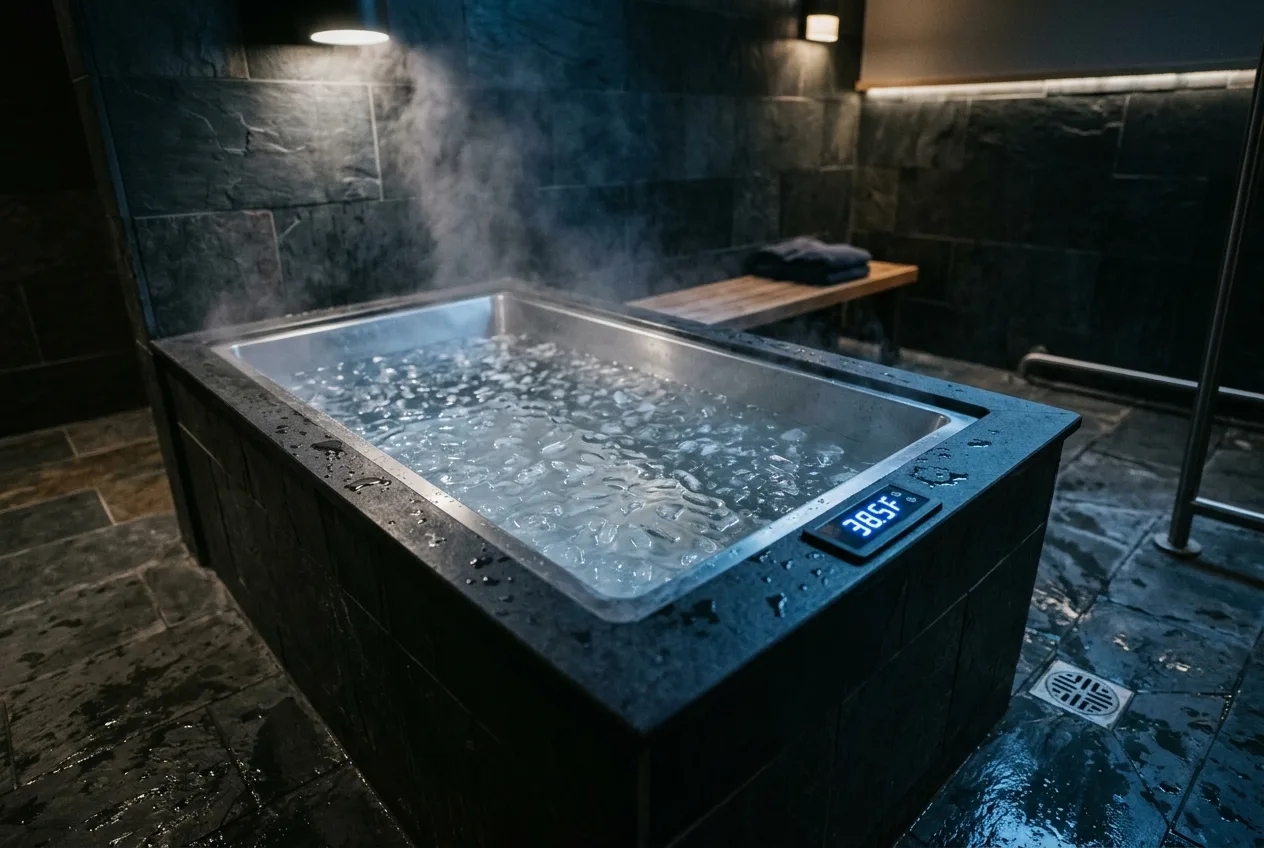
    • Cold: 10-15C (50-59F) — Cold enough for vasoconstriction without hypothermia risk

    Timing

    • Hot phase: 3-4 minutes
    • Cold phase: 1-2 minutes
    • Total cycles: 3-5 rounds
    • Total time: 15-30 minutes
    • Always end on cold — This ensures a net anti-inflammatory effect

    When to Use

    • Post-training: Within 30-60 minutes of exercise for maximum benefit
    • Heavy training days: After high-volume or high-intensity sessions
    • Competition recovery: Between events or after game day
    • Avoid pre-training: The anti-inflammatory effect may blunt training adaptations if used before exercise

    Contrast Therapy vs Other Recovery Methods

    MethodDOMS ReductionConvenienceCost
    Contrast Therapy20-30%ModerateLow-Medium
    Cold Water Immersion15-25%ModerateLow
    Active Recovery10-20%HighFree
    Compression Garments10-15%HighMedium
    Passive RecoveryBaselineHighFree

    At-Home Contrast Therapy

    You do not need expensive equipment. Two options:

    Method 1: Bathtub + Cold Shower Fill your bathtub with hot water. Soak for 3-4 minutes, then switch to a cold shower for 1-2 minutes. Repeat. Method 2: Two Containers Fill one large container with hot water and another with cold water (add ice). Alternate immersion of the target body part.
    Frequently Asked Questions

    What is contrast therapy? A recovery technique alternating hot (38-42C) and cold (10-15C) water immersion for 15-30 minutes. Used by athletes and therapists to accelerate recovery. How long should you do contrast therapy? 15-30 minutes total: 3-4 min hot, 1-2 min cold, 3-5 cycles. Always end on cold. Is contrast therapy better than ice baths? Research suggests contrast therapy may be slightly superior due to the vascular pumping effect, but both are effective. Who should avoid contrast therapy? Those with cardiovascular conditions, Raynaud's disease, open wounds, pregnancy, or uncontrolled hypertension.
    contrast therapyrecoveryhot cold therapyinflammationbiohacking

    For educational purposes only — not medical advice. Consult a healthcare professional before starting any peptide protocol. Editorial policy

    Recommended Reading

    How Cold Should a Cold Plunge Be?
    BiohackingTop Match

    How Cold Should a Cold Plunge Be?

    biohacking

    The practice of cold plunging has gained popularity as a wellness trend over recent years, with enthusiasts touting its numerous health benefits.

    12 min read
    Read
    Fibromyalgia Solution: The Science of Reversing Chronic Pain
    PeptidesTop Match

    Fibromyalgia Solution: The Science of Reversing Chronic Pain

    biohackinginflammationrecovery

    Discover the biological truth about fibromyalgia. Learn why it's reversible, the 3 fundamental failures causing it, and science-backed protocols that restore function.

    14 min read
    Read
    The Ultimate Sleep Optimization Protocol
    BiohackingTop Match

    The Ultimate Sleep Optimization Protocol

    recovery

    Master the art of recovery. Deep dive into sleep architecture and protocols used by top performers.

    15 min read
    Read
    What Is Red Light Therapy? The Complete Science Guide
    BiohackingTop Match

    What Is Red Light Therapy? The Complete Science Guide

    biohackingrecovery

    Red light therapy (photobiomodulation) uses specific wavelengths of light to stimulate cellular repair, reduce inflammation, and improve skin health. Here is how it works.

    9 min read
    Read
    How to Select the Correct Size Red Light Panel: Complete Buyer's Guide
    BiohackingTop Match

    How to Select the Correct Size Red Light Panel: Complete Buyer's Guide

    biohackingrecovery

    Choosing the right red light therapy panel depends on your treatment goals, body coverage area, and budget. This guide breaks down sizes, irradiance, and wavelengths.

    8 min read
    Read
    Circulating Cold Water Therapy Systems: The Complete Guide
    BiohackingTop Match

    Circulating Cold Water Therapy Systems: The Complete Guide

    biohackingrecovery

    Circulating cold water therapy systems deliver consistent cold temperatures for superior recovery compared to ice baths. Here are the best systems and how to use them.

    7 min read
    Read

    Made with Emergent