The Power of Cold... No, Wait — Your Heart
Picture this. You walk into a cardiologist's office. Your heart is damaged — maybe scarred, maybe throwing off weird beats, maybe just not pumping right. What do you walk out with? A prescription. Beta blockers. ACE inhibitors. A handshake. They are not fixing your heart. They are managing symptoms while the organ slowly turns to scar tissue and concrete.
I have spent 30 years as a physician and seen over a million patients. The biggest secret in cardiology right now — the one being actively buried — is a peptide called TB-500. What it does to cardiac damage is the kind of thing that should make you want to throw your biology textbook out the window and demand a reprint.
"This content is for educational purposes only and is not medical advice. TB-500 is a research peptide. Consult a licensed physician before starting any peptide protocol. All referenced studies are published, peer-reviewed research."
Your Heart Is Not a Pump
They teach you this in elementary school. Four chambers, contracts and relaxes, pushes blood around. That's like calling your iPhone a flashlight. Technically true. Completely missing the point.
Your heart is an endocrine gland. In 1981, a researcher named Adolfo de Bold at the University of Ottawa proved that the heart produces a hormone called Atrial Natriuretic Peptide (ANP). The heart literally manufactures hormonal signals that regulate blood pressure, kidney function, and fluid balance. It senses. It signals. It orchestrates the whole system.
Here is how it works in plain terms. When blood pressure goes up, special stretch-sensor cells in your heart walls fire off. Your heart releases ANP directly into your bloodstream. That hormone travels to your kidneys and tells them to dump sodium and water. Blood volume drops. Pressure comes back down. The heart managed its own workload through hormonal feedback — without a single drug.
Your heart also produces BNP, endothelin, prostaglandins. It is sensing, signaling, and orchestrating. This isn't obscure physiology — it is foundational. And it matters enormously for why TB-500 works the way it does.
How the Heart Actually Gets Destroyed
When your heart gets injured — heart attack, chronic high blood pressure, COVID, even years of extreme athletic training — a very specific chain reaction starts. The damaged cells release chemical smoke signals that call in immune cells. Those immune cells flood the area, clean up debris, and clear dead tissue. That's actually a good thing. That's how you're designed.
The problem starts when the damage doesn't stop. If your blood pressure stays elevated, if the infection doesn't clear, if the metabolic dysfunction keeps running — the inflammation becomes chronic. And chronic inflammation activates cells called fibroblasts.
Think of fibroblasts as construction workers. Normally, they build organized collagen that keeps your heart tissue healthy and flexible. But when they get stuck in the "on" position, they go haywire. They start dumping collagen everywhere — randomly, indiscriminately. That collagen isn't organized like healthy muscle. It's stiff. It doesn't contract. It doesn't relax. It sure doesn't conduct electricity. It's scar tissue. It's called myocardial fibrosis, and it is one of the biggest drivers of heart failure on the planet.
"50% of heart failure patients — even those with preserved ejection fraction — have significant fibrosis. The medical system has nothing for them. Drugs don't address fibrosis. They just lower pressure or reduce heart rate." — Sigura et al., Circulation Research, 2015
The Hypertension to Heart Failure Cascade
Your cardiologist typically only treats step one of this cascade:
- Step 1: High blood pressure creates constant mechanical strain on heart muscle cells
- Step 2: TGF-beta pathway activates — a molecular switch that wakes up fibroblasts
- Step 3: Fibroblasts multiply and dump collagen throughout heart tissue, disorganized and stiff
- Step 4: Myocardial fibrosis forms — scar tissue that cannot pump, relax, or carry electrical signals
- Step 5: Diastolic dysfunction — the heart cannot relax and fill properly
- Step 6: Clinical heart failure and eventual death
Your cardiologist treats step one. Steps two through six keep happening. It is like trying to put out a burning skyscraper by fanning the building with a towel from outside.
The Athlete's Heart Trap
Here is something that messes with a lot of serious athletes, including HYROX competitors and endurance athletes who push hard year-round: Left Ventricular Hypertrophy (LVH).
When you push your cardiovascular system hard — through chronically elevated blood pressure or extreme training loads — your left ventricle adapts by getting thicker. More muscle. More wall. Sounds like adaptation. Sounds like strength. It's not.
Here is the problem: your blood vessels do not grow proportionally. Your left ventricle gets 20% thicker, but its blood supply only grows maybe 5%. A 2003 study by Schwarzoff in the Journal of Hypertension confirmed that LVH creates a significant capillary deficit — fewer blood vessels per unit of tissue. The inner layers of that thicker wall become oxygen-starved (hypoxic).
Hypoxic tissue activates HIF-1 alpha. HIF-1 alpha upregulates TGF-beta. TGF-beta activates fibroblasts. Fibroblasts deposit collagen. Your bigger, "stronger" heart is now building itself into a scarred, stiff, electrically unstable organ.
What TB-500 Actually Does
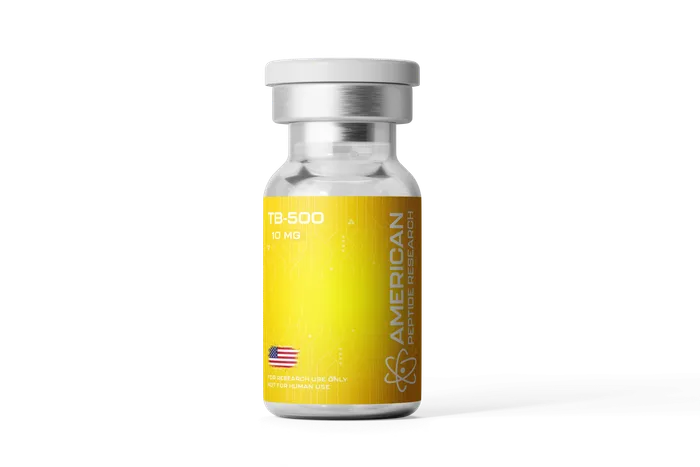
TB-500 is a synthetic version of a protein your body produces naturally called Thymosin Beta-4. It was identified back in 1981, and it works at the level of your cell scaffolding — actin filaments, the internal structure cells use to move, change shape, and heal. Here are the four primary mechanisms backed by published research:
1. Builds New Blood Vessels (Angiogenesis)
A 2002 study by Malinda and Faucet in the FASEB Journal showed that TB-500 stimulates endothelial cells to form new blood vessels by upregulating VEGF (vascular endothelial growth factor). In a damaged, hypoxic heart, this is critical — it tells the organ to build its own oxygen supply and break the fibrosis cycle at the root.
2. Converts Destructive Inflammation to Reparative Inflammation
A 2010 study by Philp in Molecular Medicine showed that TB-500 downregulates pro-inflammatory cytokines (TNF-alpha, IL-6) while upregulating anti-inflammatory mediators. In an ischemic heart, it fundamentally shifts the immune response from destroying tissue to repairing it.
3. Deprograms Fibroblasts and Stops Scar Tissue Formation
This is the big one. A 2013 study by Srivatsa in PLOS ONE showed that TB-500 directly inhibits the TGF-beta SMAD-3 pathway — the exact molecular switch that turns fibroblasts into collagen-dumping scar machines. It reduces the fibroblast activation marker alpha-smooth muscle actin by 60%.
4. Deploys the Body's Own Repair Crew
A 2008 study by Bock-Marquette in Circulation Research showed that TB-500 mobilizes bone marrow-derived progenitor cells and directs them to cardiac tissue. These are your body's own regenerative stem cells.
The Research: Hard Numbers
- 2015, Cardiovascular Research (Smart et al.): TB-500 administered 6 weeks post-MI reversed established cardiac fibrosis — reduced collagen content and improved ejection fraction
- 2016, Basic Research in Cardiology (Worth et al.): TB-500 reduced ventricular arrhythmias by 67% post-infarction
- 2013, PLOS ONE (Srivatsa et al.): TB-500 inhibited TGF-beta SMAD-3 pathway; reduced fibroblast activation marker alpha-SMA by 60%
- 2014, American Journal of Pathology (Sus et al.): TB-500 reduced kidney protein leakage by 56% and glomerulosclerosis by 48%
How TB-500 Stops Arrhythmias
Atrial fibrillation. PVCs. PACs. These arrhythmias all share something that mainstream cardiology is not connecting loudly enough: fibrosis.
Your heart's electrical system needs clean, organized pathways. Action potentials spread like smooth waves across organized tissue. But when you have patchy scar tissue, those waves hit walls, get rerouted, and start spinning in loops around the scars. That is called re-entry — and it is the engine of most arrhythmias.
TB-500 addresses arrhythmias through three distinct mechanisms: First, it reduces the fibrotic substrate that creates re-entry circuits. Second, it improves kidney function and electrolyte balance, especially potassium levels. Third, it reduces systemic inflammation that creates a pro-arrhythmic tissue environment. The result: a 67% reduction in ventricular arrhythmias (Worth, 2016).
The Heart-Kidney Connection
Your heart and kidneys are married. There is no divorce. They are inextricably linked through a system called the Renin-Angiotensin-Aldosterone System (RAAS) — your body's master controller of blood pressure, sodium balance, and fluid volume.
Here is the short version. Your kidneys sense blood pressure. When pressure drops, they release an enzyme called renin. Renin starts a chain reaction: renin converts a liver protein into Angiotensin 1, which passes through the lungs and gets converted by ACE into Angiotensin 2. Angiotensin 2 narrows blood vessels, triggers aldosterone, and ramps up the nervous system.
The RAAS Death Spiral
- Step 1: Hypertension constricts kidney blood vessels through elevated Angiotensin 2
- Step 2: Kidneys perceive low perfusion — release even more renin — more Angiotensin 2
- Step 3: Angiotensin 2 directly activates cardiac fibroblasts and damages kidney filtering units
- Step 4: Heart scars faster. Kidneys filter worse. Electrolytes dysregulate.
- Step 5: Both organs fail simultaneously while treated as separate diseases
Chronic kidney disease and heart disease are the same disease showing up in two different organs. TB-500 addresses both by targeting shared root causes: fibrosis, inflammation, and poor microvascular perfusion.
A 2014 study showed TB-500 reduced kidney protein leakage by 56%, reduced glomerulosclerosis by 48%, and improved creatinine clearance. A 2012 study by Badell showed improved renal microvascular perfusion. When you improve kidney function through TB-500, you break the RAAS spiral. When you break the RAAS spiral, you break the cardiac disease spiral.
Why This Isn't Standard of Care
The science is not fringe. The studies are published, peer-reviewed, in top-tier journals. So why is your cardiologist still handing you a beta blocker prescription instead of discussing TB-500?
Two reasons: patents and philosophy.
TB-500 (Thymosin Beta-4) is not patentable. No pharmaceutical company can exclusively own it. That means there is zero financial incentive to run the billion-dollar clinical trial pathway needed for FDA approval.
The second problem is philosophical. Conventional cardiology is built on reductionist thinking: one drug for one measurement. TB-500 is pleiotropic — it does multiple things at once. Angiogenesis, fibrosis reversal, electrolyte normalization, anti-inflammatory effects, stem cell mobilization. All simultaneously.
The Core Insight
The current cardiac toolkit slows how fast you die. TB-500 addresses the root cause — fibrosis, angiogenic deficit, RAAS dysregulation — at the cellular level. Your body already knows how to heal. It already has the machinery. TB-500 turns that program on and points it at the right target. That is the difference between managed decline and actual reversal.
Published Research Referenced
- Malinda & Faucet (2002) — FASEB Journal — TB-500 promotes angiogenesis
- Bock-Marquette (2008) — Circulation Research — TB-500 mobilizes progenitor cells for cardiac repair
- Philp (2010) — Molecular Medicine — Thymosin Beta-4 mitigates inflammation post-MI
- Badell (2012) — Nephrology — TB-500 improves renal microvascular perfusion
- Srivatsa (2013) — PLOS ONE — TB-500 inhibits TGF-beta SMAD-3 pathway; reduces alpha-SMA 60%
- Sus (2014) — Am. J. Pathology — TB-500 reduces glomerulosclerosis 48%, albuminuria 56%
- Nattel (2014) — Circulation Research — Atrial fibrillation is fundamentally a disease of atrial fibrosis
- Smart (2015) — Cardiovascular Research — TB-500 reverses post-infarction cardiac fibrosis
- Sigura (2015) — Circulation Research — 50% of heart failure patients have significant fibrosis
- Worth (2016) — Basic Research in Cardiology — TB-500 reduces ventricular arrhythmias 67%
- Schwarzoff (2003) — J. of Hypertension — LVH creates significant capillary deficit
- Zhang (2009) — J. Cardiovasc. Pharmacology — TB-500 attenuates cardiomyocyte hypertrophy