How Much Sleep Actually Slows Aging? The 6.4–7.8 Hour Window, Explained
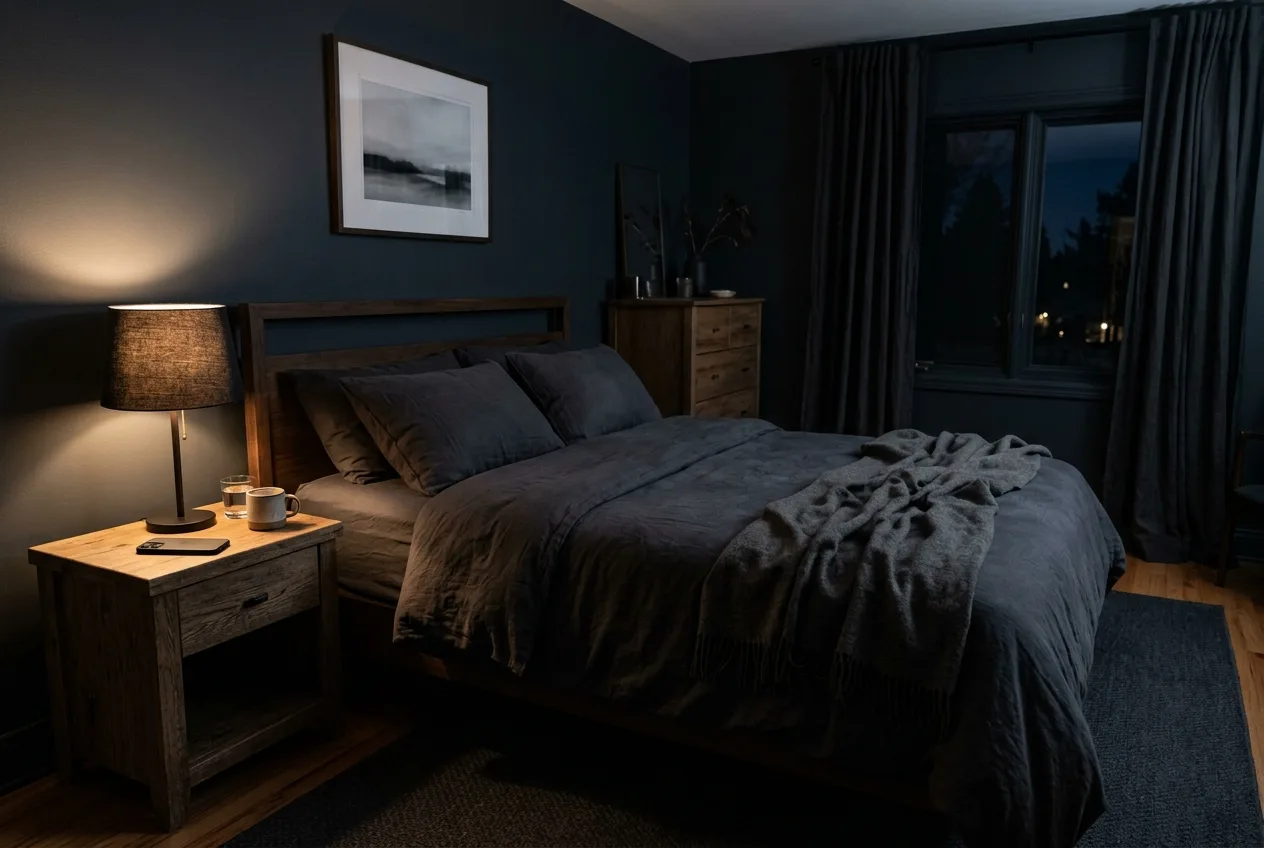
Most people age slowest biologically on 6.4 to 7.8 hours of sleep. In a 2026 Nature analysis of ~500,000 UK Biobank adults, both short sleep (under 6h) and long sleep (over 8h) tracked with faster aging across 17 organ systems. The window is narrower than the classic 7–9 hour guideline, and consistency inside it matters more than which end you favor.
- Biological aging followed a clean U-shape against sleep duration, lowest at 6.4–7.8 hours.
- The pattern held across 17 organ systems and three data layers: imaging, proteomics, metabolomics.
- The brain clock showed the strongest U-shape of all.
- Long sleep is often a marker of underlying disease, not proof that sleeping more ages you.
- Consistency inside the window beats chasing either extreme.
What did the 2026 Nature sleep study actually find?
Researchers from the MULTI Consortium built a tool they call a Sleep Chart: a way to line up self-reported sleep duration against 23 biological aging clocks. Instead of one whole-body age, each clock estimates how fast a specific system is aging relative to a person's actual birthday.
Drawing on roughly 500,000 UK Biobank adults aged 37 to 84, one shape kept repeating: a U-curve. Aging was slowest in the middle and faster on both ends. The floor sat between 6.4 and 7.8 hours.
How they measured aging: 23 clocks, 17 systems, 3 data layers
The clocks were built from three kinds of data: in-vivo imaging (organ scans), plasma proteomics (blood proteins), and metabolomics (metabolites). That spread is what makes the finding hard to wave away: the same U-shape appeared in structure, in proteins, and at the molecular level, across nine major brain and body systems.
Why is 6.4–7.8 hours the "sweet spot"?
Across the body, the lowest biological age gaps clustered in that band. It was not a single magic number. The exact low point drifted a little by organ and by sex, but the range held. For the brain clock specifically, the estimated optimum was about 7.70 hours for men and 7.82 hours for women.
The window is narrower than "7 to 9" — and consistency inside it beats chasing either end.
Is this different from the "7 to 9 hours" recommendation?
Yes, subtly but usefully. The familiar 7–9 hour range comes from the National Sleep Foundation's 2015 consensus panel, built to prevent deficiency in healthy adults. This 2026 work is asking a different question: at what duration does the body age slowest? The answer tightens the low end and pulls the ceiling in from 9 toward just under 8.
| Nightly sleep | Biological aging signal | What it often means |
|---|---|---|
| Under 6h | Accelerates sharply | The short-sleep penalty |
| 6.4–7.8h | Slowest | The longevity window |
| Over 8h, regularly | Rises again | Often a marker of an underlying issue |
Does the same pattern hold for the brain?
It holds hardest there. The brain proteomic clock showed the strongest U-shape of any system measured. The protective effect of the 6.4–7.8 window appeared in regions tied to memory, executive function, and emotion, the structures that decide long-term cognition. If you care about aging your brain slowly, sleep is not a side quest. For the cognitive-optimization angle, see our breakdown of what the science actually says about brain-repair peptides.
Wait, isn't more sleep supposed to be good?
This is where the study rewards careful reading. The long end of the curve rising does not mean you should set an alarm to cut a good night short. In population data like this, regularly sleeping well over 8 hours is frequently a marker of something underneath, such as depression, chronic inflammation, or sleep apnea, rather than the cause of faster aging. Sleep duration here is also self-reported, not measured in a lab.
So the honest takeaway is not "long sleep ages you." It is: sleep landing well outside the window is a flag worth investigating, not a number worth defending.
How do athletes actually land in the window?
For anyone training hard, sleep is where adaptation happens. Here is a practical way to sit inside 6.4–7.8 hours without obsessing over it.
- Anchor a consistent wake time. Consistency showed up as more important than chasing either extreme. Pick a wake time you can hold seven days a week.
- Aim for ~7 to 7.5 hours in bed. Most people lose 20 to 40 minutes to sleep latency and wake-ups, so time-in-bed slightly above the window nets you into it.
- Protect quality, not just quantity. The aging penalty at the long end was worst alongside poor sleep quality. Cool, dark room, caffeine cutoff ~8 hours before bed.
- Treat oversleeping as a signal. If you consistently need 9+ hours, screen for apnea, low mood, or inflammation instead of assuming it is harmless.
- Track the trend. Run your numbers through our Longevity Score calculator and pair sleep with your training load so recovery keeps up with the work.
Sleep is half the recovery equation. Oxygen is the other half.
If you are already dialing in sleep, the next lever is how fast your body clears fatigue between sessions. NanoJet nanobubble hydrotherapy is what we use for recovery on heavy HYROX blocks.
Explore Bimini recovery · code NINJAAffiliate link. Code NINJA saves $500 on NanoJet. We only partner with tools we actually use.
Frequently asked questions
How much sleep slows aging the most?
In the 2026 Nature analysis of ~500,000 UK Biobank adults, biological aging was slowest between 6.4 and 7.8 hours. Both short sleep (under 6h) and long sleep (over 8h) tracked with faster aging across 17 organ systems.
Is 8 hours of sleep too much?
Not necessarily. But regularly sleeping more than 8 hours was associated with faster biological aging, especially with poor sleep quality. Long sleep is often a marker of an underlying issue rather than the cause.
Does oversleeping cause aging?
The link is an association, not proven cause and effect. Regularly sleeping well over 8 hours can flag depression, chronic inflammation, or sleep apnea, which may drive both the long sleep and the faster aging.
Is 6 hours of sleep enough?
For most adults, no. Below 6 hours, biological aging accelerated sharply, consistent with the well-established short-sleep penalty.
Does the sleep sweet spot differ from person to person?
Yes. The lowest biological age gaps landed between 6.4 and 7.8 hours but varied by organ and sex. For the brain clock, the estimated optimum was roughly 7.70 hours for men and 7.82 hours for women.
Not medical advice. This article is educational and summarizes published research. It does not diagnose or treat any condition, and NinjAthlete does not employ clinicians or provide medical review. Talk to a licensed clinician before changing your sleep, training, or recovery, especially if you have a sleep disorder. See our editorial policy.
Sources
- The MULTI Consortium et al. Sleep chart of biological ageing clocks in middle and late life. Nature (2026). DOI: 10.1038/s41586-026-10524-5.
- Hirshkowitz M, Whiton K, Albert SM, et al. National Sleep Foundation's updated sleep duration recommendations: final report. Sleep Health 1(4):233–243 (2015). DOI: 10.1016/j.sleh.2015.10.004.
- Columbia University Irving Medical Center. Too Little Sleep, and Too Much, Associated with Faster Aging (2026).
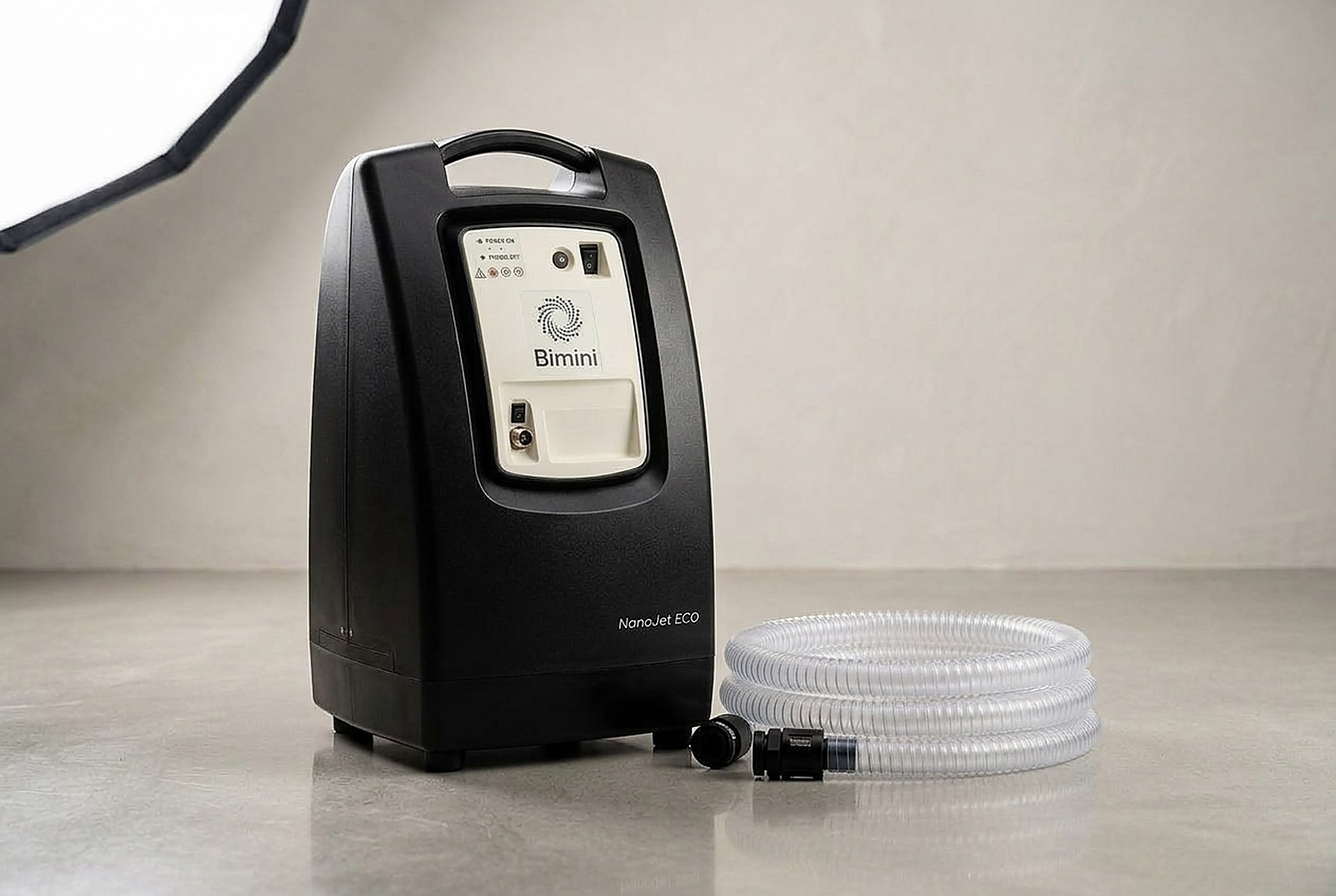
YOUR POST-TRAINING ROUTINE
Make room for recovery.
Get to know Bimini’s warm-water nanobubble system. Compare home options and see how the setup fits your routine.
Bimini NanoJet® Eco
$9,650.00$8,685.00
With NINJA • Before shipping and tax. Final offer confirmed by Bimini.
Partner offer: Daniel Rivas, NinjAthlete’s founder, is Bimini’s marketing director. NinjAthlete may earn a commission from purchases through these links.
Was this article helpful?
AI Picks For You
AI CuratedThe Ultimate Sleep Optimization Protocol
The Longevity Blueprint: 8 Science-Backed Habits + Biohacking Stack

VO2 Max & Longevity: The #1 Predictor of How Long You'll Live

Oxygen and Your Brain: What the Research Says (and How to Protect the Supply)
Recommended Reading
LongevityTop MatchVO2 Max & Longevity: The #1 Predictor of How Long You'll Live
VO2 max may be the strongest predictor of how long you'll live — beating weight, cholesterol and blood pressure. The evidence and how to train it.
LongevityTop MatchThe Longevity Blueprint: 8 Science-Backed Habits + Biohacking Stack
A landmark study of 719,147 veterans found that 8 specific habits can add up to 24 years to your lifespan. Here is the science, the habits, and the biohacking stack.
 RecoveryTop Match
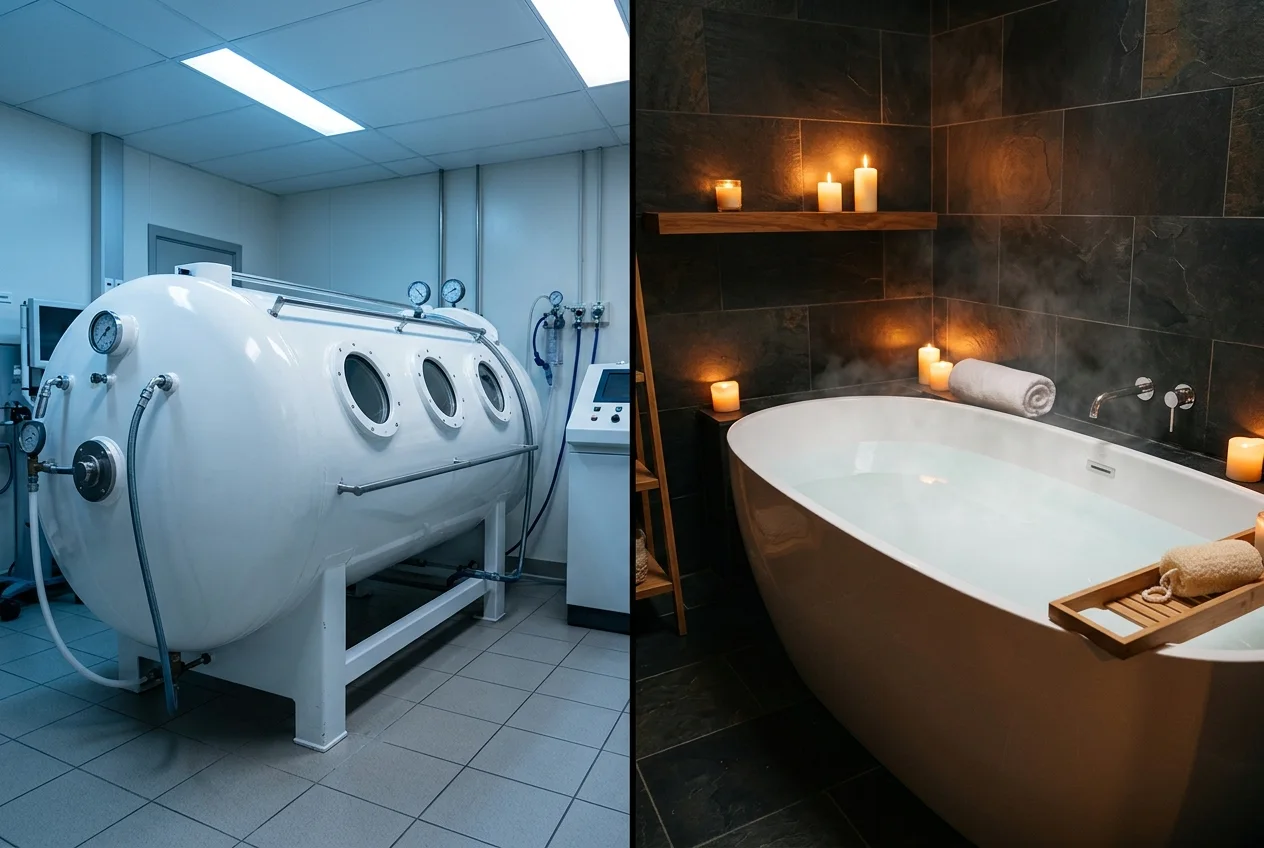
HBOT vs. Nanobubble Hydrotherapy: Oxygen Recovery Guide
Hyperbaric oxygen therapy and warm nanobubble hydrotherapy both use oxygen for recovery, but they do different jobs. See how HBOT and Bimini compare.
 WellnessTop Match
Wellness Trends 2026: The 3 Biggest Biohacking Markets for Men & Women
The wellness economy is heading to $9.8 trillion by 2029. Here are the 3 fastest-growing biohacking trends — neurowellness, longevity, and recovery real estate — backed by Global Wellness Institute data, with sex-specific playbooks for men and women.
 LongevityTop Match
The 18 Best Longevity Tools of 2026 (Ranked by Evidence)
The 18 best longevity tools of 2026, ranked by evidence and real 2026 prices — from sauna and cold plunge to hyperbaric oxygen, wearables and DEXA.
 WellnessTop Match
Evening Training: A Simple Reset for Mind and Body After Work
Transform your evenings with an evening workout to reduce stress, enhance sleep, and restore balance to your life.