HBOT vs. Nanobubble Hydrotherapy: Two Ways to Use Oxygen for Recovery
Hyperbaric chambers and warm nanobubble baths keep getting lumped together as "oxygen therapy." They're not the same tool — and knowing the difference changes how you'd actually use each one.
Disclosure: This article contains affiliate links. If you buy through them, NinjAthlete may earn a commission at no extra cost to you.
HBOT and nanobubble hydrotherapy both put oxygen to work for recovery, but they do different jobs. Hyperbaric oxygen therapy has you breathe near-100% oxygen in a pressurized chamber — clinical-grade, intensive, and occasional. Nanobubble hydrotherapy (like the Bimini system) infuses warm bath water with ultrafine oxygen bubbles you soak in — low-effort and built for daily use.
Treat them as complementary, not rivals: the chamber for the occasional targeted reset, the warm soak for the daily recovery you'll actually keep doing.
What is hyperbaric oxygen therapy (HBOT)?
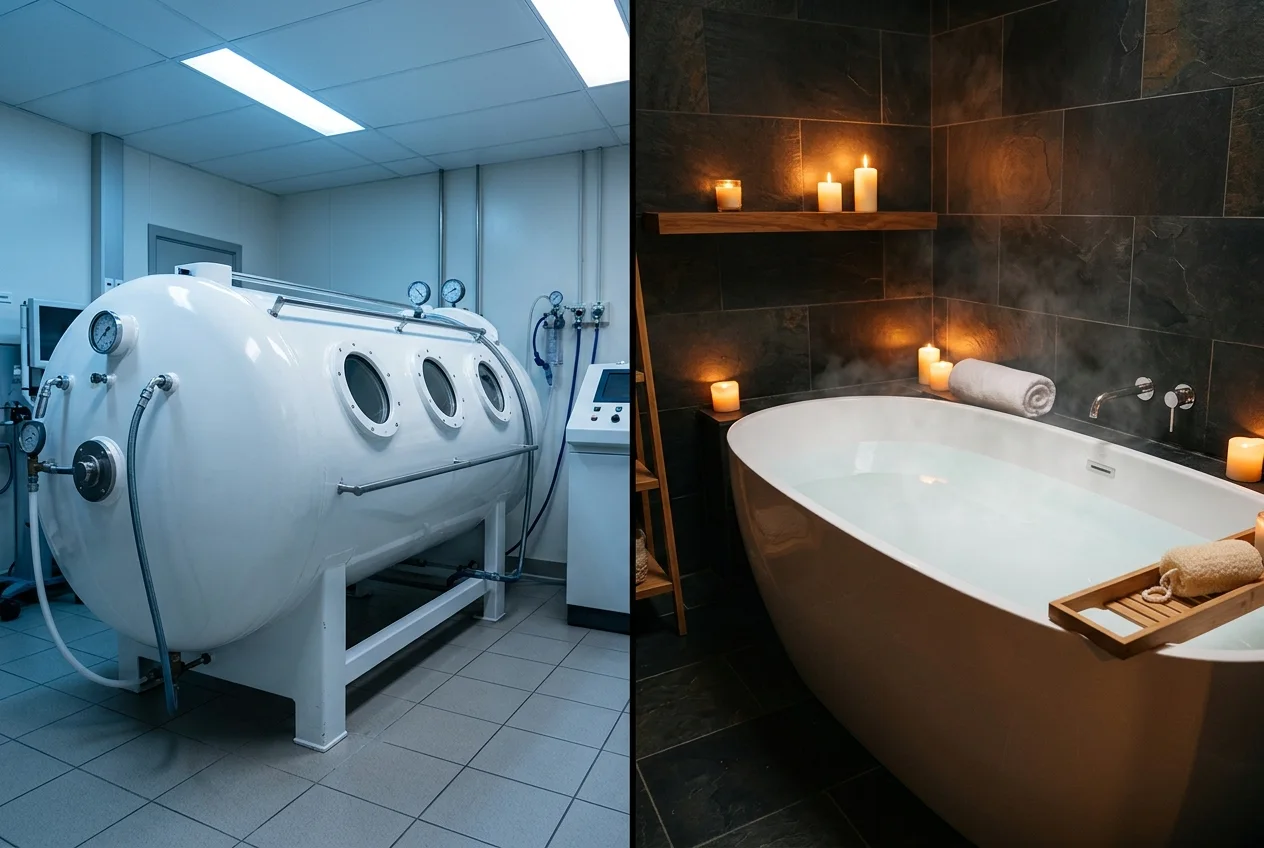
Hyperbaric oxygen therapy is a medical treatment where you breathe near-100% oxygen inside a sealed chamber pressurized above normal atmospheric pressure. That pressure matters: under it, extra oxygen dissolves directly into your blood plasma — not just the oxygen your red blood cells carry — so it can reach tissues that compromised circulation might otherwise miss.
The Undersea and Hyperbaric Medical Society recognizes 14 approved indications for HBOT, including decompression sickness, carbon monoxide poisoning, non-healing wounds, and radiation tissue injury. Clinical protocols run at a minimum of 2.0 ATA (atmospheres absolute) with sessions typically lasting 90 to 120 minutes. That's the important context for anyone eyeing HBOT for recovery or longevity: those uses fall outside the established medical indications and are considered off-label.
What is nanobubble hydrotherapy, and how does Bimini work?
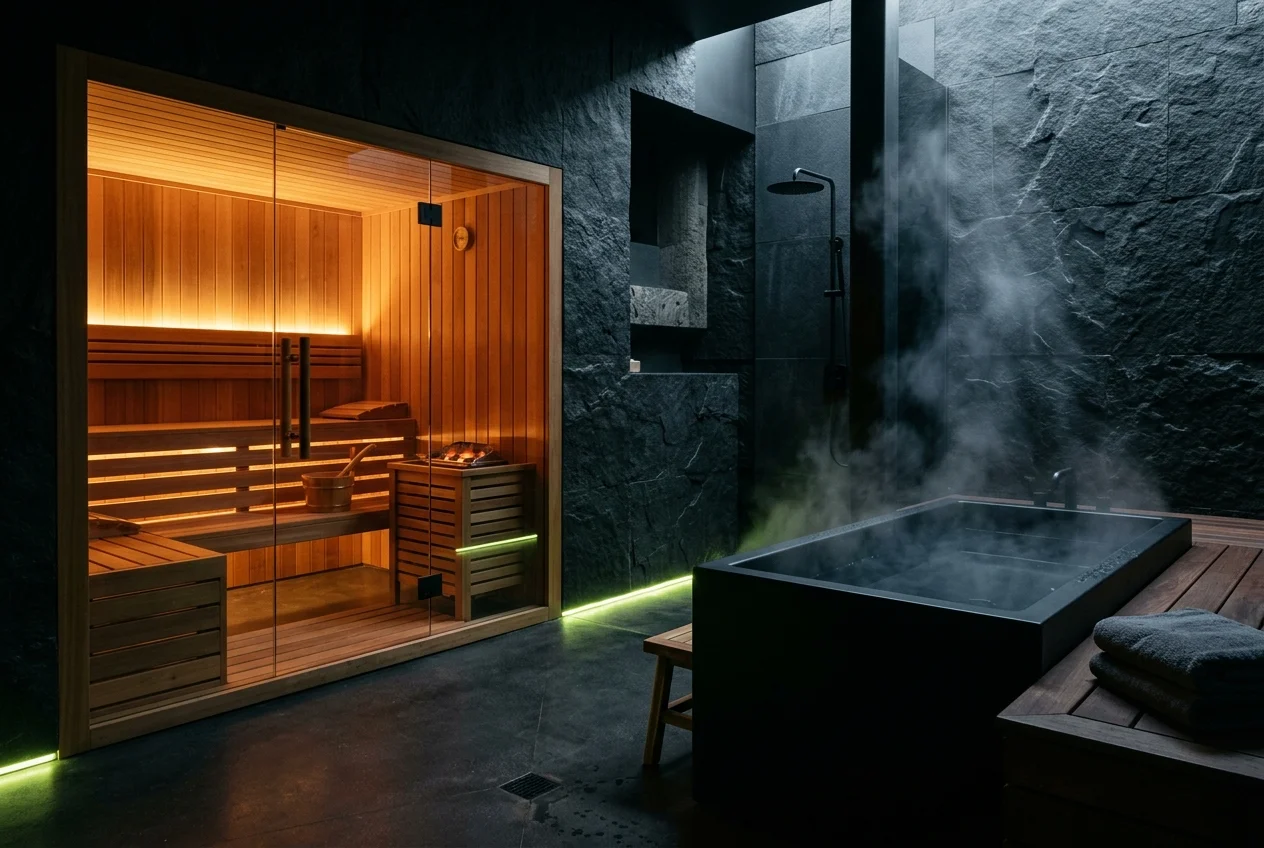
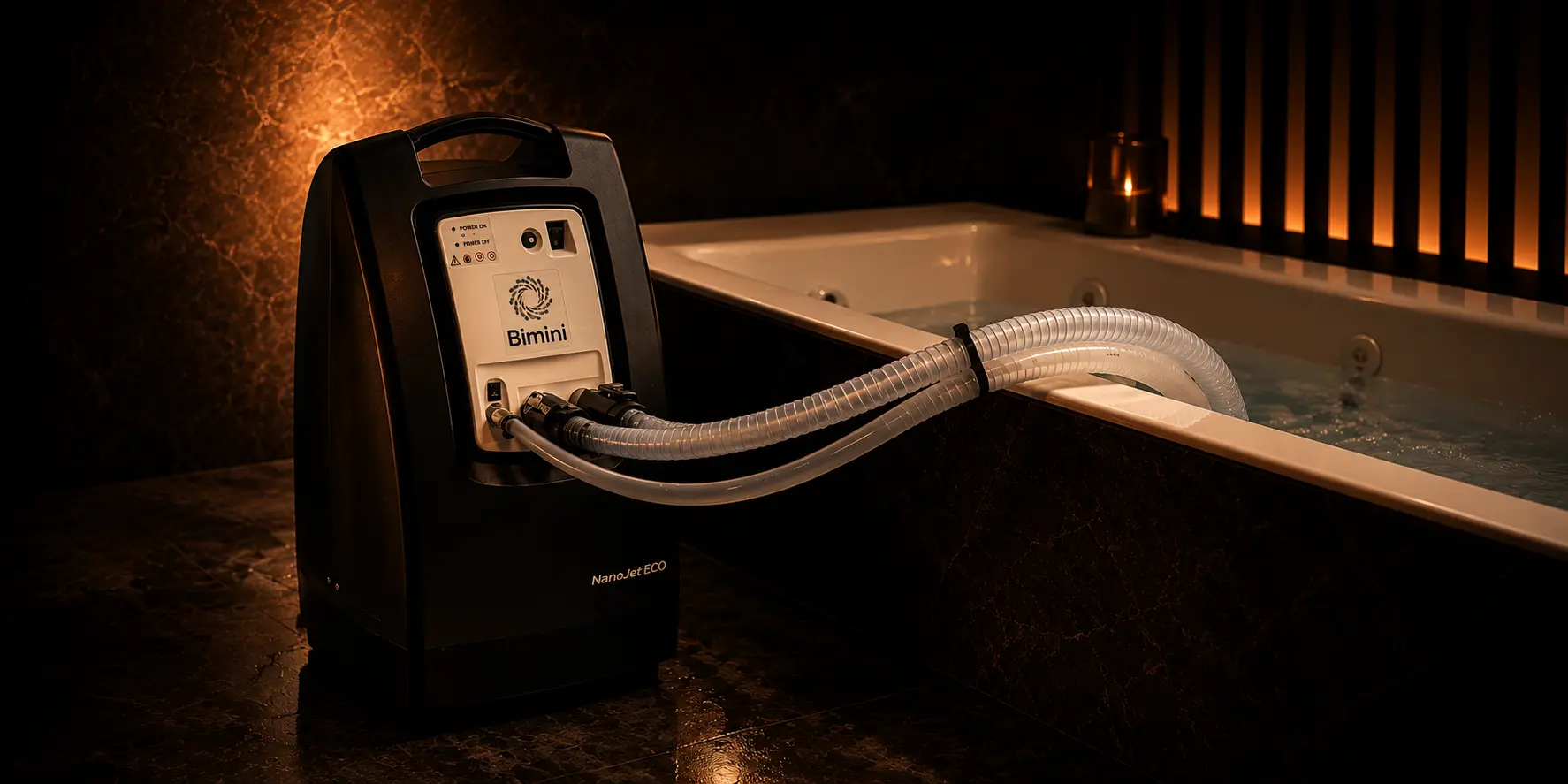
Nanobubble hydrotherapy takes a different route to oxygen. Instead of pressure and lungs, it uses water. A generator (in Bimini's case, the NanoJet) saturates warm bath water with ultrafine oxygen bubbles — nanobubbles, which are gas bubbles smaller than one micron. Unlike ordinary bubbles that rise and pop in seconds, nanobubbles stay suspended in the water, giving the gas an enormous surface area to interact with.
Bimini's position is that these sub-200-nanometer oxygen bubbles support recovery through the skin during a warm soak. It's worth being precise here: the physics of stable nanobubbles is well established, but the claim that a warm nanobubble bath meaningfully oxygenates deep tissue is a Bimini/proponent claim, not a settled clinical finding. We'll look at what the research actually supports below.
HBOT vs. nanobubble hydrotherapy: what's the difference?
Here's the head-to-head. The through-line: one is a pressurized clinical modality you schedule occasionally, the other is a warm at-home habit you can repeat daily.
| HBOT | Nanobubble (Bimini) | |
|---|---|---|
| Oxygen delivery | Breathe near-100% O₂ under pressure → dissolves into blood plasma | Soak in warm water saturated with ultrafine O₂ nanobubbles |
| Pressure / setting | Sealed chamber, ≥2.0 ATA (clinical) | Normal pressure, warm bath at home |
| Typical session | ~90–120 minutes, scheduled | A warm soak you fit into your routine |
| Cadence | Occasional, intensive resets | Low-effort, daily-friendly |
| Feel | Clinical, high-commitment | Relaxing, restorative |
| Evidence maturity | Strong for 14 medical indications; recovery/longevity uses emerging | Physics solid; human recovery trials still early |
| Best for | Targeted recovery pushes | Everyday consistency |
Oxygen, two different routes
HBOT uses pressure and your lungs; nanobubble therapy uses warm water and your skin.
Does HBOT actually work for recovery and longevity?
This is where honesty matters. HBOT is rock-solid for its 14 approved medical uses. For athletic recovery, the picture is promising but mixed.
A 2025 systematic review and meta-analysis of 10 trials (299 subjects) concluded that HBOT significantly accelerated recovery from exercise-induced muscle injury. But an earlier Cochrane review found insufficient evidence that HBOT helps delayed-onset muscle soreness, and even some signal that it might increase interim soreness. A 2025 review of musculoskeletal pain likewise called the DOMS and acute-injury results inconsistent. Translation: there's a real signal, but HBOT is best viewed as an adjunct to good training and rehab, not a magic reset.
The longevity angle got its headline moment from a 2020 Tel Aviv University trial. In healthy older adults, a 3-month HBOT protocol was associated with telomere lengthening of up to 38% and a drop of up to 37% in senescent immune cells.
HBOT longevity signal (Hachmo et al., 2020)
Changes in isolated blood cells after ~60 HBOT sessions over 3 months, in healthy older adults. Small study — encouraging, not proof.
It's a genuinely exciting result — but it's one small study in healthy older adults, measuring markers in isolated blood cells. It is not proof that HBOT reverses aging, and it shouldn't be sold that way. Bigger, longer trials are the next step.
Is nanobubble hydrotherapy backed by science?
The foundation is real. Nanobubbles are a legitimate, well-characterized phenomenon: ultrafine bubbles under a micron that stay stable in water, giving gases a huge surface area to transfer. Early research is intriguing — nanobubble and hydrogen-nanobubble water has been linked to antioxidant, anti-inflammatory, and skin-appearance signals in lab settings, and a 2025 rat study found ultrafine-bubble drinking water shifted gut microbiota and lowered inflammatory markers.
What's missing is the same thing missing from a lot of wellness tech: robust, human, randomized trials specifically on warm oxygen nanobubble bathing for recovery. So the honest framing is that nanobubble hydrotherapy is a low-risk, genuinely relaxing recovery ritual with promising early science — but the deep-tissue-oxygenation claims should be read as emerging, not established. If a brand tells you it's clinically proven to oxygenate your muscles, be skeptical.
Key takeaways
- Different jobs: HBOT = pressurized, occasional, clinical-grade. Nanobubble bath = warm, daily, low-effort.
- HBOT for recovery: a 2025 meta-analysis is positive; older Cochrane data is cautious. Adjunct, not cure.
- HBOT for longevity: one promising 2020 trial (+38% telomere length) — small, early, not proof.
- Nanobubble science: real physics, promising early lab/animal data, thin human recovery evidence.
- The move: use both for different days; neither replaces sleep, training, and food.
Should you use HBOT, Bimini, or both?
Because they solve different problems, the smartest framing isn't "which one wins" — it's "which job are you hiring it for."
- Pick HBOT when the job is a targeted, occasional reset. You want a clinical-grade push around a hard training block, an injury, or a specific goal — and you're fine scheduling it.
- Pick nanobubble hydrotherapy when the job is daily consistency. You want a relaxing, low-effort recovery habit you'll actually repeat at home most nights. Consistency beats intensity you never do.
- Stack both if you have access. Occasional chamber sessions for the deep reset, a warm nanobubble soak for the everyday. They cover opposite ends of the recovery spectrum.
- Anchor it to the basics. Neither tool outruns poor sleep, no training stimulus, or bad nutrition. Want a baseline? Run your numbers with our Longevity Score Calculator.
If you're training for something specific, recovery only matters as much as the work it supports — our HYROX training guide and sub-60 HYROX plan pair well with either recovery tool. More deep-dives live in the HYROX Training Hub and on the NinjAthlete blog.
Want the daily oxygen habit?
Bimini's NanoJet turns any tub into a warm nanobubble soak — the low-effort recovery you'll actually keep doing. See the featured partner module below for the current NinjAthlete offer.
Frequently asked questions
Is nanobubble hydrotherapy the same as a hyperbaric oxygen chamber?
No. HBOT has you breathe near-100% oxygen in a pressurized chamber, which dissolves extra oxygen into your blood plasma. Nanobubble hydrotherapy infuses warm bath water with ultrafine oxygen bubbles you soak in. One is a pressurized clinical modality done occasionally; the other is a warm, at-home immersion built for daily use.
Does HBOT actually work for athletic recovery?
Promising but mixed. A 2025 meta-analysis of 10 trials found HBOT significantly accelerated recovery from exercise-induced muscle injury, while an earlier Cochrane review found insufficient evidence for DOMS and even signs of increased interim pain. Best treated as an adjunct to standard recovery.
Can HBOT reverse aging?
A 2020 Tel Aviv University trial reported up to 38% telomere lengthening and up to 37% fewer senescent immune cells after a 3-month protocol in healthy older adults. Encouraging, but small and early — not proof that HBOT reverses aging.
Is nanobubble hydrotherapy backed by science?
The physics of stable ultrafine bubbles is well established, and early lab and animal studies show antioxidant and anti-inflammatory signals. But high-quality human trials on warm oxygen nanobubble bathing for recovery are still limited, so deep-tissue-oxygenation claims are emerging rather than settled.
Should I use HBOT, Bimini, or both?
They do different jobs. HBOT is an occasional, clinical-grade reset; nanobubble hydrotherapy is a relaxing daily habit. Many people use both — the chamber for a targeted push, the warm soak for everyday consistency. Neither replaces sleep, training, and nutrition.
Sources
- Hachmo Y, et al. Hyperbaric oxygen therapy increases telomere length and decreases immunosenescence in isolated blood cells: a prospective trial. Aging. 2020;12(22):22445–22456. DOI: 10.18632/aging.202188. aging-us.com
- Undersea and Hyperbaric Medical Society. Indications for Hyperbaric Oxygen Therapy (14 approved indications; ≥2.0 ATA). uhms.org
- Effects of Hyperbaric Oxygen Therapy on Exercise-Induced Muscle Injury and Soreness: A Systematic Review and Meta-analysis. 2025 (10 trials, 299 subjects). PubMed 40784513
- Bennett MH, et al. Hyperbaric oxygen therapy for delayed onset muscle soreness and closed soft tissue injury. Cochrane Database Syst Rev. Cochrane
- Effectiveness of HBOT for Musculoskeletal Pain Syndromes: A Systematic Review (2025). PMC12736084
- Nanobubbles: a bridge connecting nanomedicine and gas medicine. PMC. PMC11918481
- Jackowetz JN, et al. Effects of Ultrafine Bubble Water on Gut Microbiota Composition and Health Markers in Rats. Nanomaterials. 2025. DOI: 10.3390/nano15151193. PMC12348793
- Medscape / eMedicine. Hyperbaric Oxygen Therapy: Overview, Physics and Physiology. emedicine.medscape.com