Oxygen and Your Brain: What the Research Says (and How to Protect the Supply)
Your brain is 2% of your body and burns about 20% of the oxygen you breathe. Here's what it does with it, what happens when it runs short, and the four habits that actually protect the supply.
Disclosure: This article contains affiliate links. If you buy through them, NinjAthlete may earn a commission at no extra cost to you.
Key takeaways
- Your brain is about 2% of your body weight but uses about 20% of your oxygen at rest (Raichle & Gusnard, PNAS, 2002).
- Across 22 experiments in healthy adults, acute low oxygen caused a moderate drop in thinking performance (effect size g = -0.49; McMorris et al., Neuroscience & Biobehavioral Reviews, 2017).
- Attention takes the biggest hit when oxygen drops, ahead of memory and executive function (Jung et al., Journal of Sport and Health Science, 2020).
- In healthy people, blood oxygen already sits at 95 to 100% (Cleveland Clinic), so "more oxygen" usually means protecting delivery and recovery, not breathing harder.
- A warm bath 1 to 2 hours before bed shortened the time it took to fall asleep across a 2019 meta-analysis of 17 studies (Haghayegh et al., Sleep Medicine Reviews).
How much oxygen does the brain use?
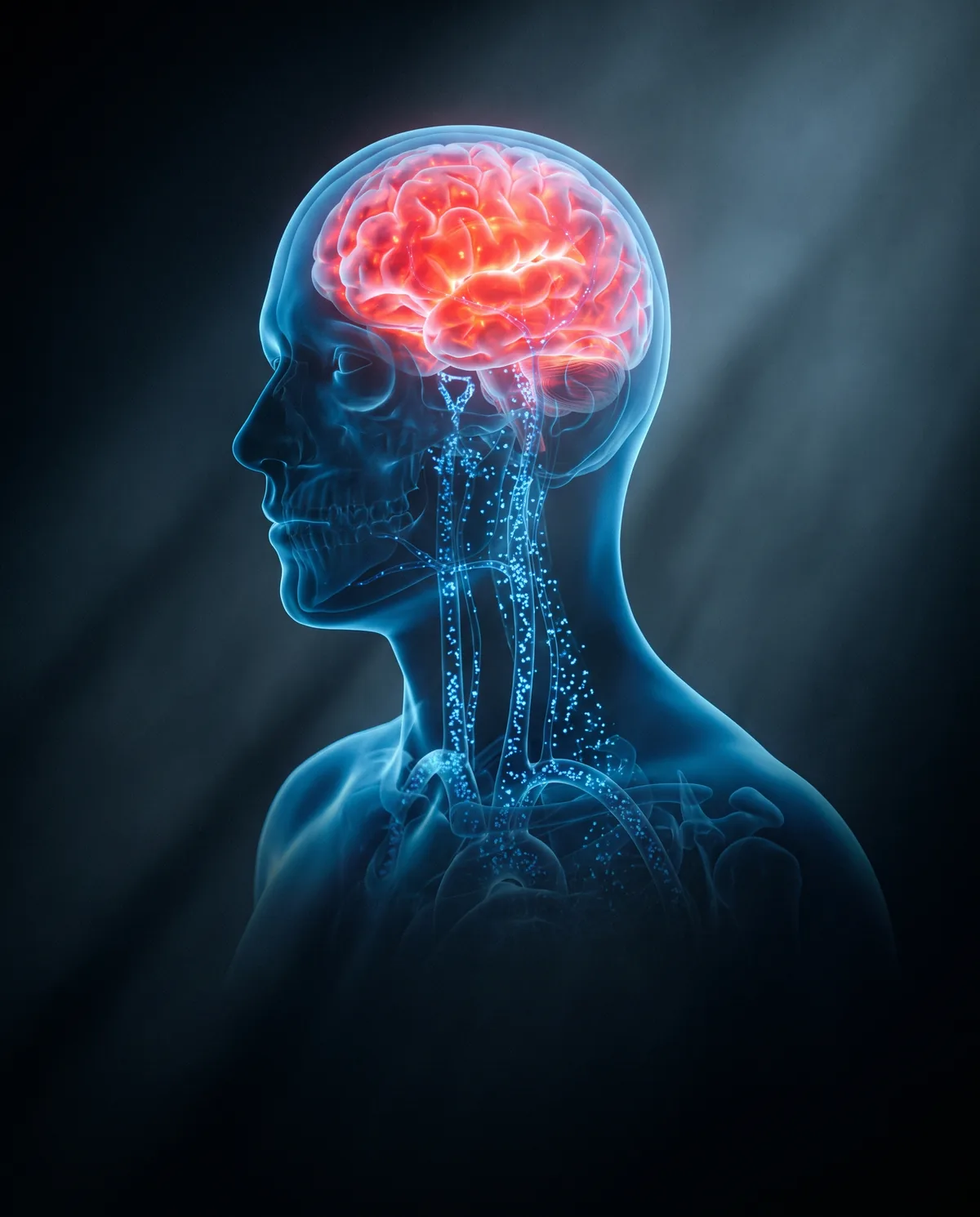
About 20% of your body's oxygen at rest, even though the brain is only about 2% of your body weight. That ratio comes from decades of brain-metabolism research summarized by Marcus Raichle and Debra Gusnard in PNAS in 2002.
Pound for pound, that makes the brain roughly ten times hungrier than the average tissue in your body. Most of that energy goes into keeping neurons ready to fire: maintaining the electrical gradients that every signal, memory and decision depends on. The brain also has almost no oxygen reserve, so it relies on a constant, uninterrupted supply from your blood.
What does oxygen actually do in the brain?
Oxygen is the fuel your neurons use to make energy, and it's a direct ingredient in the chemistry behind mood and motivation. Without a steady supply, signaling slows down.
Two jobs matter most:
- Energy production. Neurons burn oxygen in their mitochondria to make ATP, the energy currency that powers signaling between brain cells.
- Neurotransmitter production. The enzymes that build dopamine (tyrosine hydroxylase) and serotonin (tryptophan hydroxylase) use oxygen directly. In a rat study, 30 minutes at 12% oxygen reduced the activity of both enzymes (Hedner et al., Biology of the Neonate, 1977). That's an animal study, so treat it as mechanism, not proof of what happens in your head after a hard set.

What happens to your brain when oxygen drops?
Thinking gets measurably worse. A 2017 meta-regression pooled 22 experiments in healthy adults and found a moderate negative effect of acute low oxygen on cognitive performance (g = -0.49, 95% CI -0.64 to -0.34). The strongest predictor was how low arterial oxygen pressure fell (McMorris et al., 2017).
Important context: those drops happened at genuinely low oxygen, the kind you get at high altitude or in a hypoxic chamber. This isn't a claim that a normal day at sea level is starving your brain.
Which mental skills go first when oxygen is low?
Attention. A 2020 systematic review and meta-analysis found low oxygen impaired attention (SMD -0.40), memory (SMD -0.26) and executive function (SMD -0.18) (Jung et al., 2020).
| Mental skill | Effect of low oxygen (SMD) | What it feels like |
|---|---|---|
| Attention | -0.40 | Losing focus, missing details |
| Memory | -0.26 | Slower recall |
| Executive function | -0.18 | Weaker planning and decisions |
Source: Jung et al., Journal of Sport and Health Science, 2020 (meta-analysis of 12 studies).

Can you "get more oxygen" to your brain?
If you're healthy and at sea level, your blood is probably already near full. A normal pulse-oximeter reading is 95 to 100% (Cleveland Clinic). Breathing faster or buying canned oxygen won't push a full tank much higher.
So the useful question isn't "how do I flood my brain with oxygen?" It's "how do I protect the delivery system and give my brain time to recover?" That's where the evidence is.
4 evidence-based ways to protect your brain's oxygen supply
Train your engine, protect your sleep, respect altitude, and build a wind-down routine. Each one is backed by research, and none of them requires a gadget.
1. Build aerobic fitness
Exercise appears to protect thinking when oxygen is low. In the same 2020 meta-analysis, exercising under hypoxia had a positive effect on cognition (SMD 0.30, 95% CI 0.14 to 0.45; Jung et al., 2020). A bigger aerobic engine means better oxygen delivery everywhere, including your head. Our VO2 max and longevity guide covers how to train it.
2. Protect your sleep
Sleep is when your brain takes out the trash. In mice, natural sleep expanded the space between brain cells by about 60%, speeding the clearance of waste products like beta-amyloid (Xie et al., Science, 2013). Short sleep means less cleanup time.
If you snore loudly, stop breathing at night, or wake up unrefreshed no matter how long you sleep, talk to a doctor about sleep apnea. It's one of the most common reasons oxygen drops overnight.
3. Respect altitude
If you train or race high, expect your focus to dip at first. The cognitive losses in the studies above show up at altitude-level oxygen. Give yourself time to acclimatize before decisions that matter.
4. Use a warm soak to wind down
A warm bath 1 to 2 hours before bed helps you fall asleep faster. A 2019 meta-analysis of 17 studies found water at about 104 to 108.5°F (40 to 42.5°C), scheduled 1 to 2 hours before bedtime for as little as 10 minutes, shortened sleep onset and improved self-rated sleep quality (Haghayegh et al., 2019). The likely mechanism is the drop in core temperature after you get out.
Where does Bimini fit in?
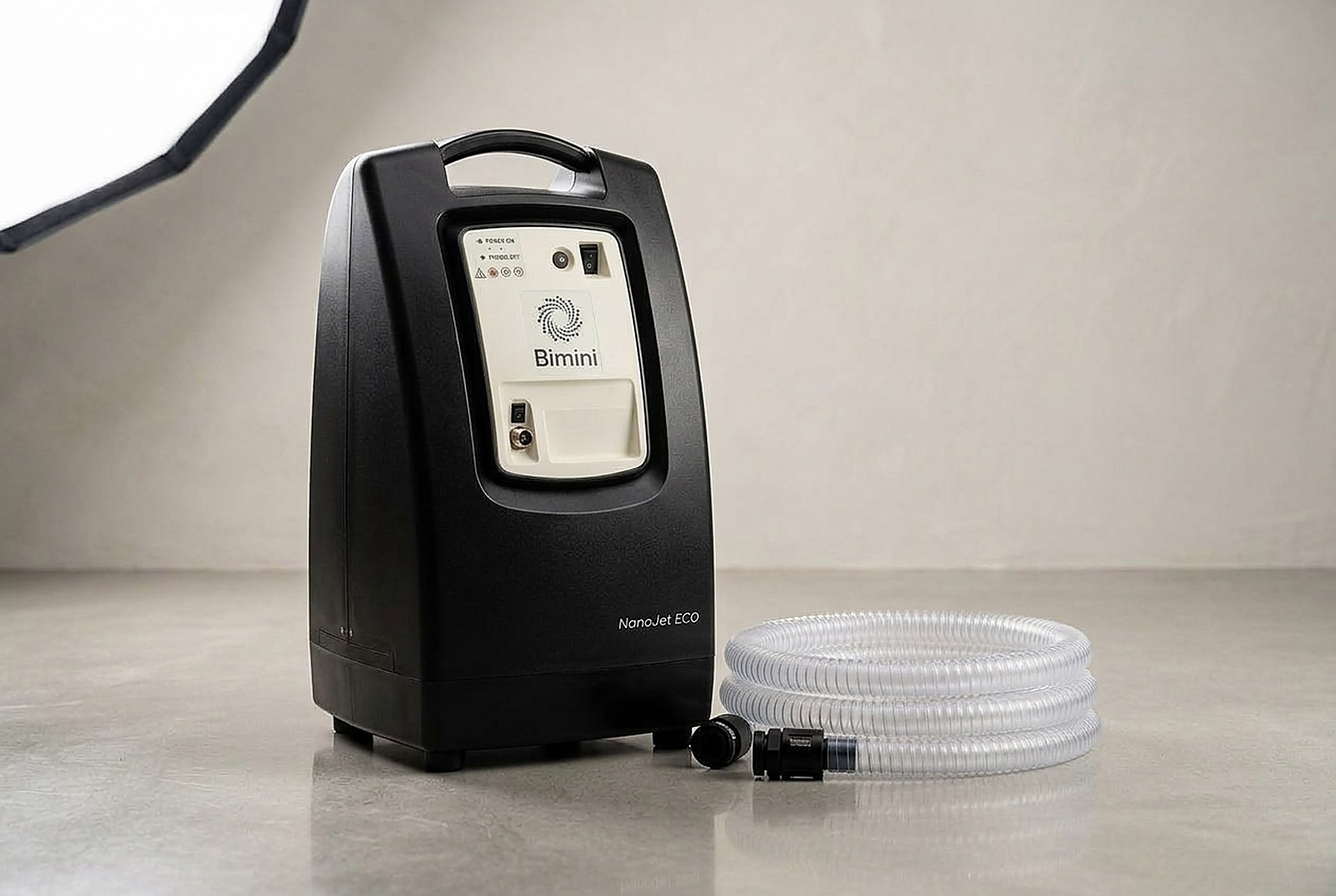
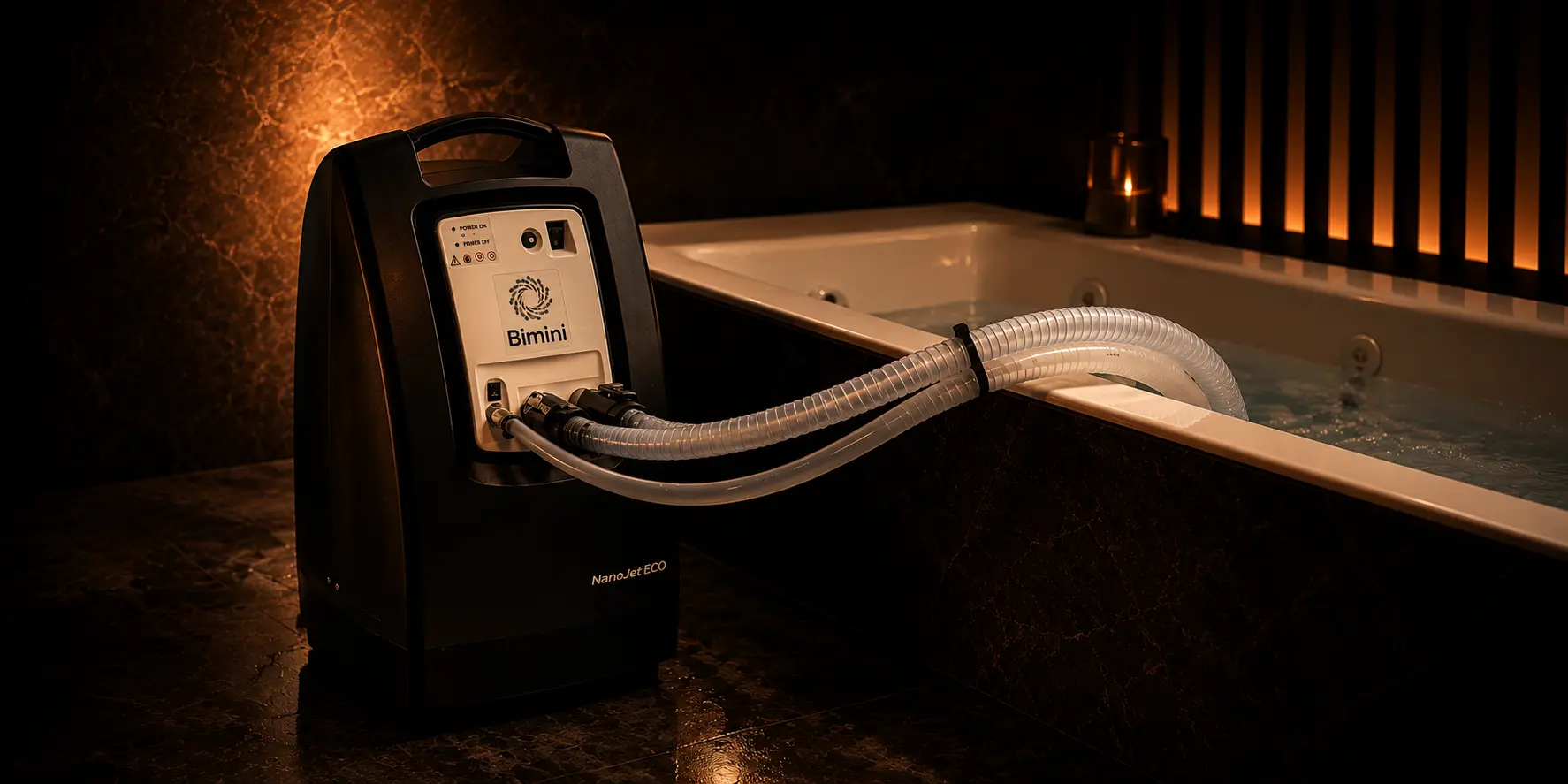
Bimini's NanoJet turns any standard bathtub into a warm oxygen nanobubble soak, which makes it an easy way to build habit number 4. It's built for exactly that kind of evening ritual: a 30 to 45 minute warm soak before bed. For the sleep effect in the research, aim for water around 104°F, finished 1 to 2 hours before lights out.
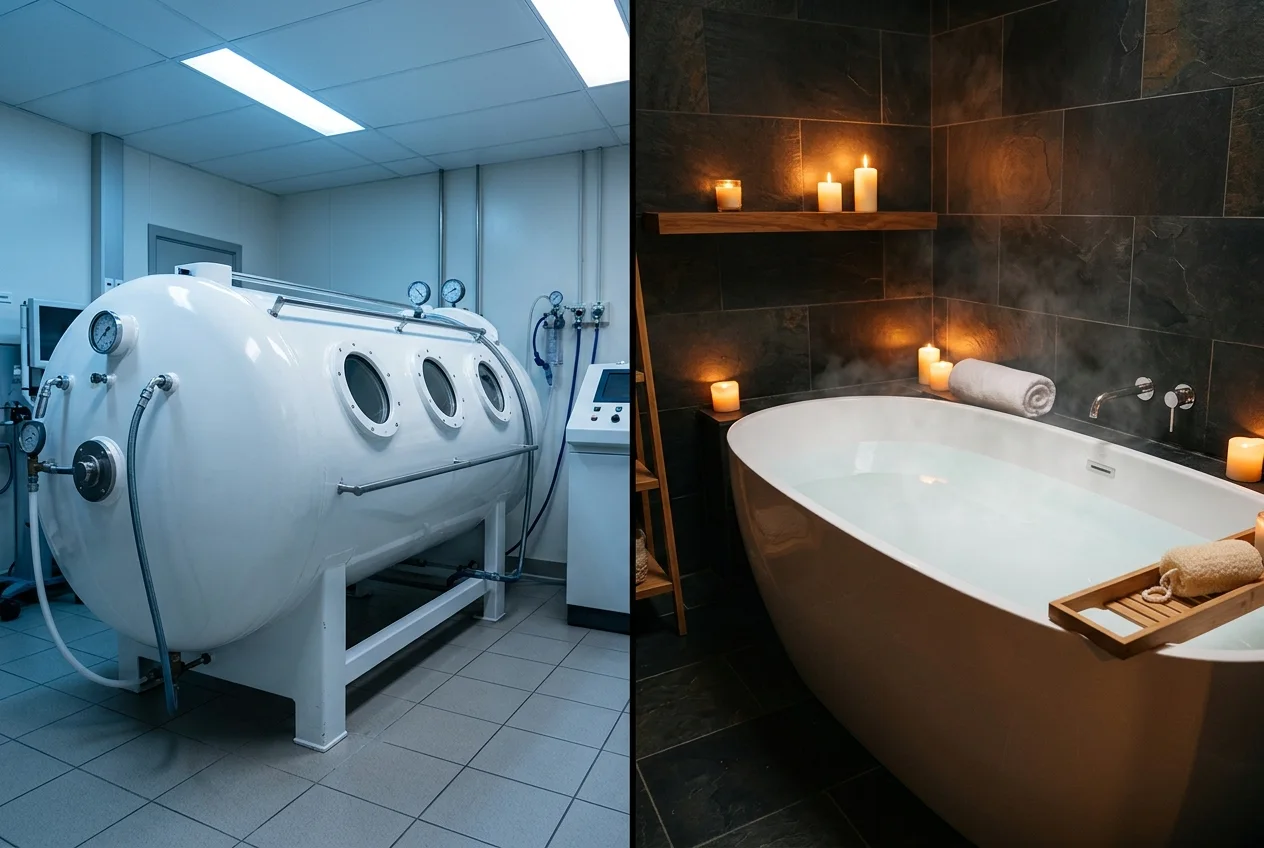
Be clear on what that does and doesn't mean. A nanobubble bath is not a way to pump oxygen into your brain, and there are no human trials showing it changes brain oxygen. What the research supports is the warm-water part: a pre-bed soak that helps you wind down and fall asleep faster, which protects the hours your brain uses to recover. For how it compares with a hyperbaric chamber, read our HBOT vs. nanobubble hydrotherapy breakdown.
Want the evening soak habit?
The Bimini NanoJet Eco fits any standard bathtub. Use code NINJA for 10% off any NanoJet system.
$9,650, or $8,685 with code NINJA
Shop NanoJet EcoBrain Oxygen Habits Checklist
Check the habits you already have. Each one is backed by the research in this article.
0 of 6 habits. Start with sleep: it's the biggest lever.
Frequently asked questions
How much oxygen does the brain use?
About 20% of the body's oxygen at rest, even though the brain is only about 2% of body weight (Raichle & Gusnard, PNAS, 2002). Most of that energy keeps neurons ready to signal.
What happens to your brain when it doesn't get enough oxygen?
Thinking gets measurably worse. Across 22 experiments in healthy adults, acute low oxygen caused a moderate drop in cognitive performance, and attention was hit hardest (McMorris et al., 2017; Jung et al., 2020).
Does breathing extra oxygen make you smarter?
Not if you're healthy at sea level. Normal blood oxygen is already 95 to 100%, so extra oxygen has little room to raise it. Protecting sleep, fitness and recovery matters more.
Can a warm bath before bed improve sleep?
Yes. A 2019 meta-analysis found a warm bath or shower at 104 to 108.5°F, taken 1 to 2 hours before bed for as little as 10 minutes, shortened the time it took to fall asleep (Haghayegh et al., 2019).
Does a Bimini nanobubble bath increase brain oxygen?
There's no human research showing that. The NanoJet's evidence-backed role is as a warm pre-bed soak that supports faster sleep onset and recovery.
Sources
- Raichle ME, Gusnard DA. Appraising the brain's energy budget. PNAS. 2002;99(16):10237-9. doi:10.1073/pnas.172399499
- Hedner T, Lundborg P, Engel J. Effect of hypoxia on monoamine synthesis in brains of developing rats. Biology of the Neonate. 1977;31(1-2):122-6. Animal study. doi:10.1159/000240952
- McMorris T, et al. Effect of acute hypoxia on cognition: a systematic review and meta-regression analysis. Neuroscience & Biobehavioral Reviews. 2017;74:225-232. 22 experiments. doi:10.1016/j.neubiorev.2017.01.019
- Jung M, et al. Does exercise have a protective effect on cognitive function under hypoxia? A systematic review with meta-analysis. Journal of Sport and Health Science. 2020;9(6):562-577. 18 studies reviewed, 12 meta-analyzed. doi:10.1016/j.jshs.2020.04.004
- Xie L, et al. Sleep drives metabolite clearance from the adult brain. Science. 2013;342(6156):373-7. Mouse study. doi:10.1126/science.1241224
- Haghayegh S, et al. Before-bedtime passive body heating by warm shower or bath to improve sleep: a systematic review and meta-analysis. Sleep Medicine Reviews. 2019;46:124-135. 17 studies, 13 meta-analyzed. doi:10.1016/j.smrv.2019.04.008
- Cleveland Clinic. Blood Oxygen Level: What It Is and How To Increase It. my.clevelandclinic.org
Related: HBOT vs. Nanobubble Hydrotherapy · VO2 Max and Longevity · Recovery Hub · All articles