Why Layout Matters
A gym floor plan is not just about fitting equipment into a room. It is about creating an experience that maximizes member engagement, ensures safety, optimizes traffic flow, and ultimately drives retention. A poorly designed gym feels cramped, confusing, and intimidating. A well-designed gym feels intuitive, energizing, and inviting.
Quick Answer: Effective gym floor plan design creates distinct zones (cardio, free weights, machines, functional, stretching), maintains 3-4 foot aisles between equipment, places high-visibility areas near the entrance, and ensures heavy equipment is on reinforced flooring. Plan for 10-15 sq ft per member at peak capacity.
Key Takeaways
- Zone your gym into distinct areas: cardio, strength, functional, flexibility, and social
- Maintain minimum 3-4 foot aisles between all equipment
- Place cardio near the entrance (highest visibility, least intimidating)
- Free weight areas need mirrors, proper lighting, and reinforced flooring
- Natural traffic flow should guide members through the space intuitively
The Five Essential Zones
1. Cardio Zone
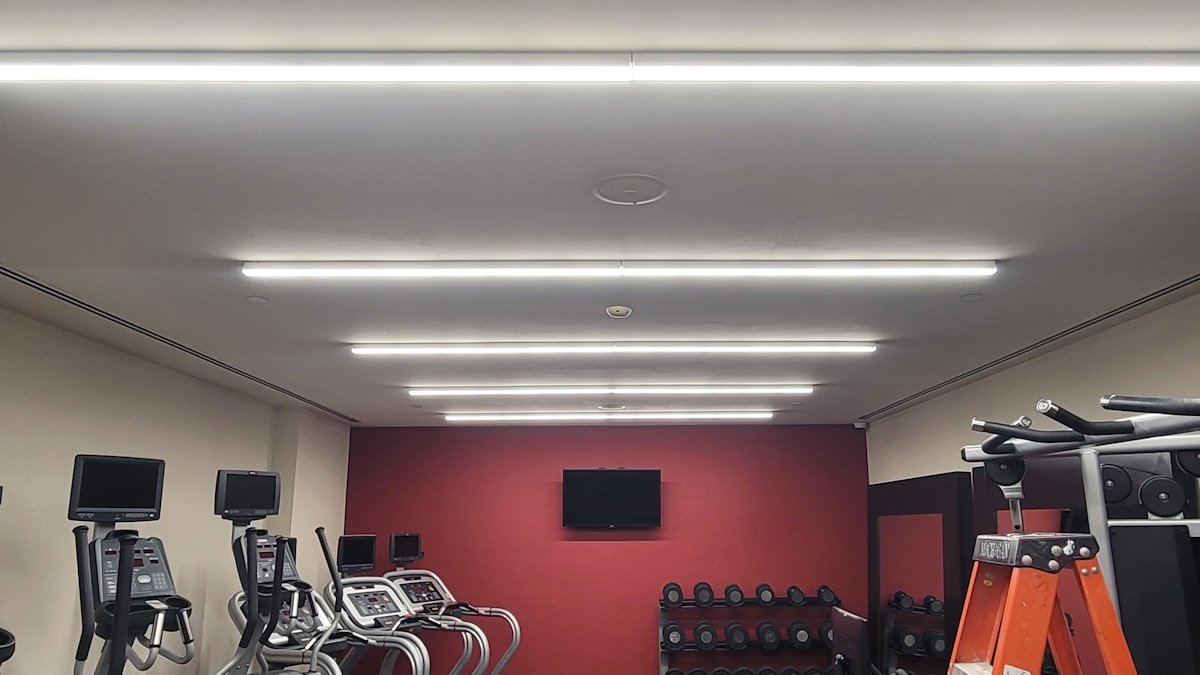
Place near the entrance or windows. Cardio is the least intimidating activity and serves as a visual draw from outside. Arrange treadmills, bikes, and ellipticals with at least 3 feet between machines and 6 feet behind treadmills (safety zone for dismounting).2. Strength / Machine Zone
Position selectorized machines in the middle of the floor. They are guided-motion, making them approachable for beginners. Group by muscle group (chest press near shoulder press, leg press near leg curl) for logical workout flow.3. Free Weight Zone
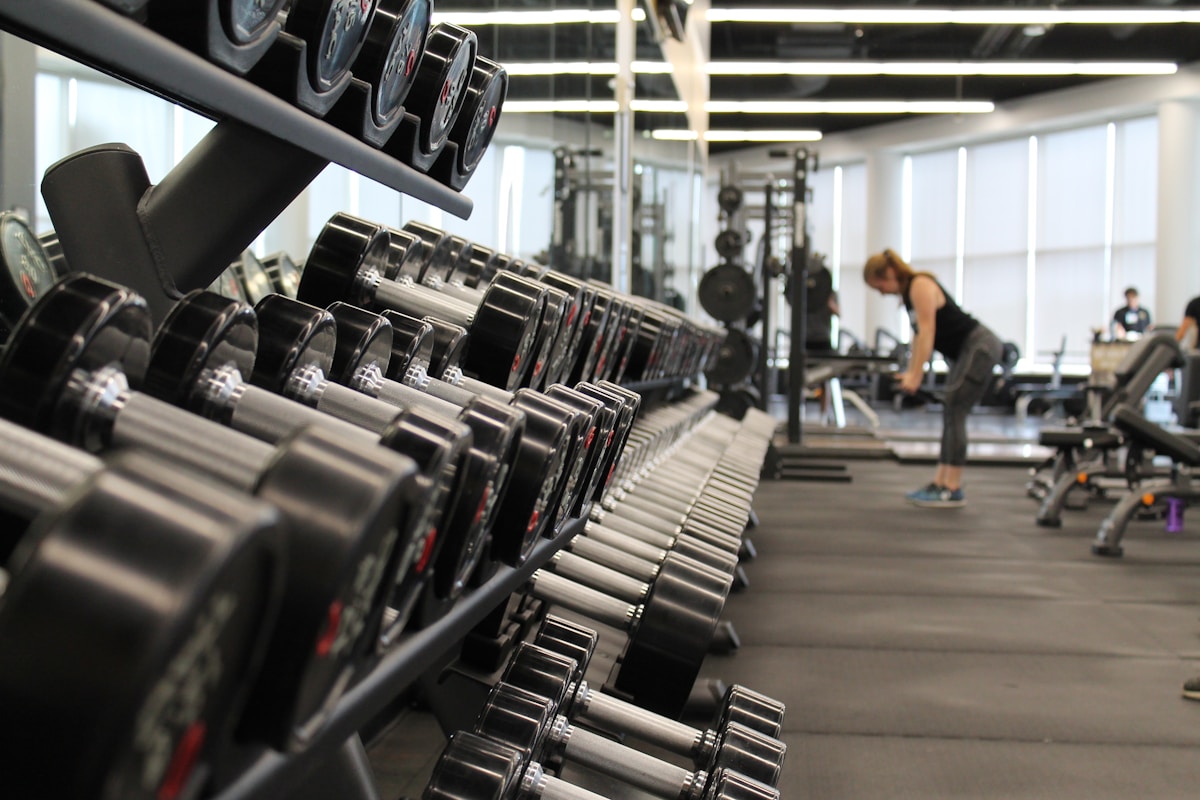
This is the heart of a serious gym. Requires reinforced flooring (rubber matting, minimum 8mm thickness), mirrors on at least one wall, and proper lighting. Provide 4-6 feet of clearance around squat racks and benches.4. Functional Training Zone
Open floor space for kettlebells, battle ropes, TRX, box jumps, and sled work. This area needs the most square footage per person (20-25 sq ft). Place away from mirrors to avoid projectile risk.5. Flexibility and Recovery Zone
Stretching mats, foam rollers, and mobility tools. Place in a quieter area of the gym, ideally near the exit so members cool down before leaving.Traffic Flow Principles
- One-way flow reduces congestion: entrance on one side, exit/changing rooms on the other
- Main aisles (6-8 feet wide) connect all zones
- Secondary aisles (3-4 feet) run between equipment within zones
- Dead ends frustrate members — every path should lead somewhere
Common Layout Mistakes
The Bottom Line
A great gym floor plan balances function, safety, and atmosphere. Zone your space intentionally, maintain generous aisles, and think about member flow from entry to exit. Whether you are designing a 2,000 sq ft boutique studio or a 20,000 sq ft commercial facility, the principles are the same: create an environment where people want to train, return, and stay.