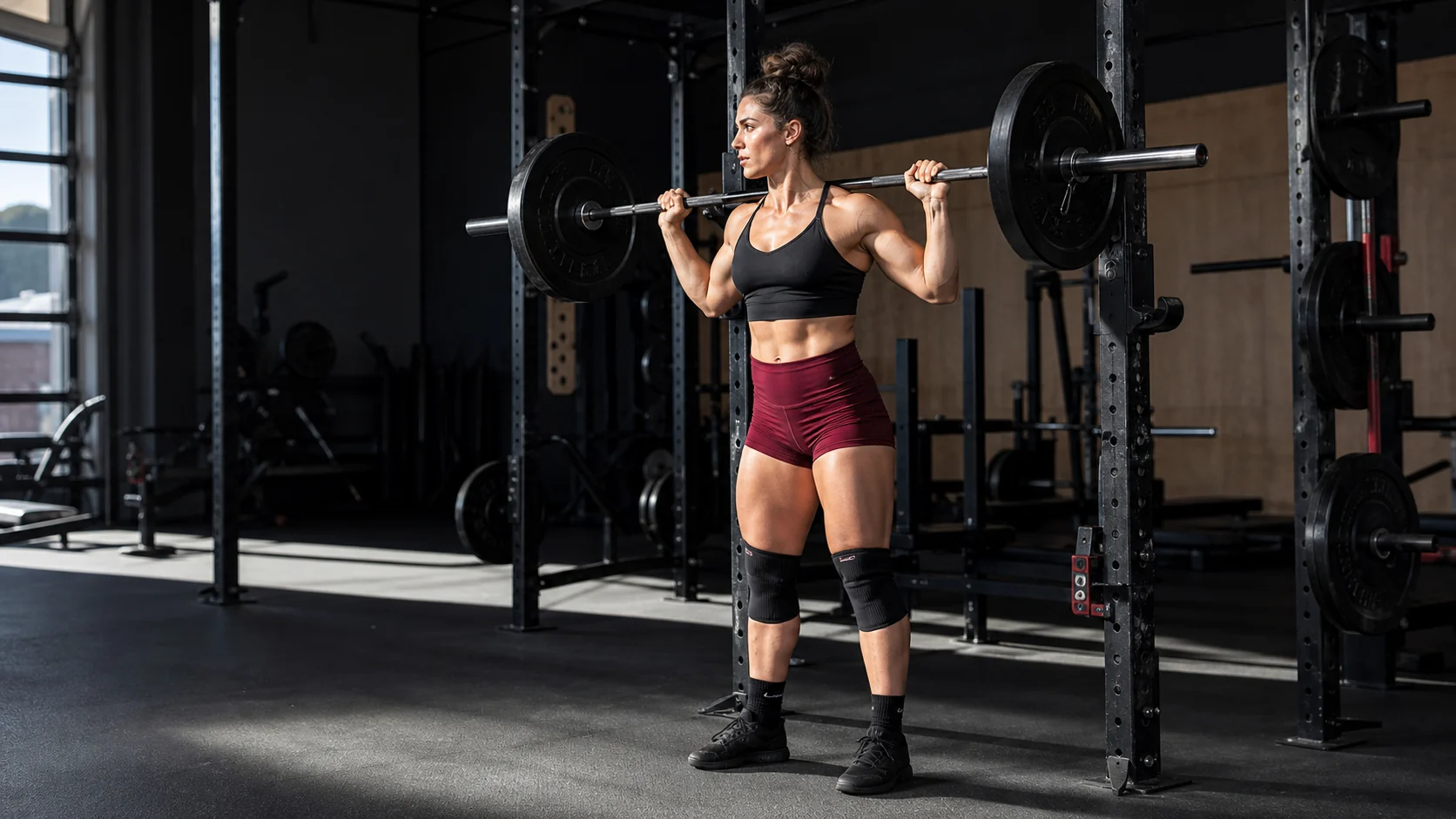
Short answer: A muscle mommy is a slang term for a strong, muscular woman who lifts weights and takes pride in her strength. She does not have to be a mother. Online, the phrase can describe women who strength train, powerlift, bodybuild, or simply embrace a visibly athletic physique and a strength-first mindset.
The term is playful, not a formal fitness category. Some women use it proudly; others do not like being labeled. The respectful rule is simple: let people choose the words they use for themselves.
At a glance
- Meaning: a muscular, strength-training woman
- Does she have to be a mom? No
- Typical training: progressive resistance training with compound and accessory lifts
- Common goals: strength, muscle growth, confidence, health, performance, or all five
- What it is not: one required body type, weight, age, or level of leanness
What does "muscle mommy" mean?
"Muscle mommy" usually means a woman with noticeable muscular development who enjoys strength training. The phrase appears across gym culture and social media — sometimes as the #musclemommy hashtag — where it can function as a compliment, a self-description, a meme, or a shorthand for women who reject the idea that strength and femininity are opposites.
The definition is broader than "fit mom." A muscle mommy may be a parent, but motherhood is not required. She may train for bodybuilding, powerlifting, Olympic weightlifting, CrossFit, HYROX, sport performance, or general fitness. What connects these uses is an emphasis on building capability rather than trying only to become smaller.
That distinction matters because the older interpretation — "a mother who stays fit" — misses how people now use the phrase. In current gym slang, muscle mommy describes a muscular woman more often than it describes a specific parenting identity.
Where did the muscle mommy trend come from?
There is no single verified person who coined the phrase. It grew through online fitness culture as women shared lifting progress, training advice, physique updates, and jokes about being strong enough to command the weight room — the same culture that produced terms like gym rat.
The trend reflects a wider change in women's fitness: strength, visible muscle, and performance are increasingly celebrated alongside — or instead of — thinness. It also gives women a memorable label for taking up space in activities historically marketed to men.
The phrase is not universally welcomed. Some people find "mommy" funny or empowering; others hear it as infantilizing, sexualized, or too focused on appearance. Use it as a self-selected identity, not an unsolicited nickname.
What does a muscle mommy look like?
There is no official muscle mommy body or "mommy physique." The label can include different heights, body-fat levels, ages, and training histories. Common visual traits may include developed shoulders, arms, back, glutes, or legs, but appearance alone is not the definition.
A better description focuses on behavior:
- She trains consistently.
- She tries to improve strength, technique, work capacity, or muscle over time.
- She eats and recovers in a way that supports training.
- She values what her body can do, not only how it looks.
Visible muscle takes time. Genetics, training age, nutrition, sleep, stress, hormones, and program design all affect the rate and location of muscle growth. No one needs extreme leanness — or any specific measurements — to qualify.
Why the muscle mommy movement resonates
For many women, the appeal is less about a nickname and more about a change in focus: add strength rather than chase endless weight loss. That shift can make progress concrete. A cleaner squat, a first pull-up, or a heavier deadlift is measurable even when day-to-day appearance changes are not.
Resistance training is also effective. A systematic review focused on healthy adult women found large improvements in upper- and lower-body strength and a moderate effect on muscle hypertrophy. More recent evidence likewise reports improvements in strength and body composition across the female lifespan.
The movement can still create pressure if a muscular body becomes another narrow ideal. Strength training does not owe anyone a particular look. Performance, enjoyment, health, confidence, and community are all valid outcomes.
How to become a muscle mommy
You do not need a punishing six-day split. Start with two or three full-body strength sessions per week, learn the main movement patterns, and add difficulty gradually. U.S. physical-activity guidance recommends muscle-strengthening work for all major muscle groups on at least two days per week.
1. Build around six movement patterns
A balanced program includes:
- Squat: goblet squat, front squat, or back squat
- Hinge: Romanian deadlift, deadlift, or hip hinge
- Push: push-up, bench press, or overhead press
- Pull: row, lat pulldown, or assisted pull-up
- Single-leg: split squat, step-up, or reverse lunge
- Carry or core: farmer carry, Pallof press, plank, or dead bug
Choose versions you can perform with control and without pain. Machines, dumbbells, barbells, cables, and body-weight exercises can all build strength and muscle.
2. Use progressive overload
Progressive overload means asking your body to do slightly more over time. That might mean one more repetition, a small weight increase, better range of motion, improved technique, or another high-quality set. Our free one-rep max calculator can help you pick sensible working weights.
Keep a training log. When you reach the top of a rep range with clean technique and could still perform about two more reps, add the smallest practical amount of weight at the next session.
3. Train hard enough — without turning every set into a test
Most working sets should feel challenging while leaving roughly one to three good repetitions in reserve. Beginners usually progress faster by practicing stable technique than by repeatedly lifting to failure.
A simple three-day muscle mommy workout
Perform the sessions on nonconsecutive days. Warm up with several minutes of easy movement and lighter practice sets.
| Day | Exercise | Sets × reps |
|---|---|---|
| A | Goblet squat | 3 × 6–10 |
| A | Dumbbell bench press | 3 × 6–10 |
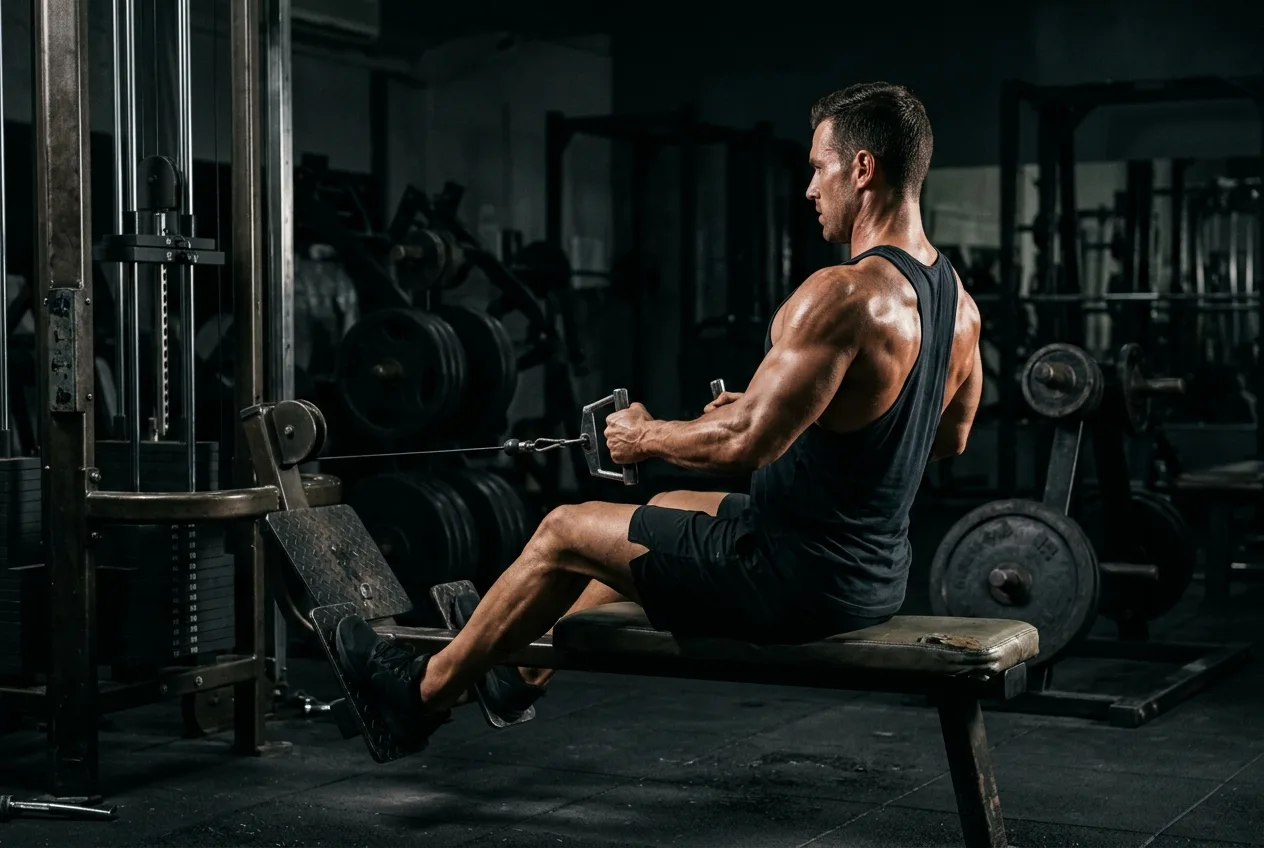
| A | Seated cable row | 3 × 8–12 |
| A | Romanian deadlift | 2 × 8–12 |
| A | Farmer carry | 3 × 30–45 sec |
| B | Trap-bar deadlift | 3 × 5–8 |
| B | Lat pulldown | 3 × 8–12 |
| B | Split squat | 3 × 8–10/side |
| B | Dumbbell overhead press | 2 × 8–12 |
| B | Dead bug | 3 × 6–10/side |
| C | Leg press or front squat | 3 × 8–12 |
| C | Hip thrust | 3 × 8–12 |
| C | Incline push-up or press | 3 × 8–12 |
| C | Chest-supported row | 3 × 8–12 |
| C | Lateral raise | 2 × 12–15 |
Alternate A, B, and C. If you can train only twice in a week, complete the next session in sequence rather than cramming all three together.
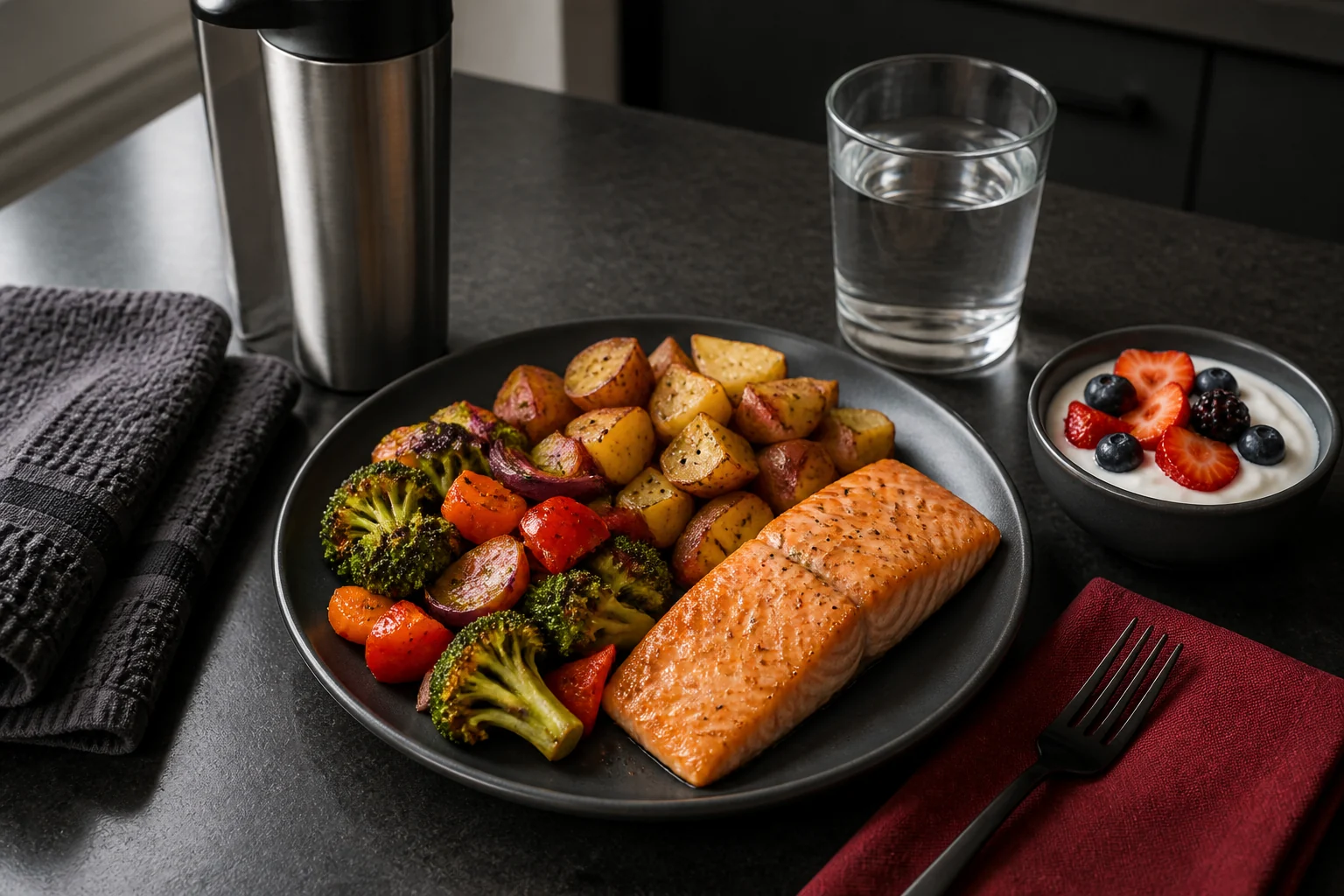
Muscle mommy meals: eating to support strength
There is no special muscle mommy diet. The useful basics are enough total food, adequate protein, carbohydrates that support training, dietary fat, produce, and hydration.
- Protein: Include a protein-rich food at each meal. For healthy exercising adults, a widely cited sports-nutrition position stand places a useful daily range around 1.4–2.0 grams per kilogram of body weight. Our protein calculator can personalize that number. Needs vary, and people with medical conditions should ask a qualified clinician.
- Carbohydrates: Rice, potatoes, oats, fruit, beans, bread, and similar foods help fuel training and replenish glycogen.
- Fats: Include sources such as olive oil, nuts, seeds, avocado, eggs, and fatty fish.
- Total energy: Building muscle is difficult when consistently under-fueled. A small calorie surplus may help maximize growth, but beginners and people returning to lifting can often make progress without aggressive bulking.
- Supplements: None are required. Food, training, sleep, and consistency come first.
Recovery is part of the program
Muscle adapts between sessions. Schedule at least one easier day before training the same movement hard again, aim for a consistent sleep routine, and reduce load or volume when fatigue is accumulating.
Sharp pain, worsening joint pain, dizziness, chest pain, or symptoms that change how you move are reasons to stop and seek appropriate medical guidance. Soreness is not a scorecard, and more fatigue does not automatically mean more progress.
Can you be a muscle mommy during pregnancy or postpartum?
Many women can continue or resume appropriately modified aerobic and strength-conditioning exercise during pregnancy and after birth, but individual circumstances matter. The American College of Obstetricians and Gynecologists recommends clinical evaluation and notes that modifications may be necessary.
After childbirth, return gradually when medically safe based on delivery type, symptoms, and complications. Ask an obstetric clinician or pelvic-health physical therapist for individualized guidance — especially after a cesarean birth, complications, pelvic heaviness, leaking, pain, or abdominal-wall concerns. Online identity should never outrank recovery.
Muscle mommy vs. related terms
| Term | Usual meaning |
|---|---|
| Muscle mommy | A muscular woman associated with strength training; she does not have to be a mother |
| Fit mom / gym mom | A mother who prioritizes fitness; she may or may not have visibly large muscles |
| Female bodybuilder | An athlete who trains and may compete specifically for muscularity, symmetry, and conditioning — see bodybuilding vs. weightlifting |
| Powerlifter | An athlete focused on the squat, bench press, and deadlift |
| Muscle mami / muscle mummy | Regional or stylistic variants with similar slang meaning |
Muscle mommy etiquette
If someone calls herself a muscle mommy, matching her language can be supportive. If she does not, "strong," "athletic," or a specific compliment about her performance is usually safer. Avoid comments about someone's body, parenting status, fertility, or sexuality unless that conversation is clearly welcome.
See the muscle mommy movement on NinjAthlete Instagram
NinjAthlete's muscle mommy post celebrates women who build strength, visible muscle, confidence, and community through resistance training.
Frequently asked questions
Does a muscle mommy have to be a mom?
No. In current gym slang, a muscle mommy is generally a strong, muscular woman. She may be a mother, but the label does not require parenthood.
Is "muscle mommy" a compliment?
It can be when a woman uses the term for herself or welcomes it. Some people dislike it or hear a flirtatious or sexual undertone, so avoid applying it to strangers without permission.
What is a muscle mommy workout?
A muscle mommy workout is simply a muscle-building strength program. It usually emphasizes progressive overload through squats or leg presses, hinges, presses, rows, pulldowns, single-leg work, and targeted accessories.
How long does it take to build a muscle mommy physique?
There is no universal timeline. Beginners may notice strength improvements within weeks, while visibly substantial muscle usually requires many months or years of consistent training, adequate nutrition, and recovery. Genetics and starting point matter.
Will lifting weights make women bulky?
Resistance training can build muscle, but dramatic muscularity does not happen accidentally. The amount and rate of growth depend on program volume, effort, nutrition, genetics, and years of training. You control the goal and can adjust the program as you progress.
What is the difference between "muscle mommy" and "muscle mom"?
"Muscle mommy" is broad internet slang for a muscular woman. "Muscle mom" more often literally describes a mother who lifts, although online usage overlaps.
The bottom line
A muscle mommy is a woman who embraces strength and muscularity — whether or not she is a mother. The healthiest version of the movement is not a required look; it is permission to train for capability, take up space in the weight room, eat enough to support the work, and define strength on your own terms.
Sources
- U.S. Department of Health and Human Services — Physical Activity Guidelines Q&A
- American College of Obstetricians and Gynecologists — Exercise After Pregnancy
- ACOG — Physical Activity and Exercise During Pregnancy and Postpartum
- Hagstrom et al. — Resistance training in women: systematic review
- Isenmann et al. — Resistance training across the female lifespan
- Jäger et al. — ISSN position stand: protein and exercise