

Understanding "Quiet Desperation" in Modern Times
"Most men lead lives of quiet desperation." This simple yet profound statement from Henry David Thoreau's "Walden" has echoed through the ages.
Written in the 19th century, its relevance today remains undiminished, if not enhanced.
What did Thoreau mean, and how does this sentiment relate to contemporary life?
In this exploration, we'll dissect the meaning and implications of living a life of "quiet desperation."
The Historical Context of Thoreau’s Statement
Thoreau’s Walden
Henry David Thoreau lived in a small cabin near Walden Pond in Massachusetts for two years, where he wrote "Walden."
This book, part philosophical treatise and part social critique, discusses the author’s experiment in simple living.
Thoreau's critique was not just of the industrial age but of the human condition itself.
The Age of Industrialization
Thoreau wrote during the Industrial Revolution.
A period when people began leaving rural settings for urban environments, seeking better livelihoods in factories.
It was an age of transformation, but also one where many felt disconnected from nature and themselves.
Interpreting the Phrase "Quiet Desperation"
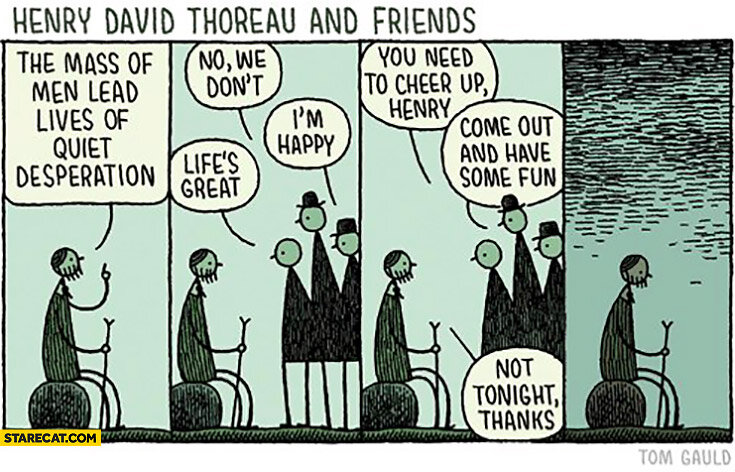 The Silence of the Internal Struggle
"Quiet desperation" signifies an internal struggle that isn't always visible.
Many people, despite appearing content or even successful, grapple with a profound sense of dissatisfaction or unfulfillment.
This desperation remains silent because societal norms often discourage open expression of such feelings.
The Universality of the Experience
Thoreau suggests that this isn't a niche experience but rather a widespread condition.
Most people, regardless of their station or circumstance, at some point, feel the weight of unrealized dreams, unmet expectations, or the seeming futility of their daily grind.
Contemporary Relevance: Living in a Digital Age

The Paradox of Connectivity
Today, we live in a world hyper-connected through technology. Yet, many feel more isolated than ever.
Social media platforms can sometimes amplify feelings of inadequacy or loneliness, as individuals compare their lives to the highlight reels of others.
Economic Pressures and the Rat Race
Modern economies, especially in urban settings, often require individuals to work long hours in jobs they don't love to maintain a certain lifestyle.
This perpetual chase can lead to burnout and a sense of being trapped in an unending cycle.
Breaking Free from Desperation
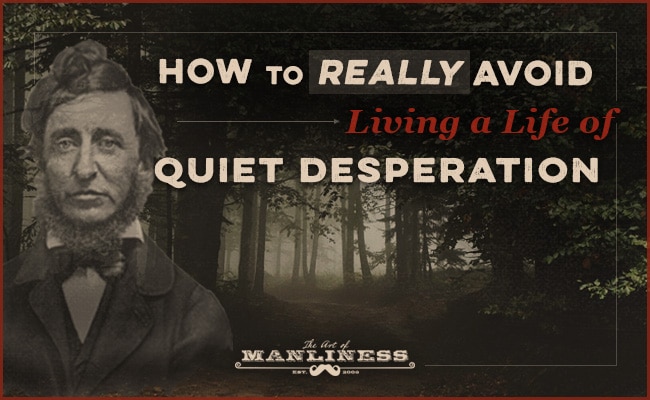
Seeking Purpose and Meaning
While Thoreau advocated for simplicity, he wasn't just talking about a minimalist lifestyle.
He was suggesting a life that is purposeful and in tune with one's true nature.
Finding purpose, whether through work, relationships, or personal passions, can be a potent antidote to feelings of desperation.
Building Authentic Connections
In the digital age, prioritizing real-world interactions and deep, meaningful relationships can counteract feelings of isolation.
Human beings are inherently social creatures, and genuine connections can provide a sense of belonging and understanding.
The Power of Reflection and Mindfulness
Taking time to reflect, meditate, or simply be in the present moment can help individuals connect with themselves.
This practice, which Thoreau himself championed during his time at Walden Pond, can offer clarity and peace in a chaotic world.
The Enduring Echo of Thoreau's Words
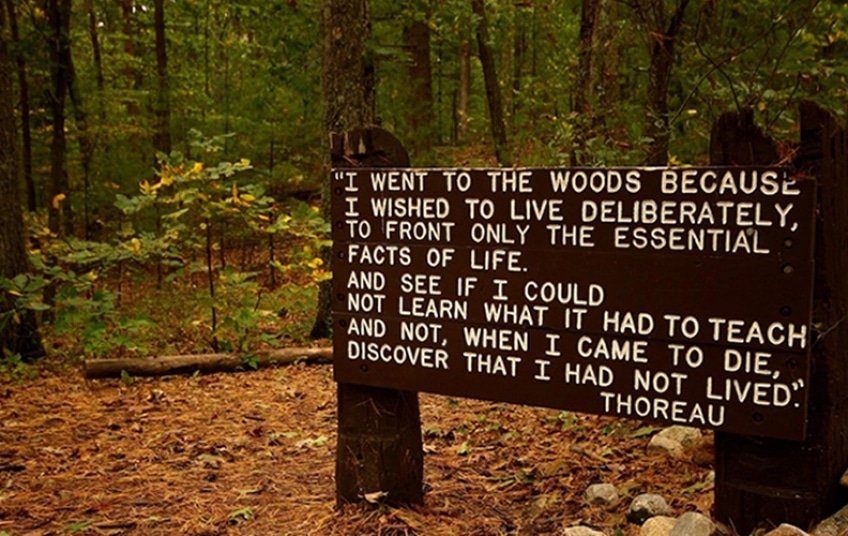
More than a century and a half after Thoreau penned those words in "Walden," they still resonate powerfully.
They serve as a reminder that, regardless of the era, human beings crave meaning, connection, and a sense of purpose.
In acknowledging the quiet desperation, society can work towards addressing the root causes, fostering environments where individuals can thrive both internally and externally.
By recognizing and addressing the "quiet desperation" in our own lives, we can aspire to lead lives of fulfillment, purpose, and genuine happiness.
For students exploring such themes, EduWriter.ai provides invaluable support in crafting well-researched essays and analyses.